

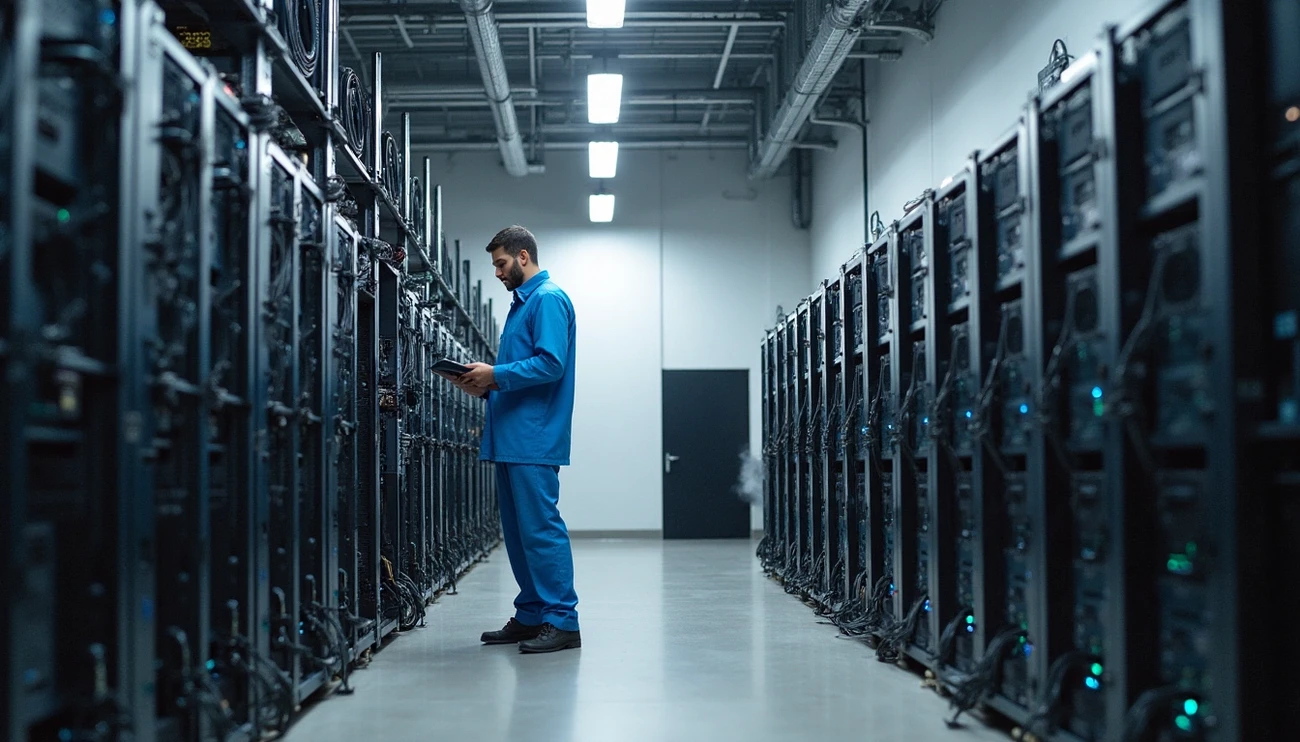
Crypto Mining Machine
Crypto Mining Machine Buying Guide: What Experts Won't Tell You
ASIC miners deliver superior hash rates and energy efficiency compared to standard crypto mining machines. These specialized devices solve cryptographic algorithms quickly while providing the computational power that secures blockchain networks.
Crypto mining hardware comes in various configurations designed for specific digital assets like Kaspa and Alephium. BlockDAG mining hardware achieves confirmation speeds of 10 blocks per second, delivering consistent mining rewards. Energy-efficient miners with low power consumption represent a critical factor that experts often overlook when discussing purchase decisions.
This guide reveals the information industry insiders rarely share about buying cryptocurrency mining machines. You'll discover the essential differences between mining technologies, how to identify efficient hardware, and the hidden costs that affect your investment. Both beginners and experienced miners need to understand these overlooked aspects to make informed purchase decisions.
Understanding Crypto Mining Machines
Cryptocurrency mining hardware includes several specialized options, each designed for different performance requirements. Understanding the key differences between these crypto mining machines directly impacts your potential returns.
ASIC vs GPU vs FPGA: What's the Difference?
Mining hardware options fall into three distinct categories, each with specific performance characteristics, flexibility levels, and cost considerations:
|
Hardware Type |
Strengths |
Weaknesses |
Ideal For |
|---|---|---|---|
|
ASIC |
Unrivaled hash rate and energy efficiency for specific algorithms |
High upfront costs, poor versatility, rapid obsolescence |
Miners focused on maximizing profit from specific cryptocurrencies |
|
GPU |
Relatively affordable, versatile for various tasks, supports multiple cryptocurrencies |
Lower hash rate and efficiency for specific algorithms, higher power consumption |
Miners balancing initial investment with potential returns |
|
FPGA |
Flexible for various algorithms, programmable, better hash rates than GPUs for certain algorithms |
More complex and expensive than GPUs, requires programming knowledge |
Miners seeking both specialization and flexibility |
GPUs became popular when miners transitioned from CPU mining. Graphics cards work effectively for mining because of their parallel processing design. However, specialized hardware significantly outperforms general-purpose graphics cards.
Why ASIC miners dominate the market
ASIC miners represent the standard for cryptocurrency mining, especially Bitcoin, due to clear performance advantages.
ASIC (Application-Specific Integrated Circuit) miners are custom-built microchips designed for a single task—solving specific cryptographic algorithms. This single-purpose design enables mining operations with exceptional speed and power.
ASIC dominance comes from their efficiency. These machines execute one function, allowing them to mine cryptocurrencies like Bitcoin with focused performance. Current ASIC models operate at efficiencies as low as 30 J/TH (joules per terahash) [5], significantly outperforming general-purpose hardware.
ASIC mining also strengthens network security through massive combined hash power. This reduces the likelihood of attacks on blockchain networks, though it raises mining difficulty for smaller operators.
What makes a mining rig efficient?
Mining rig efficiency depends on specific technical factors:
-
Hash Rate and Power Consumption: J/TH—how much energy is needed to process one terahash of data represents the critical efficiency metric. Lower J/TH ratings indicate superior energy efficiency, essential for long-term profitability.
-
Hardware Type and Quality: Mining machines vary in efficiency levels. Newer ASIC models offer better efficiency through improved power utilization while delivering higher hash rates.
-
Cooling Systems: Effective cooling prevents overheating and maintains optimal hardware performance. Quality airflow, fans, or liquid cooling systems directly impact energy efficiency.
Energy-efficient miners generate maximum hashing power with minimal energy consumption. Mining difficulty increases make this efficiency more critical—energy-efficient hardware maintains profitability despite network changes.
Selecting crypto mining hardware requires balancing upfront costs with long-term efficiency. Bitcoin miners rely on ASICs as the only practical option in 2024, while GPUs appeal to miners targeting ASIC-resistant cryptocurrencies or seeking operational flexibility.
Key Features to Look for in Mining Hardware
Technical specifications directly impact your profitability and operational success when investing in crypto mining machines. Beyond choosing between ASICs, GPUs, or FPGAs, you must evaluate specific performance metrics that determine your mining hardware's effectiveness over time.
Hashrate and power consumption
The hashrate-to-power ratio represents the most critical efficiency metric for crypto mining hardware. This relationship is measured in joules per terahash (J/TH), indicating energy required to perform one trillion calculations. Lower J/TH ratings mean higher energy efficiency and better long-term profitability.
Top-performing miners like the Antminer S21 XP Immersion achieve efficiency rates of 13.5 J/TH, substantially outperforming older models. Electricity costs in your region ultimately determine how these efficiency ratings affect your bottom line, as power consumption remains the primary operational expense for mining operations.
Calculate your potential return on investment based on:
-
Hardware hashrate (computational power)
-
Energy efficiency (J/TH)
-
Local electricity rates
-
Current cryptocurrency prices
Cooling systems: air, hydro, and immersion
Proper cooling directly impacts mining rig performance, efficiency, and lifespan. Three primary cooling methods dominate the market:
|
Cooling Type |
Pros |
Cons |
Best For |
|---|---|---|---|
|
Air |
Cost-effective, easy maintenance, widely available components |
Limited efficiency, noise issues, dust accumulation |
Beginners, small operations, budget-conscious miners |
|
Immersion |
Excellent heat dissipation, increases hashrate by up to 25%, eliminates dust problems |
Expensive setup, complex maintenance, requires specialized fluids |
Professional operations seeking maximum performance |
|
Hydro |
Good temperature control, scalable, lower energy costs than air |
Requires water infrastructure, maintenance challenges, limited system availability |
Medium to large operations in areas with good water access |
Immersion cooling can boost ASIC performance by up to 50% while maintaining lower temperatures. Mining hardware operates more efficiently when properly cooled. Inadequate cooling causes reduced workload, decreased hashrate, or complete shutdown of your mining machine.
Noise levels and home suitability
Noise represents a significant yet often overlooked factor when selecting crypto miners for home use. Most mining rigs produce 70-90 decibels at close range – comparable to standing near a vacuum cleaner or lawnmower continuously.
Human ears experience discomfort above 70dB, with potential hearing damage occurring above 80dB during prolonged exposure [1]. This makes many standard mining machines problematic for residential settings, where noise can disrupt sleep and cause tension with neighbors.
For mining at home, consider:
-
The Avalon Nano 3, which produces only 35dB
-
Soundproofing solutions like acoustic panels or specialized mining enclosures
-
Liquid-cooled systems that eliminate fan noise entirely
Build quality and durability
The average lifespan of crypto mining hardware ranges from 3-5 years with proper maintenance. Profitability often declines before physical failure occurs. Build quality significantly influences how long your investment remains viable.
Machines from established manufacturers like Bitmain (Antminer series) and MicroBT (Whatsminer series) offer superior construction quality and reliability. Regular maintenance extends hardware lifespan:
-
Clean dust buildup from fans and vents quarterly
-
Monitor temperature and performance metrics continuously
-
Use stable power sources with surge protection
-
Operate in well-ventilated spaces with appropriate ambient temperatures
A mining rig's profitability timeline often ends before its physical lifespan. Newer, more efficient models entering the market make older hardware less competitive even if still functional.
How do you choose the right miner for your coin?
Selecting cryptocurrency mining equipment tailored to specific coins affects your mining returns directly. Mining difficulty increases annually, making the right crypto mining machine choice essential for profitability.
Bitcoin miners
Bitcoin mining requires specialized ASIC hardware with high hash rates to remain competitive. Advanced Bitcoin miners in 2025 feature specifications that outperform previous generations:
The Bitmain Antminer S21e XP Hyd 3U delivers 860 TH/s hashrate while consuming 11,180W of power [14]. This unit achieves 13 J/Th energy efficiency, suitable for industrial mining operations.
The Bitdeer SealMiner A2 Pro Hyd offers 500 TH/s with 7,450W power consumption at 14.9 J/TH efficiency [14]. This model costs GBP 3,143.29, providing value compared to premium options.
The MicroBT WhatsMiner M66S++ produces 356 TH/s hashrate with 5,518W power consumption [14]. Its 75dB noise level makes it unsuitable for residential settings. When selecting Bitcoin mining equipment, prioritize machines with efficiency ratings under 20 J/TH to maintain profitability during market fluctuations.
Ethereum Classic and other altcoin miners
Ethereum Classic mining requires hardware optimized for the Etchash algorithm. The Jasminer X16-P leads ETC mining with 5,800 MH/s hashrate at 1,900W power consumption, achieving 0.33 J/MH efficiency.
Budget-conscious miners can consider the Jasminer X4-Q, delivering 1,040 MH/s at 480W with 0.46 J/MH efficiency. The IPollo V1 Mini offers 300 MH/s at 240W with 0.80 J/MH efficiency.
ETC mining software includes T-Rex for Nvidia GPUs, lolMiner for AMD GPUs, or GMiner for both [4]. Many pools support ASIC miners like Antminer E9 and Innosilicon A10 Pro.
Multi-algorithm compatibility
Some crypto mining rigs mine multiple cryptocurrencies simultaneously, providing protection against market volatility. Recent ASICs support multi-algorithm functionality, enabling mining of different coins like Litecoin (Scrypt) or Dash (X11).
GPU mining offers the most versatility for multi-algorithm mining. Modern GPUs like NVIDIA RTX 4080 switch between algorithms easily [15]. This flexibility allows mining Ethash, KawPoW, RandomX, or Equihash-based cryptocurrencies.
For multi-coin mining setup, specialized software like Cudo Miner or MinerGate optimizes performance based on algorithm profitability. This allows automatic switching to the most profitable coins without manual reconfiguration.
What Experts Won't Tell You About Buying Crypto Miners
Technical specifications and pricing represent only part of your crypto mining machine investment decision. Marketing materials rarely address the critical factors that directly impact mining profitability.
Hidden costs: shipping, customs, and taxes
Crypto mining hardware purchases involve additional expenses beyond the advertised price. International shipping costs range from $100-300 per unit. Import duties on mining hardware vary from 5-35% depending on your country. VAT or sales tax can reach 25% in some regions, plus courier handling fees for customs clearance.
A $2,000 mining rig often costs $2,700+ after import-related expenses. These additional costs extend your breakeven period by several months.
Warranty limitations and repair issues
Mining equipment warranties typically last only 180 days, significantly shorter than standard electronic devices. Manufacturers exclude PCB boards, fans, and power supplies from coverage—components most likely to fail.
Repair procedures require international shipping costs of $200+ each way and 4-8 weeks of downtime. Warranty service is often unavailable outside the manufacturer's home country, leaving international buyers without practical support options.
Firmware and software compatibility problems
Factory firmware limits your mining hardware's functionality. Manufacturers lock machines to specific mining pools, collecting 2-5% of earnings through pool fees. Custom firmware maximizes performance but voids your warranty.
Mining software updates frequently drop support for older hardware models. This planned obsolescence forces equipment upgrades more often than technically required.
Scams and fake listings in the market
Mining hardware sales operate in an unregulated marketplace. Warning signs include:
-
Prices 30%+ below market value
-
Cryptocurrency-only payment requirements
-
Missing serial numbers or verification codes
-
Unrealistic hashrate claims for the model
-
Refurbished units marketed as new
Counterfeit mining equipment quality has improved significantly, sometimes becoming apparent only after installation when performance falls short of specifications.
Where to Buy: Trusted Sources for Crypto Mining Rigs 💰
Finding reliable sources for cryptocurrency mining equipment requires careful evaluation of vendors in a marketplace with both legitimate sellers and potential scammers. Your choice of vendor directly affects your investment outcome.
Top platforms with crypto miners for sale
Bitmain operates as the industry's leading manufacturer, selling the Antminer series directly through their website. Their S23 Hydro model provides 580TH/s hashrate with 5510W power consumption. Compass Mining offers a beginner-friendly platform for Bitcoin mining hardware purchases with hosting options at verified facilities.
D-Central provides mining solutions that extend beyond hardware sales. Their services include software optimization, repair services, and mining setup guidance. They maintain a Discord marketplace where miners can browse available offers and connect with the community.
MiningCave, based in Canada, serves thousands of customers with ASIC miners including the Antminer series for Bitcoin mining and GPU rigs for Ethereum mining.
How to verify a legitimate mining hardware seller
Examine the seller's online presence thoroughly, including their official website, social media profiles, and forum mentions [6]. Customer reviews on independent platforms reveal important details about reliability and service quality.
Legitimate businesses provide transparent contact information and verifiable business registration details. Direct communication with the seller reveals much about their legitimacy—reputable vendors respond promptly with knowledgeable answers.
Use these payment protection methods:
-
Escrow services that hold funds until equipment delivery
-
Credit cards or PayPal with buyer protection
-
Cryptocurrency platforms offering payment security
Avoid wire transfers to unknown accounts, gift cards, or other non-reversible payment methode.
Group buys and consignment options
Group buying services, like those offered by Bitdeer, allow retail investors to purchase single mining machines while accessing benefits typically reserved for large-scale operations. This approach reduces entry barriers for newcomers and eliminates the need to establish a physical mining farm.
Consignment services from companies like BT-Miners and Jingle Mining help sellers market their used equipment effectively. Jingle Mining accepts "ship first, pay later" arrangements, with full payment after equipment testing, charging an 8-10% service fee.
These alternative purchasing methods often provide better prices and reduced risk, particularly for pre-owned crypto mining hardware.
Conclusion
Selecting the right crypto mining machine requires evaluating multiple factors beyond marketing specifications. Hash rate and power efficiency matter, but cooling systems, noise levels, and build quality also affect your long-term profitability. The specific cryptocurrency you plan to mine determines your hardware selection, with Bitcoin requiring specialized ASICs while other coins benefit from versatile GPU setups.
Hidden costs represent a critical aspect many first-time miners overlook. Shipping fees, customs duties, taxes, and potential repair expenses can extend your breakeven timeline significantly. Calculating your true investment requires accounting for these additional expenses before making a purchase. Mining equipment comes with limited warranties and complicated repair processes, unlike standard consumer electronics.
Your hardware purchase location determines both your initial experience and ongoing support. Trusted platforms like Bitmain, Compass Mining, and D-Central offer reliable equipment with proper verification and support services. Group buys and consignment options provide cost-effective alternatives for budget-conscious miners while maintaining reasonable security safeguards.
The cryptocurrency mining landscape evolves rapidly, with newer, more efficient machines entering the market regularly. Your mining journey begins with an informed purchase decision based on thorough research rather than specifications alone. This guide provides the information industry insiders rarely discuss openly. You can now make strategic decisions that maximize your mining profits while minimizing potential pitfalls.
FAQs
Q1. What is the most efficient crypto mining machine available? The most efficient crypto mining machines are typically ASIC miners designed for specific cryptocurrencies. For Bitcoin, top models like the Bitmain Antminer S21e XP Hyd 3U offer hash rates up to 860 TH/s with energy efficiency as low as 13 J/TH. However, efficiency can vary depending on the cryptocurrency being mined.
Q2. How much does a crypto mining machine typically cost? The cost of crypto mining machines varies widely based on their performance and the cryptocurrency they're designed to mine. Entry-level ASIC miners can start around $500, while high-end models can exceed $10,000. It's important to factor in additional costs like shipping, customs fees, and taxes, which can add 20-30% to the base price.
Q3. Are crypto mining machines profitable for home use? Profitability for home miners depends on factors like electricity costs, mining difficulty, and cryptocurrency prices. While it's possible to make a profit, home miners face challenges such as high energy consumption, noise levels, and the need for proper cooling. It's crucial to calculate potential returns based on your specific circumstances before investing.
Q4. What should I look for when buying a crypto mining machine? Key factors to consider include hash rate, power efficiency (measured in J/TH), cooling system, noise levels, and build quality. Also, consider the specific cryptocurrency you want to mine, as different coins require different hardware. Don't forget to factor in hidden costs like shipping and potential repair expenses.
Q5. How long do crypto mining machines typically last? With proper maintenance, crypto mining machines can last 3-5 years on average. However, their profitability often declines before physical failure due to increasing mining difficulty and the introduction of more efficient models. Regular cleaning, stable power supply, and proper ventilation can help extend a mining rig's lifespan.
Related Blog
RTX PRO 6000 vs RTX PRO 6000D: Care GPU Blackwell să cumperi în 2026?
Sep 7, 2026 by Guntis Vitolins
Mineshop
RTX PRO 6000 vs RTX PRO 6000D: Kuru Blackwell GPU iegādāties 2026. gadā?
Sep 7, 2026 by Guntis Vitolins
Mineshop
RTX PRO 6000 vs RTX PRO 6000D: Który GPU Blackwell wybrać w 2026?
Sep 7, 2026 by Guntis Vitolins
Mineshop
RTX PRO 6000 vs RTX PRO 6000D: Welches Blackwell GPU kaufen Sie 2026?
Sep 7, 2026 by Guntis Vitolins
Mineshop