

ASIC Miners in 2025
ASIC Miners in 2025: What Smart Investors Need to Know Before Buying
ASIC miners deliver exceptional performance levels in 2025, with leading Bitcoin units achieving over 400 terahashes per second. These specialized devices have matured considerably since 2012, establishing themselves as the preferred choice for serious cryptocurrency mining operations.
Smart investment decisions require understanding both profit potential and operational demands. The Bitmain Antminer S23 Hyd 3U generates approximately $52.73 daily profit with its 1160 TH/s hashrate, while smaller units like the Antminer L9 produce around $10.23 daily. Power consumption remains a significant factor—the S23 Hyd draws 11,020 watts, making electricity costs a primary consideration for profitability calculations. ASIC miners target specific algorithms, delivering superior efficiency for particular cryptocurrencies compared to general-purpose hardware.
This guide provides essential information about ASIC miners in 2025, covering operational principles, value-oriented models, and profitability calculations to support your investment decisions.
What is an ASIC miner and how does it work? 🔧
An Application-Specific Integrated Circuit (ASIC) miner is a specialized device built exclusively for cryptocurrency mining. These machines contain chips engineered to solve specific cryptographic puzzles required to validate blockchain transactions.
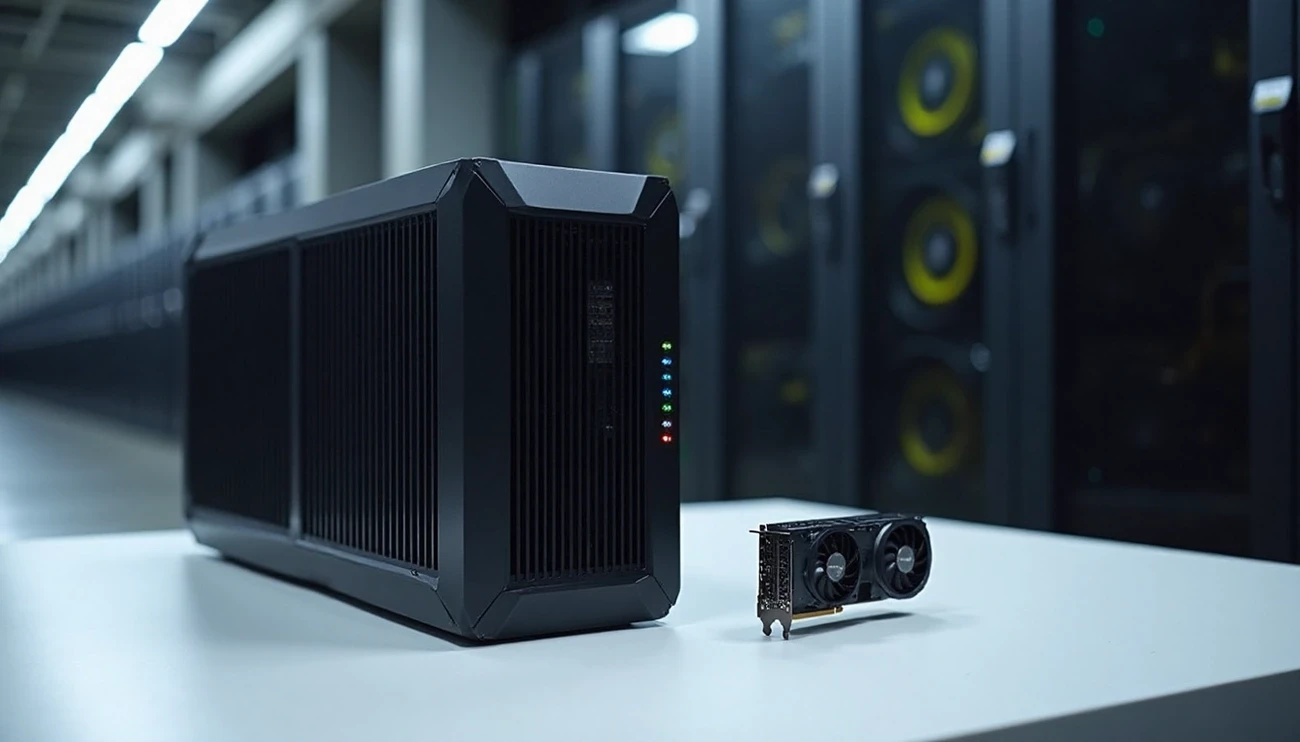
ASIC vs GPU: What makes it different
ASICs and GPUs serve different purposes. ASICs mine specific cryptocurrencies exclusively, while GPUs handle graphics rendering and can switch between various tasks. This focused design gives ASICs superior mining efficiency.
Performance differences are substantial. High-end ASIC miners generate terahashes per second (TH/s), while powerful GPUs typically reach only hundreds of megahashes per second (MH/s). ASICs also consume less power per unit of computational output, making them more economical for sustained mining operations.
Understanding hashing algorithms
Cryptocurrency mining centers on the hashing process. Hashing converts input data into fixed-length character strings through mathematical calculations. Each cryptocurrency uses specific algorithms—Bitcoin uses SHA-256, Litecoin uses Scrypt, others use X11.
During mining, your ASIC continuously modifies values called "nonce" and "extra nonce" to generate different hashes until finding one below the target value. Mining is essentially a competition to find this valid hash first and claim the block reward.
Why ASICs are faster and more efficient
ASIC miners perform exceptionally because every component targets one specific algorithm. This dedicated design enables rapid calculations with minimal energy waste.
Network difficulty increases drove the shift from CPU to ASIC mining. More miners joining Bitcoin and similar networks created exponentially higher computational demands. General-purpose hardware could no longer compete effectively, creating demand for specialized equipment.
ASICs provide better returns through superior efficiency despite higher initial costs. However, their specialization limits flexibility—they can only mine cryptocurrencies using their designated algorithm.
ASIC Mining Evolution Through 2025 🔄
The cryptocurrency mining landscape has changed dramatically since Bitcoin's genesis block in 2009. This progression reflects technological advancement alongside economic drivers that built the modern mining industry.
From CPUs to ASICs: The hardware progression
Bitcoin mining started with minimal computing requirements—a standard laptop CPU handled the workload when Satoshi Nakamoto mined the first block. Bitcoin's increasing value, particularly after Laszlo Hanyecz's 10,000 BTC pizza purchase in May 2010, drove miners toward more efficient solutions.
GPU mining appeared in October 2010, delivering approximately six times better efficiency than CPUs. GPUs achieved this advantage through parallel processing capabilities rather than sequential computation.
Field Programmable Gate Arrays (FPGAs) arrived in 2011, processing calculations twice as fast as top-tier GPUs. However, Canaan Creative's introduction of Application-Specific Integrated Circuits (ASICs) in 2013 quickly superseded these innovations.
Mining difficulty drives hardware development
Mining difficulty created the primary catalyst for hardware evolution. Bitcoin's rising value generated strong incentives for technological progress. Higher block rewards meant greater potential profits, encouraging innovations that improved margins while reducing operational expenses.
The Bitcoin protocol's difficulty adjustment mechanism maintained consistent block times regardless of network hashrate increases. This created ongoing pressure for optimization—miners required more efficient equipment to maintain profitability.
This cycle accelerated development continuously. Mining difficulty increased with new hardware deployment, which then demanded even better equipment. ASICs progressed from >100nm to 3nm technology in just ten years, a timeline that took more than twice as long in the broader semiconductor industry.
Current ASIC hardware developments
Chip size reduction represents the most significant ASIC advancement since 2013—from 130nm down to 7nm in current devices. Smaller chips require less electricity for data transmission, directly improving efficiency.
Thermal management solutions have advanced considerably. Modern cooling systems include immersion techniques where ASICs operate submerged in non-conductive oil. Bitmain announced collaborations in 2024 on next-generation miners featuring liquid-to-chip cooling to reduce energy consumption per terahash.
Efficiency improvements continue despite technological plateau predictions. Leading machines improved from around 100 joules per terahash (J/TH) down to as low as 13 J/TH between 2018 and 2025. Today's ASIC Bitcoin mining devices operate 100 billion times faster than average CPUs from 2009.
What factors should you evaluate before buying an ASIC miner? ⚡
Investing in ASIC mining equipment requires careful evaluation of several critical factors that directly impact profitability. Successful miners analyze these elements thoroughly before committing thousands of dollars to mining hardware.
How do power consumption and electricity costs affect profitability?
Electricity expenses represent 60-80% of operational costs for Bitcoin miners. Modern ASIC units consume between 3,000-3,500 watts of power, with top models like the S21 Pro drawing 3,510 watts while delivering 234 TH/s. Your location's electricity rate dramatically affects profitability—rates vary widely from GBP 0.06 to GBP 0.41 per kWh globally. To determine if mining remains viable, calculate your break-even efficiency: at GBP 0.06/kWh with current Bitcoin prices, your hardware must achieve approximately 33.78 W/Th or better to remain profitable.
What are the noise, heat, and space requirements?
ASIC miners generate substantial noise—typically exceeding 80 decibels, with models like the Antminer S9 producing up to 95 decibels in 25°C environments. This noise can be heard from 300 meters away, making residential deployment challenging. Heat production necessitates proper cooling systems to prevent hardware damage and maintain efficiency. Consider space requirements not just for the miner itself but also for cooling equipment and proper ventilation.
Which coins and algorithms are supported?
Each ASIC miner targets specific algorithms—SHA-256 for Bitcoin, Scrypt for Litecoin, or Ethash for Ethereum Classic. Unlike GPUs, ASICs cannot switch between different algorithms, limiting their flexibility. Verify algorithm compatibility with your preferred cryptocurrency before purchasing.
Should you join a mining pool or mine solo?
Solo mining provides 100% of block rewards but with highly unpredictable income. Pool mining offers stable, smaller payments by combining hashpower with other miners for a 1-3% fee. For most individual miners, pools provide more consistent returns despite the fees.
How do you calculate expected ROI and break-even?
Calculate your ROI by determining initial investment costs, estimated daily revenue based on hashrate, and ongoing expenses. Use online mining calculators that factor in hashrate, power consumption, electricity costs, and current cryptocurrency prices. Variables like mining difficulty, coin value, and equipment efficiency significantly impact your break-even timeline.
Top ASIC Miners in 2025 and Their Profitability 🚀
Current ASIC miners deliver exceptional performance levels, with leading models achieving hashrates that seemed impossible just years ago. Market analysis reveals distinct winners across efficiency, profitability, and budget categories.
Best ASIC miners by efficiency
Efficiency ratings measured in joules per terahash determine long-term mining viability. The Bitmain Antminer S23 Hyd achieves 9.5 J/TH efficiency while delivering 580 TH/s. The S21 XP+ Hyd reaches 11 J/TH with 500 TH/s hashrate. For Scrypt algorithm mining, the ElphaPex DG2+ leads at 0.19 J/MH efficiency.
Most profitable ASIC miners by coin
Bitcoin mining profits favor the Bitmain Antminer S23 Hyd 3U, generating approximately £51.02 daily at £0.19/kWh electricity rates. The S21e XP Hyd 3U produces around £37.95 daily.
Altcoin mining offers different opportunities. The Iceriver AE3 Lite delivers £17.80 daily mining ALEO using zkSNARK algorithm. The VolcMiner D1 Hydro earns £25.79 daily mining Litecoin and Dogecoin.
Cheap ASIC miners with decent returns
The Canaan Avalon Nano 3 provides an accessible entry point at £348.64 with 4 TH/s and 140W power consumption. The Avalon6 Made A1366 offers 130 TH/s at approximately £476.50 second-hand.
The BitChimney Space Heater S19K Pro at £1111.03 serves dual purposes—mining Bitcoin at 31 TH/s while heating your home. Many budget miners now emphasize this dual functionality to justify purchase costs.
Where to buy ASIC miners in the UK and globally
Specialized UK retailers like The Mining Shop provide detailed selections with ROI calculations. Major manufacturers including Bitmain, MicroBT, and Canaan typically sell directly to large-scale operations.
Chinese mining manufacturers are establishing US production facilities throughout 2025 to avoid tariffs. North American buyers will soon access these machines with reduced import costs and faster delivery times.
Final Thoughts on ASIC Mining Investments 🎯
ASIC mining presents a substantial investment opportunity that demands careful evaluation. This guide has covered how these machines operate, their performance advantages, and the factors that determine profitability.
Success with ASIC mining requires balancing several key variables. Electricity costs represent the largest ongoing expense, making efficiency metrics like joules per terahash essential for equipment selection. Heat management, noise levels, and space requirements also affect operational viability, particularly for home-based miners.
The mining industry has progressed significantly from CPU mining origins. Current ASIC technology achieves hashrates in hundreds of terahashes per second—performance levels that seemed impossible just years ago. This advancement coincides with increasing network difficulty, making hardware selection more important than ever.
Profitability calculations must account for your specific electricity rates, target cryptocurrency values, and projected difficulty increases. What generates profit in one location may create losses elsewhere due to varying power costs.
Equipment choices depend on your investment goals and risk tolerance. Top-tier models like the Bitmain Antminer S23 Hyd offer superior long-term prospects but require significant upfront investment. Budget-friendly options provide entry points, especially when they include additional functionality like home heating.
Pool mining versus solo mining requires consideration of your preferred payment structure. Pools deliver consistent smaller payments, while solo operations provide full block rewards with unpredictable timing. Most individual miners prefer pools for steadier returns despite the fees.
Hardware developments continue rapidly in cryptocurrency mining. Equipment that appears advanced today may become outdated quickly, affecting your investment calculations.
ASIC mining offers potential returns for informed investors prepared to manage its requirements. Success depends on continued learning, thorough planning, and realistic expectations about costs and returns. The information in this guide provides the foundation for making informed cryptocurrency mining investment decisions in 2025.
FAQs
Q1. What is the main advantage of ASIC miners over GPUs? ASIC miners are designed specifically for mining cryptocurrencies, making them significantly more efficient and powerful than GPUs. They can achieve much higher hash rates while consuming less power relative to their output.
Q2. How do I calculate the profitability of an ASIC miner? To calculate profitability, consider the initial investment cost, the miner's hash rate, power consumption, your electricity costs, and current cryptocurrency prices. Use online mining calculators to estimate potential returns based on these factors.
Q3. Are ASIC miners suitable for home use? ASIC miners can be challenging for home use due to their high power consumption, heat generation, and noise levels. Proper cooling and ventilation are essential, and the noise (often exceeding 80 decibels) may be disruptive in residential settings.
Q4. What's the difference between solo mining and joining a mining pool? Solo mining offers full block rewards but with unpredictable income. Mining pools provide more consistent, smaller payments by combining resources with other miners, typically for a small fee. Most individual miners prefer pools for steadier returns.
Q5. How often do I need to upgrade my ASIC miner? The need for upgrades depends on factors like technological advancements, increasing mining difficulty, and changes in cryptocurrency values. Generally, newer models offer better efficiency, but the decision to upgrade should be based on a cost-benefit analysis of your specific situation.
Related Blog