


I takt med att vi rör oss djupare in i 2026 fortsätter Bitcoin solo mining att fånga fantasin hos hembrytare och hobbyister världen över. Idén är enkel: bryt ensam, vinn ensam. Inga poolgifter, ingen delning av belöningar — bara du mot nätverket. Men är det verkligen värt det? I den här guiden går vi igenom allt du behöver veta om solo mining 2026: hur det fungerar, vilken hårdvara du behöver och om siffrorna ger mening för hembrytare i Europa.
Vad är Bitcoin Solo Mining?
Bitcoin solo mining innebär att du ansluter din ASIC-brytare direkt till Bitcoin-nätverket (eller en solo mining-pool) och tävlar självständigt om att hitta nästa block. Varje brytare på planeten löser i princip samma pussel — en SHA-256 kryptografisk hash — och den första som hittar lösningen vinner blockbelöningen.
Till skillnad från pool mining, där tusentals brytare kombinerar sin hashrate och delar belöningar proportionellt, är solo mining allt-eller-inget. Antingen hittar du ett block och samlar in hela belöningen, eller så får du ingenting. Tänk på det som en lottolott: dina odds beror helt på vilken andel av nätverkets totala hashrate du kontrollerar.
För- och nackdelar med Solo Mining
Varför solo mining lockar hembrytare
- Full blockbelöning. Efter halveringen i april 2024 är den nuvarande blockbelöningen 3,125 BTC per block. Om du hittar ett är det helt ditt — inga uppdelningar, inga avdrag.
- Inga poolgifter. De flesta pooler tar ut 1–3 % av dina intäkter. Solo mining eliminerar det helt.
- Integritet och självständighet. Du rapporterar inte din hashrate till en tredjepartsoperatör. Full kontroll över din hårdvara.
- Det har faktiskt hänt. Solo-brytare med små uppställningar har hittat block — det är sällsynt, men det händer. Under 2024 och 2025 fanns det flera dokumenterade fall där hembrytare vann block med blygsam hårdvara.
De ärliga nackdelarna
- Extremt låg sannolikhet. Bitcoin-nätverket bearbetar för närvarande över 800 EH/s i total hashrate. En enda Antminer S21 Pro (234 TH/s) utgör ungefär 0,000000029 % av nätverket. Du kan bryta i flera år utan att hitta ett block.
- Oregelbunden inkomst. Pool mining ger dig små, förutsägbara dagliga utbetalningar. Solo mining kan ge ingenting på månader, sedan en enorm vinst. Om du behöver ett konsekvent kassaflöde för att täcka elen är solo mining inte för dig.
- Hårdvaruinvestering. Du behöver effektiv, modern hårdvara. Äldre brytare slösar el utan tillräcklig hashrate för att förbättra dina odds nämnvärt.
Hur du beräknar dina Solo Mining-odds
Matematiken är enkel. Din sannolikhet att hitta nästa block är lika med din hashrate dividerat med nätverkets totala hashrate. Med en 200 TH/s-brytare och ett nätverk på 800 EH/s:
200 TH/s ÷ 800 000 000 TH/s = 0,000000025 % per blockförsök.
I genomsnitt hittar nätverket ett block var 10:e minut. Din förväntade tid mellan block är ungefär:
10 minuter × (800 000 000 ÷ 200) = ~4 000 000 000 minuter = ~7 600 år
Det är genomsnittet. Du kan ha tur imorgon, eller aldrig. Det är genuint slumpmässigt. Använd en lönsamhetskalkylator som asicminersprofitability.com för att köra dina specifika siffror.
Bästa hårdvaran för Solo Mining 2026
Om du är seriös med solo mining vill du ha högsta möjliga hashrate per watt för pengarna. Här är kategorierna värda att överväga:
Högpresterande ASIC-brytare
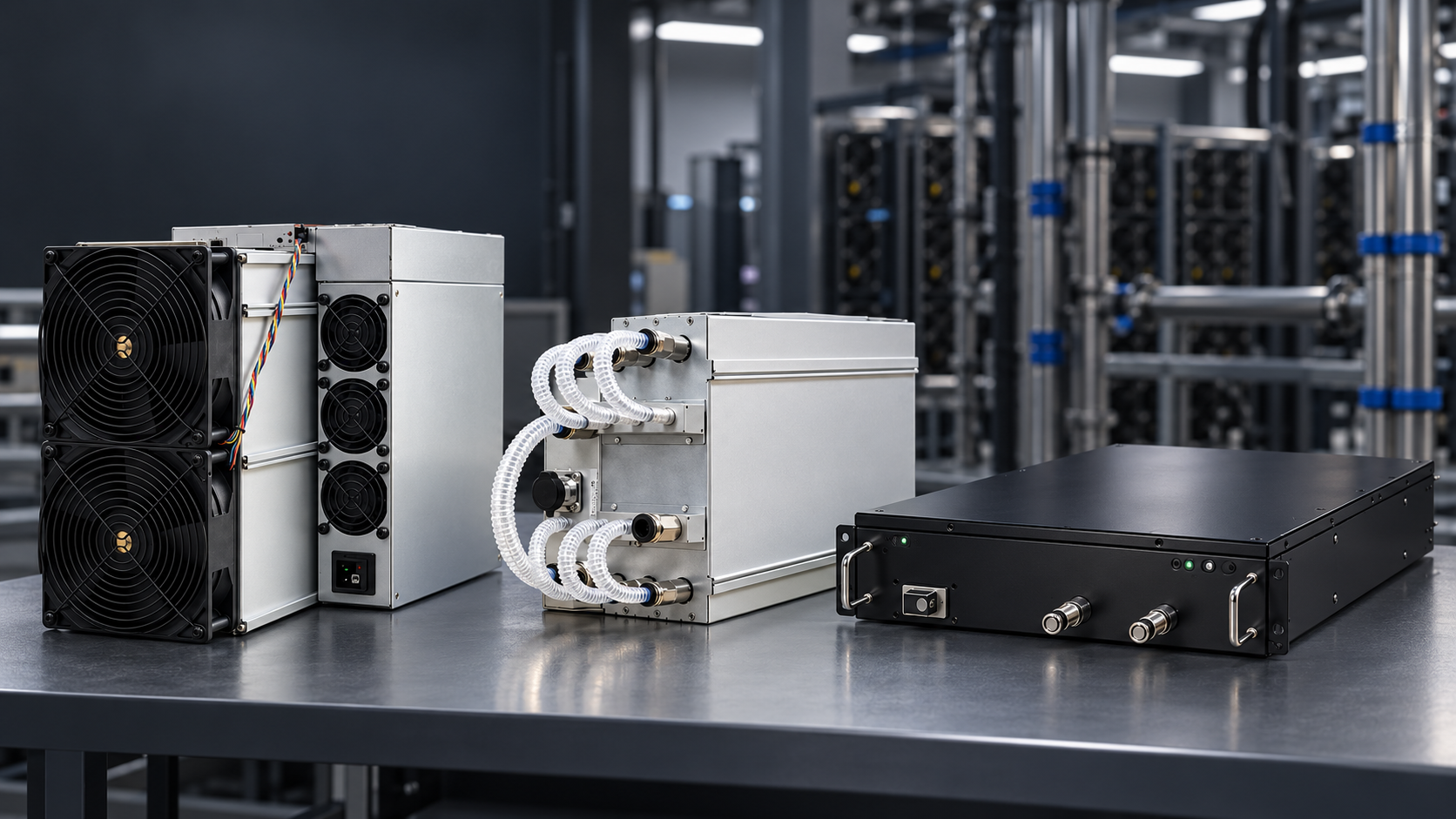
Bitmain Antminer S21- och S21 Pro-serien samt MicroBT Whatsminer M60-serien representerar det nuvarande toppskiktet. Dessa maskiner levererar 200–300+ TH/s med rimlig effektivitet (17–21 J/TH). Mer hashrate = bättre odds, enkelt och tydligt.
Hemvänliga mini-brytare
För hobbyister som vill delta utan buller och värme från en fullskalig datacenterbrytare är mini Bitcoin miners som NerdAxe eller Bitaxe värda att utforska. De körs tyst, förbrukar minimal ström (under 20W) och är genuint roliga att köra hemma. Dina odds att hitta ett block är astronomiskt låga, men elkostnaden är lika liten — och upplevelsen av att köra din egen nod är verklig.
Mellanklass-alternativ
Bitmain Antminer S23 Hyd 3U erbjuder imponerande hashrate med flytande kylning — idealisk om du bygger en liten hemuppställning med seriösa ambitioner. Effektiv hårdvara minskar din break-even-elkostnad och ger dig mer hashrate per investerad euro.
Är Solo Mining Lönsamt 2026?
Lönsamhet beror på fyra variabler: Bitcoin-priset, mining-svårighetsgraden, din hashrate och din elkostnad. I Europa ligger hushållselen på €0,20–0,35/kWh i de flesta länder, vilket gör marginaleffektivitet avgörande.
Vid €0,25/kWh kostar en 3 500W-brytare ungefär €2 100/år i el. Om Bitcoin handlas till €80 000 och du hittar ett block per år (vilket skulle kräva extraordinär tur eller enorm hashrate) tjänar du 3,125 BTC = €250 000 — uppenbart lönsamt. Men det är jackpot-scenariot.
Den realistiska bilden: behandla solo mining som en långvarig lottolott. Ditt förväntade värde per dag är litet, men inte noll. Om du redan kör en brytare för pool mining kostar det dig ingenting extra att ibland rikta den mot en solo-pool, och du får en liten chans till en mycket större belöning.
Många europeiska hembrytare använder en hybridstrategi: pool mine större delen av tiden för förutsägbar inkomst och byter ibland till solo mining när de vill chansa på den fulla belöningen.
Slutsats: Bör du Solo Mina 2026?
Solo mining är inte en tillförlitlig inkomststrategi för de flesta hembrytare — oddsen är helt enkelt för långa. Men som hobby, experiment eller ett sätt att delta meningsfullt i Bitcoin-nätverket har det verklig dragningskraft. Spänningen i att köra din egen nod, den lilla men reella chansen till en livsförändrande blockbelöning, och tillfredsställelsen av att bryta utan att ge en andel till en pooloperatör — dessa saker har värde utöver rena vinstberäkningar.
Om du har effektiv hårdvara, låga elkostnader och tålamodet att spela ett långt spel är solo mining värt att utforska. Börja med att förstå dina siffror, välja rätt hårdvara och ansluta till en seriös solo mining-pool som låter dig behålla 100 % av varje block du hittar.
Redo att utforska dina alternativ? Bläddra bland vårt urval av hembrytare och professionella ASIC-brytare, eller kontakta oss om du behöver hjälp att välja rätt uppställning för solo mining 2026.
Vanliga frågor
Vad är Bitcoin solo mining?
S: Bitcoin solo mining innebär att du riktar din ASIC-brytares fulla hashrate mot Bitcoin-nätverket självständigt — utan att gå med i en pool — i hopp om att hitta ett block själv och göra anspråk på den fulla blockbelöningen på 3,125 BTC (plus transaktionsavgifter). I och med Q1 2026 är blockbelöningen värd ungefär €250 000–€280 000 vid nuvarande BTC-priser. (Källa: Bitcoin-protokollet, efter halveringen i april 2024.)
Vilka är de verkliga oddsen för att solo mina ett Bitcoin-block 2026?
S: Vid en nätverks-hashrate på ungefär 800 EH/s (i Q1 2026, källa: mempool.space) har en enda Antminer S21 XP (270 TH/s) en solo-blocksannolikhet på ungefär 1 på 2 963 000 per block — statistiskt sett ungefär en gång vart 17 000 år. Med 100 TH/s (en Goldshell SC-Box) kan du förvänta dig ett block ungefär en gång vart 46 000 år. Solo mining bör därför behandlas som en lottolott, inte en primär inkomststrategi.
Vilken är den bästa poolen för solo Bitcoin mining?
S: CKPool Solo (ckpool.org) är den mest populära solo mining-poolen — noll avgift, betalar full blockbelöning när du vinner. OCEAN Pool decentraliserar blockkonstruktionen med Stratum V2. Public Pool (public-pool.io) är helt öppen källkod och tillståndsfri. Följ solo-blockfynd i realtid över alla pooler på SoloBlocks.io.
Kan hembrytare realistiskt sett solo mina Bitcoin 2026?
S: Ja — tekniskt sett kan vilken brytare som helst peka mot en solo-pool. NerdQAxe+ Ultra (2,1 TH/s, 25W) och BitAxe Gamma (1,2 TH/s, 15W) är populära enheter för hembaserad solo mining just eftersom de körs nästan ljudlöst, förbrukar nästan ingen el och deltar i lotteriet till minimal kostnad. Flera hembrytare hittade block med enheter under 10 TH/s under 2025. Använd kalkylatorn för solo mining-sannolikhet för att uppskatta dina specifika odds.
Hur jämförs solo mining med pool mining ekonomiskt?
S: Pool mining ger dig små, förutsägbara dagliga utbetalningar proportionella mot ditt hashrate-bidrag. Solo mining ger dig noll inkomst det mesta av tiden, sedan en enorm vinst om du hittar ett block. För brytare som förlitar sig på brytnngsinkomst för att täcka elkostnaderna är pool mining det enda hållbara alternativet. Solo mining är meningsfullt som en sekundär allokering — lågeffekts-, lågkostnadsenheter som körs parallellt med dina huvudsakliga poolbrytare.
Vilken hashrate behöver du för att solo mina Bitcoin lönsamt 2026?
S: Det finns ingen hashrate som gör solo mining statistiskt "lönsamt" i traditionell mening — det är alltid hög varians. Men vid 1 PH/s (1 000 TH/s) sjunker din förväntade tid för att hitta ett block till ungefär 4,5 år. Vid 10 PH/s, ungefär 162 dagar. De flesta hembrytare behandlar solo som underhållning — elkostnaden för att köra en NerdQAxe (25W) ett helt år är under €22 med europeiska elpriser.
Var kan jag köpa Bitcoin-hembrytare lämpliga för solo mining i Europa?
S: Mineshop.eu har NerdQAxe+, BitAxe, Avalon Nano 3S och andra hembrytare i lager. De flesta beställningar skickas från Irland och Lettland. Mineshop har försett EU-brytare med äkta hårdvara och snabb DHL/FedEx-leverans sedan 2016.