



Großflächige ASIC-Deployment: Rack-Dichte, PDU-Planung, Kühlung
Die meisten Miner, die von einer einzelnen Einheit zu einem Rack mit zehn oder mehr Maschinen wechseln, stellen innerhalb des ersten Monats dasselbe fest: Die Hardware war nie das Problem. Die Netzstromversorgung, der Luftstrom und das physische Layout – das sind die Probleme. Und sie verstärken sich gegenseitig auf eine Weise, die wirklich gefährlich werden kann, wenn die Planung ausbleibt.
Eine großflächige ASIC-Deployment bezeichnet jede Konfiguration, bei der mehrere Hochleistungs-Miner eine gemeinsame Strominfrastruktur teilen – typischerweise ab 5–10 Einheiten mit jeweils über 3.000W – wobei Rack-Dichte, PDU-Kapazität und Wärmemanagement aktiv geplant und nicht improvisiert werden müssen. Der Ausfallpunkt ist fast nie der Miner selbst. Es ist der 32A-Stromkreis, der vier Maschinen versorgt, obwohl er nur drei tragen sollte – in einer Anlage, in der die Umgebungstemperatur im Juli 34°C erreicht.
Dieser Artikel richtet sich an Miner, die von Hobby-Setups zu etwas Durchdachterem wechseln – einem dedizierten Raum, einem Schiffscontainer oder einer gemieteten Industrieeinheit. Die Zahlen hier sind real. Die Fehler sind solche, die wir europäischen Minern immer wieder beobachtet haben.
Was wir behandeln
- Rack-Dichte: Wie viele Miner passen wirklich hinein?
- PDU-Planung für großflächige ASIC-Deployments
- Kühlarchitektur: Der Teil, den die meisten Anleitungen überspringen
- Welche Miner sind im großen Maßstab in Europa derzeit sinnvoll?
- Was Sie klären müssen, bevor Sie die zweite Einheit kaufen
- Häufig gestellte Fragen
Rack-Dichte: Wie viele Miner passen wirklich hinein?
Der Instinkt ist, so viele Einheiten wie möglich in einen gegebenen Raum zu packen. Verständlich. Aber die Rack-Dichte bei einer großflächigen ASIC-Deployment ist nicht nur eine Frage der physischen Abmessungen – es ist in erster Linie ein Problem des Wärmebudgets und erst an zweiter Stelle ein Problem des Strombudgets.
Ein Standard-19-Zoll-Rack kann physisch viele ASICs aufnehmen. In der Praxis sollten Sie niemals mehr als 80% der theoretischen Dichte einplanen. Der Grund: ASIC-Miner saugen Luft von vorne an und blasen heiße Luft nach hinten aus. Werden Einheiten zu eng gestapelt – oder speist der Abluft einer Reihe die Ansaugluft der nächsten –, beginnen Ihre Hash-Boards innerhalb von Minuten zu drosseln. Die Bitmain Antminer-Serie beispielsweise reduziert die Hashrate automatisch, sobald die Chip-Temperaturen 85°C überschreiten. Das klingt nach einer Sicherheitsfunktion. Und das ist es auch. Aber es ist gleichzeitig ein stiller Gewinnverlust, den Sie möglicherweise wochenlang nicht bemerken.
Eine praktische Faustregel für Open-Frame-Rack-Deployments: Lassen Sie mindestens 1U Abstand zwischen den Miner-Einheiten, halten Sie einen Mindestabstand von 600mm im Heißgang hinter dem Rack ein und betreiben Sie die Ansaugluft niemals über 25°C, wenn Sie die Nennleistung erreichen möchten. In südeuropäischen Sommerbedingungen – Zypern, Malta, Süditalien – überschreiten die Umgebungstemperaturen diesen Wert regelmäßig ohne Eingreifen.
Denken Sie über Container-Mining nach?
Dedizierte Mining-Container lösen das Dichteproblem auf andere Weise. Sie sind mit festen Luftstrompfaden und vorberechneten Leistungsverteilungen ausgelegt, was viel Rätselraten bei der großflächigen ASIC-Deployment beseitigt. Wenn Sie 20+ Einheiten planen, lohnt es sich, einen Container ernsthaft zu kalkulieren, bevor Sie sich für den Ausbau eines Raums entscheiden.
PDU-Planung für großflächige ASIC-Deployments
Hier überspringen die meisten Mining-Anleitungen den schwierigen Teil – was frustrierend ist, denn die PDU-Planung ist das, was am ehesten jemanden gefährdet oder aus einem Mietvertrag herausbringt.
Jeder ASIC-Miner zieht Strom bei einer Rate, die eine saubere, stabile 240V-Versorgung voraussetzt (in Europa typischerweise 230V ±10%). Das eigentliche Problem ist die Dauerlast. Ein Miner mit 3.500W Nennleistung zieht nicht gelegentlich 3.500W – er zieht diese Leistung kontinuierlich, 24 Stunden am Tag, 365 Tage im Jahr. Die NEC-80%-Regel – die europäische Elektrovorschriften widerspiegeln – bedeutet, dass ein 32A-Stromkreis bei 230V (7.360W verfügbar) nicht mehr als 5.888W Dauerlast tragen sollte. Das sind ungefähr eineinhalb 3.500W-Miner pro 32A-Sicherungsautomat. Nicht zwei. Nicht drei.
Für eine 10-Einheiten-Deployment mit Maschinen, die jeweils ~3.500W ziehen (35.000W gesamt), benötigen Sie mindestens sieben dedizierte 32A-Stromkreise, idealerweise acht. Sie benötigen eine dreiphasige 400V-Versorgung, um die Last auf alle Phasen zu verteilen, ohne eine einzelne Phase zu überlasten. Und Sie benötigen PDUs – Power Distribution Units – mit Überwachung pro Steckdose. Keine einfachen Steckdosenleisten-PDUs. Überwachte PDUs, die Ihnen die Stromstärke pro Steckdose in Echtzeit anzeigen, damit Sie einen Miner erkennen können, der 10% über der Nennleistung zieht, bevor er um 2 Uhr morgens einen Sicherungsautomaten auslöst.
Spannungsabfall ist real
Wenn Ihre Kabelwege lang sind – mehr als 10 Meter vom Verteilerkasten zur PDU – wird der Spannungsabfall zu einem messbaren Problem. Unterdimensionierte Kabel (beispielsweise 2,5mm² statt 4mm² bei einem 32A-Stromkreis) können Ihre Versorgungsspannung unter Last auf 215V absenken. Die meisten Miner kommen damit zurecht, aber der Wirkungsgrad verschlechtert sich. Das sollten Sie wissen, bevor Sie Kabel beim günstigsten Anbieter kaufen.
Kühlarchitektur: Der Teil, den die meisten Anleitungen überspringen
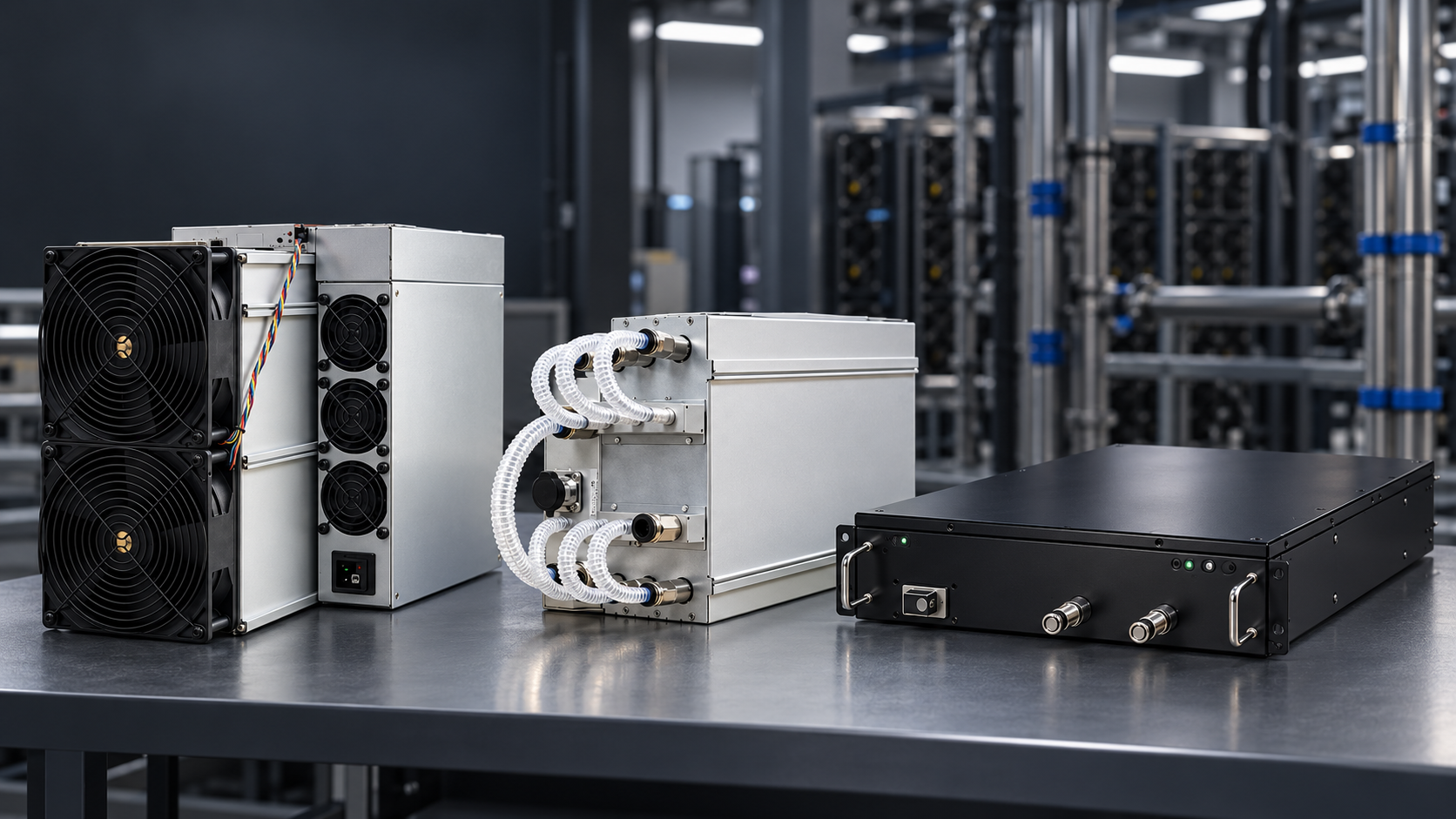
Luftkühlung ist der Standard für großflächige ASIC-Deployments in Europa. Immersionskühlung gewinnt bei großen Anlagen an Bedeutung, aber die Vorabkosten – spezielles Dielektrikum, Tanks, Pumpen, Wärmetauscher – machen sie für die meisten Betriebe unter 50 Einheiten unerschwinglich. Konzentrieren wir uns also auf das, was tatsächlich umsetzbar ist.
Heiß-/Kaltgang-Containment ist ab 10 Einheiten unverhandelbar. Das Prinzip ist einfach: Alle Miner-Ansaugöffnungen zeigen zum Kaltgang (wo kühle Luft eintritt), alle Abluftöffnungen zeigen zum Heißgang (wo heiße Luft austritt). Die beiden Luftströme dürfen sich niemals vermischen. Wenn sie es tun, steigt Ihre effektive Ansaugtemperatur und der Wirkungsgrad bricht ein. Das lässt sich nicht mit mehr Lüftern beheben. Sie beheben es durch physische Trennung – Vorhänge, Paneele oder einen vollständig abgetrennten Heißgang, der direkt nach außen oder in eine Kühleinheit abgeführt wird.
Für Wärmeberechnungen: Jedes Kilowatt Leistung, das ein Miner verbraucht, wird zu ungefähr einem Kilowatt Wärmeabgabe (die Umwandlung liegt nahe bei 1:1 mit geringer Abweichung). Eine 10-Einheiten-Deployment mit 35kW Dauerbetrieb erzeugt 35kW Wärme, die das Gebäude verlassen muss. In Irland oder den Niederlanden machen die Umgebungstemperaturen im Winter dies fast kostenlos – passive Abfuhr nach außen funktioniert von Oktober bis April problemlos. In einer deutschen Industriehalle im August benötigen Sie aktive Kühlung. Budgetieren Sie dafür.
Nach unserer Erfahrung beim Versand an Kunden in 27 EU-Ländern ist der größte Fehler in dieser Phase die Unterschätzung der Abluftkapazität. Miner installieren ausreichend Ansaugluftstrom, vergessen aber, dass heiße Luft einen gleichwertigen oder größeren Abluftweg benötigt. Ein Abluftventilator mit einem CFM-Wert unterhalb der kombinierten Leistung Ihrer Miner, und der Raum füllt sich innerhalb einer Stunde mit rezirkulierter Hitze.
Welche Miner sind im großen Maßstab in Europa derzeit sinnvoll?
Nach dem Halving im April 2024, mit einer Blockbelohnung von jetzt 3,125 BTC und einer Netzwerk-Hashrate von ungefähr 800–1.000 EH/s, ist Effizienz wichtiger als rohe Hashrate. Bei €0,25/kWh – ungefähr dem EU-Durchschnitt (Eurostat, Q4 2025) – verdient ein weniger effizienter Miner nicht nur weniger. Er macht Verlust. Im großen Maßstab verstärkt sich diese Lücke schnell.
Für SHA-256 Bitcoin-Mining dominieren die Bitmain Antminer-Reihe und die Whatsminer-Serie ernsthafte Deployments. Für alternatives Algorithm-Mining im großen Maßstab bieten Optionen wie der Bitmain Antminer Z15 Pro mit 820ksol/s starke Effizienz bei Equihash, und der Bitmain Antminer X9 XMR RandomX ASIC Miner ist für Monero-basierte Deployments erwägenswert, wo Wärme pro Watt geringer und der Lärmpegel wichtiger ist.
| Miner | Algorithmus | Hashrate | Stromverbrauch | Effizienz |
|---|---|---|---|---|
| Antminer Z15 Pro | Equihash | 820 ksol/s | ~2.650W | 3,23 W/ksol |
| Antminer X9 XMR | RandomX | ~1 MH/s | ~1.200W | Geringe Wärme pro Einheit |
| Goldshell AE Box Pro | Aleo / PoSW | 44 MH/s | ~230W | 5,2 W/MH |
Rentabilitätsdaten von asicminersprofitability.com sollten Ihre erste Anlaufstelle sein, bevor Sie eine Hardware-Bestellung abschließen. Die Margen bei €0,25/kWh sind real, aber bei älteren Maschinen dünn. Ehrliche Antwort: Wenn Ihr Strompreis €0,28/kWh übersteigt – wie es bei vielen deutschen Privatkunden der Fall ist – macht nur die effizienteste Hardware der aktuellen Generation im großen Maßstab Sinn. Der Rest ist eine Last, die Sie tragen.
Mineshop.eu beliefert europäische Miner seit 2016 mit echter ASIC-Hardware und schneller DHL/FedEx-Lieferung in alle EU-Länder; die meisten Bestellungen werden aus Irland und Lettland versandt.
Was Sie klären müssen, bevor Sie die zweite Einheit kaufen
Die Hardware-Entscheidung ist die letzte Entscheidung, nicht die erste. Bevor Sie ein ganzes Rack voller ASICs bestellen, brauchen Sie bestätigte Antworten auf vier Fragen: Wie hoch ist Ihr Stromtarif, schriftlich, einschließlich etwaiger Leistungsgebühren ab einem bestimmten kW-Schwellenwert? Wie groß ist Ihre dreiphasige Versorgungskapazität an dem Standort? Wie hoch ist Ihre maximal zulässige Dauerlast pro Stromkreis? Und wie hoch ist die Spitzenumgebungstemperatur im heißesten Monat des Jahres an diesem Standort?
Klären Sie diese vier Zahlen. Dann spezifizieren Sie Ihre PDUs, dann planen Sie Ihren Luftstrom, dann wählen Sie Ihre Miner. Tun Sie es in umgekehrter Reihenfolge und Sie werden Geld damit verbringen, Infrastruktur zu korrigieren, anstatt mehr Hardware zu kaufen.
Für Miner, die sich auf ernsthafte Multi-Einheiten-Setups zubewegen, ist das Durchstöbern des vollständigen Sortiments im ASIC-Miner-Katalog von Mineshop ein guter Ausgangspunkt – filtern Sie nach Wattleistung und Algorithmus, um Ihre Infrastrukturbeschränkungen abzugleichen, bevor Sie sich in ein Datenblatt verlieben. Und wenn Sie noch früher in der Planung sind und noch nicht bereit für eine vollständige Rack-Deployment, bietet die Home-Miner-Kategorie Optionen, die sanfter skalieren. Fragen zu spezifischen Deployment-Szenarien? Kontaktieren Sie das Mineshop-Team direkt – wir haben die meisten dieser Situationen bereits erlebt.
Häufig gestellte Fragen
Wie viele ASIC-Miner kann ich an einem einzigen 32A-Stromkreis in Europa betreiben?
A: Bei 230V stellt ein 32A-Stromkreis maximal 7.360W bereit. Unter Anwendung der standardmäßigen 80%-Dauerlastregel sollten Sie nicht mehr als 5.888W Dauerlast überschreiten. Bei Minern mit je 3.500W bedeutet das einen Miner pro 32A-Stromkreis mit sicherem Spielraum, oder höchstens zwei Miner an einem 32A-Stromkreis, wenn beide weniger als 2.900W ziehen. Lassen Sie Ihre spezifische Installation immer von einem qualifizierten Elektriker prüfen. (Quelle: Bitmain.com, 2026)
Welche Umgebungstemperatur ist für eine großflächige ASIC-Deployment korrekt?
A: Die Ansauglufttemperatur für die meisten kommerziellen ASIC-Miner sollte für Nennleistung unter 25°C gehalten werden. Bei Ansaugtemperaturen über 35°C ist eine Hashrate-Drosselung wahrscheinlich und die Hardware-Lebensdauer nimmt messbar ab. Für Deployments in Südeuropa während des Sommers ist aktive Kühlung keine Option – sie ist eine Voraussetzung.
Benötige ich Drehstrom für ein Multi-Miner-Setup?
A: Für kleine Setups unter 5 Einheiten nicht unbedingt erforderlich, aber für 10+ Miner mit je über 3.000W ist eine dreiphasige 400V-Versorgung dringend empfohlen. Sie verteilt die Last auf drei Phasen, reduziert den Spitzenstrom pro Phase und vermeidet die Überlastung einer Einphasenversorgung. Die meisten europäischen Industrie- und Gewerbeimmobilien haben Drehstromanschluss – Wohnimmobilien in der Regel nicht ohne ein Netz-Upgrade.
Was ist Heiß-/Kaltgang-Containment und brauche ich es?
A: Heiß-/Kaltgang-Containment ist eine physische Layoutmethode, bei der alle Miner-Ansaugöffnungen zu einem Gang zeigen (dem Kaltgang, der mit Frischluft versorgt wird) und alle Abluftöffnungen zum gegenüberliegenden Gang zeigen (dem Heißgang, der nach außen oder zu einer Kühleinheit entlüftet wird). Ohne Containment zirkuliert heiße Abluft in die Ansaugöffnungen zurück und die Ansaugtemperaturen steigen. Für Deployments über 10 Einheiten ist Containment der Unterschied zwischen stabiler Leistung und ständiger thermischer Drosselung.
Lohnt sich Immersionskühlung für eine 20-Einheiten-ASIC-Deployment in Europa?
A: Bei 20 Einheiten ist Immersionskühlung für die meisten Betreiber finanziell schwer zu rechtfertigen. Die Hardware-Kosten – Dielektrikum bei ungefähr €5–8 pro Liter, maßgefertigte Tanks, Pumpen und Wärmetauscher – belaufen sich typischerweise auf €15.000–€30.000 Einrichtungskosten, bevor ein einziger Miner in den Tank kommt. Immersionskühlung beginnt bei 50+ Einheiten oder in Situationen, wo Lärm und Platz stark eingeschränkt sind, wie in städtischen Gewerbeobjekten, finanziell sinnvoll zu werden. Luftkühlung mit ordnungsgemäßem Containment ist die praktische Antwort für die meisten europäischen Deployments unterhalb dieser Schwelle.
Wie wirkt sich das Halving vom April 2024 auf die Wirtschaftlichkeit großflächiger ASIC-Deployments in Europa aus?
A: Das Halving vom April 2024 reduzierte die Blockbelohnung von 6,25 BTC auf 3,125 BTC. Mit einer Netzwerk-Hashrate von derzeit 800–1.000 EH/s und EU-Stromkosten von durchschnittlich €0,20–0,30/kWh (Eurostat, Q4 2025) erzielen im großen Maßstab nur hocheffiziente Maschinen zuverlässige Margen. Der Einsatz älterer Hardware bei €0,25/kWh oder darüber führt in den meisten Monaten zu negativen Margen. Im großen Maßstab summiert sich jeder Prozentpunkt Effizienzgewinn über alle Maschinen der Deployment – die Hardware-Auswahl war noch nie so entscheidend.
Comments (0)