


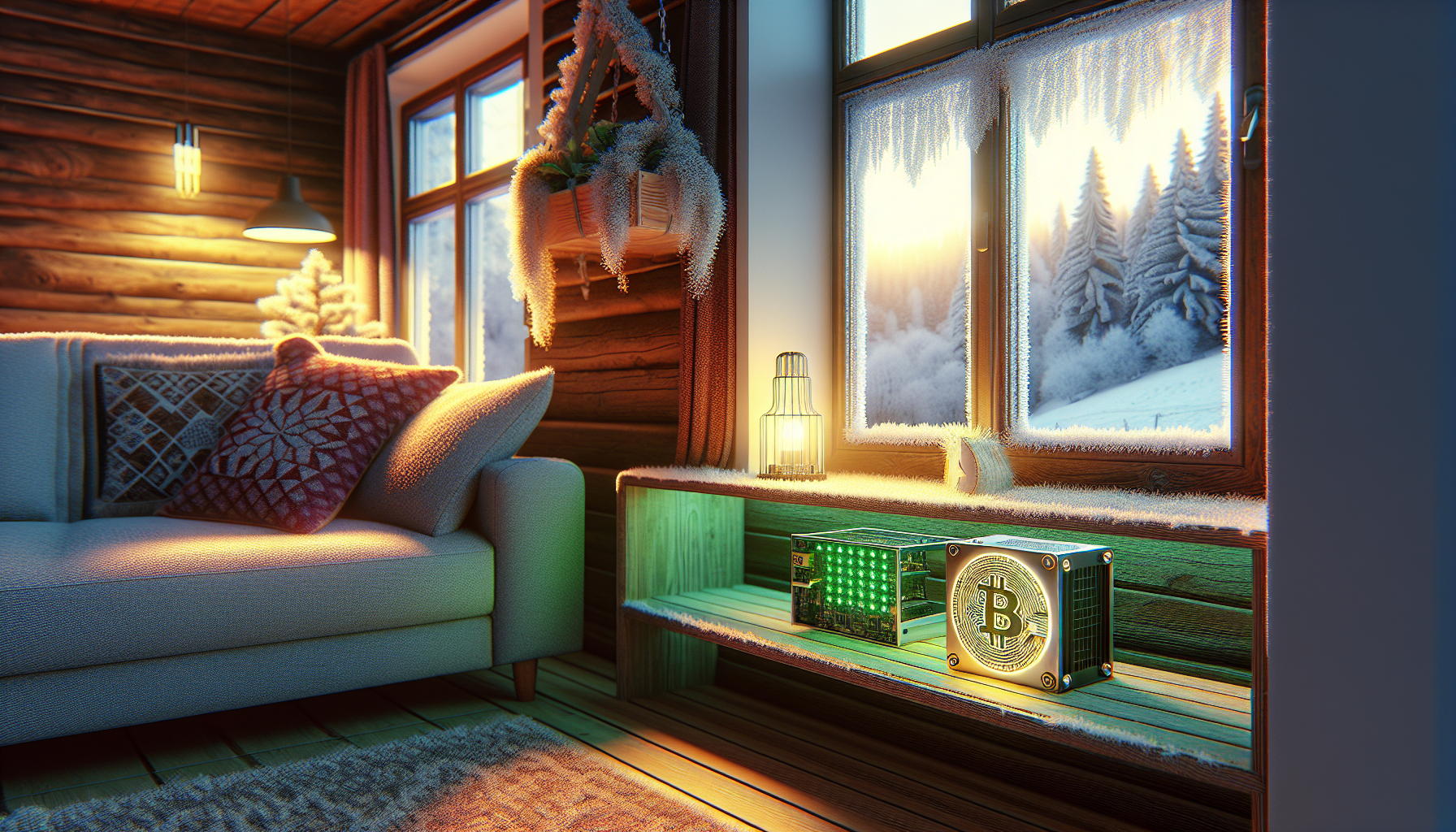
Et si votre facture de chauffage se payait elle-même en Bitcoin ? Cela paraît trop beau pour être vrai, mais des milliers de mineurs européens à domicile font exactement cela — ils font tourner un mineur ASIC compact dans leur salon, chambre ou bureau à domicile, utilisent la chaleur produite pour chauffer la pièce et accumulent des récompenses Bitcoin.
En 2026, avec la hausse des coûts d'électricité et le hashrate Bitcoin à des niveaux record, la stratégie du mineur ASIC comme chauffage domestique n'a jamais eu autant de sens. Ce guide couvre tout ce que vous devez savoir : comment cela fonctionne, quels mineurs sont les mieux adaptés au chauffage, les coûts réels et comment démarrer dès aujourd'hui.
Ce que nous couvrons
- Comment les mineurs ASIC produisent de la chaleur
- Meilleurs mineurs ASIC pour le chauffage domestique en 2026
- Coûts réels : électricité vs récompenses Bitcoin
- Comment configurer votre radiateur Bitcoin
- Conseils sur le bruit et le placement
Comment les mineurs ASIC produisent de la chaleur
Chaque watt d'électricité consommé par un mineur ASIC est converti presque entièrement en chaleur. Contrairement à un radiateur électrique traditionnel qui brûle de l'énergie uniquement pour la chaleur, un mineur ASIC fait deux choses à la fois : il hache la blockchain Bitcoin et rayonne cette énergie sous forme de chaleur dans votre pièce.
Un mini mineur de 60 watts comme l'Avalon Nano 3S produit à peu près la même chaleur qu'une ampoule à incandescence de 60 watts — suffisant pour réchauffer une petite pièce. Une unité de 300 watts chauffe confortablement une chambre ou un bureau à domicile pendant un froid hiver européen. L'idée clé est simple : l'électricité que vous auriez dépensée pour un radiateur électrique génère maintenant aussi du Bitcoin.
La physique du chauffage gratuit
Les radiateurs à résistance traditionnels ont un rendement de 100 % — chaque watt devient chaleur. Les mineurs ASIC sont également proches de 100 % d'efficacité en termes de chaleur produite, car pratiquement toute l'énergie électrique finit par devenir énergie thermique. La différence est qu'avec un mineur, vous obtenez un sous-produit utile : du Bitcoin. Même de petites récompenses de minage compensent votre coût d'électricité au fil du temps.
Meilleurs mineurs ASIC pour le chauffage domestique en 2026
Tous les mineurs ne conviennent pas à un espace de vie. Les unités industrielles comme l'Antminer S21 consomment 3 500 watts et font un bruit de réacteur d'avion — pas idéal pour une chambre. La plage optimale pour le chauffage domestique est la plage 50–400 watts, où les mini mineurs modernes fonctionnent silencieusement et efficacement.
Avalon Nano 3S — Meilleur polyvalent
L'Avalon Nano 3S fonctionne à environ 140 watts, produit environ 4 TH/s de hashrate Bitcoin et fonctionne à des niveaux sonores agréables pour un bureau ou une étagère. C'est l'un des mineurs de chauffage domestique les plus populaires en Europe en 2026, combinant une véritable production de chaleur avec une participation constante au solo mining. Parcourez la gamme Avalon Nano chez Mineshop.
NerdOctaxe — Open-source et silencieux
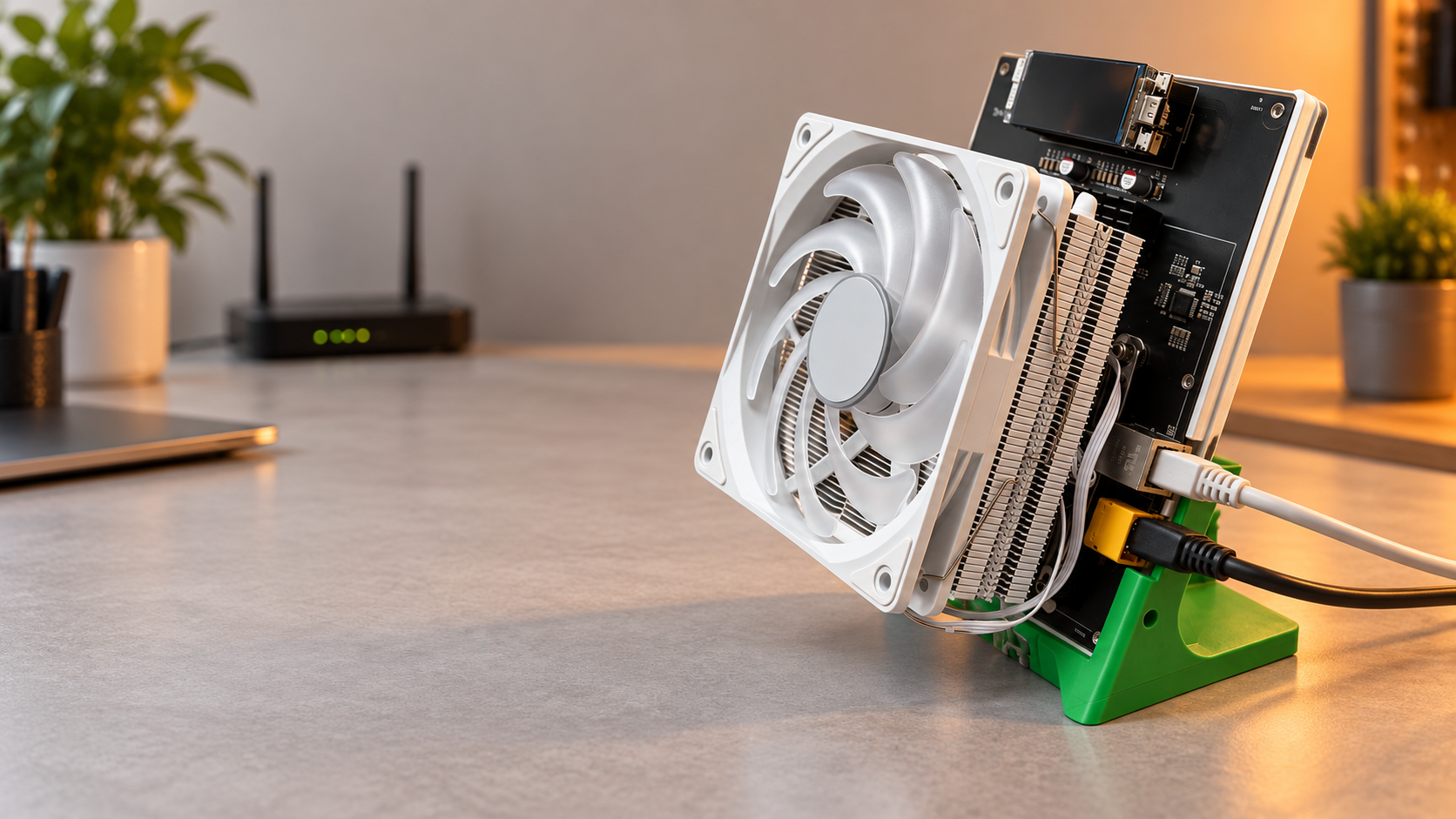
Pour ceux qui veulent un contrôle total et un appareil soutenu par la communauté, le NerdOctaxe est un excellent choix. Fonctionnant à environ 80–120 watts avec un firmware open-source (AxeOS), il peut être réglé pour une efficacité maximale. Son facteur de forme compact tient sur une étagère et le bruit du ventilateur est bien dans les limites confortables d'un espace de vie. Consultez la collection complète de mini mineurs chez Mineshop.
NerdQaxe++ — Haute puissance pour les grandes pièces
Si vous souhaitez chauffer une pièce plus grande ou un bureau à domicile, le NerdQaxe++ monte à 200–300 watts selon la configuration. Cet appareil open-source à quatre puces fonctionne sous AxeOS et se connecte directement aux pools de solo mining public. Il produit une chaleur significative pour une pièce de taille moyenne tout en contribuant un hashrate sérieux au réseau Bitcoin.
Coûts réels : électricité vs récompenses Bitcoin
La réponse honnête sur la rentabilité du chauffage par minage domestique dépend de votre tarif d'électricité. À la moyenne européenne d'environ €0,20/kWh, un mineur de 140 watts comme l'Avalon Nano 3S coûte environ €0,67 par jour — soit environ €20 par mois, comparable à un petit radiateur électrique.
Les récompenses Bitcoin varient en fonction de la chance et du hashrate. Utilisez le calculateur de rentabilité des mineurs ASIC pour estimer les rendements attendus pour votre appareil spécifique. Avec un appareil de 4 TH/s, l'espérance statistique est modeste — mais parfois, un mineur domestique trouve un bloc et remporte la récompense complète de 3,125 BTC.
Le bon état d'esprit
Les mineurs domestiques les plus satisfaits le considèrent comme un remplacement du chauffage, pas comme un moyen de s'enrichir rapidement. Si vous alliez de toute façon dépenser €20/mois en électricité pour un radiateur, faire fonctionner un mineur ASIC signifie que ces mêmes €20 vous achètent aussi des billets de loterie sur le réseau Bitcoin. La chaleur est gratuite — le minage est le bonus.
Comment configurer votre radiateur Bitcoin
Démarrer est plus simple que la plupart des gens ne le pensent. Voici le processus pour un mini mineur fonctionnant sous AxeOS (Avalon Nano, NerdOctaxe, NerdQaxe++) :
- Mise sous tension — brancher l'alimentation et se connecter à votre réseau WiFi.
- Ouvrir AxeOS — trouver l'adresse IP du mineur sur votre routeur et l'ouvrir dans un navigateur.
- Définir votre pool — entrer
public-pool.iocomme hôte du pool, port21496. - Entrer votre adresse BTC — coller votre adresse de portefeuille dans le champ Stratum User suivi de
.miner1. - Sauvegarder et miner — le mineur se connecte en quelques secondes. La production de chaleur commence immédiatement.
Aucun logiciel à installer, aucune connaissance technique requise. Des questions ? Contactez l'équipe Mineshop — nous aidons les clients à s'installer tous les jours.
Conseils sur le bruit et le placement
Les mini mineurs sont bien plus silencieux que les ASICs industriels, mais ils ne sont pas silencieux. Attendez-vous à un doux bourdonnement de ventilateur — similaire à un PC de bureau sous charge. Conseils pratiques de placement :
- Sous un bureau — la chaleur monte naturellement, le son est étouffé par les meubles.
- Sur une étagère — le garde hors du sol, améliore la circulation d'air, le son se fond dans l'arrière-plan.
- Loin des rideaux — l'air d'échappement est chaud ; gardez une distance avec tout ce qui est inflammable.
- Laisser 10 cm de dégagement — la circulation d'air libre sur les côtés d'entrée et de sortie est essentielle.
Prêt à chauffer avec Bitcoin ?
Le concept ASIC-comme-chauffage n'est plus une nouveauté — c'est un choix pratique et économique pour les mineurs européens à domicile en 2026. Parcourez notre gamme complète de mini mineurs Bitcoin et de mineurs ASIC Bitmain sur Mineshop.eu. Mineshop expédie la plupart des commandes depuis l'Irlande et la Lettonie dans toute l'Europe.
Pas sûr du modèle qui convient à la taille de votre pièce ou à votre tarif d'électricité ? Contactez-nous — nous trouverons le bon choix pour vous.