



Comment réduire le bruit d'un mineur ASIC à la maison : 7 conseils pratiques
Un Antminer S23 Hyd qui tourne dans votre chambre d'amis fait le même bruit qu'un Boeing 737 qui roule vers la piste. Ce n'est pas une métaphore — les mineurs ASIC industriels atteignent couramment 75 à 85 dB à un mètre, soit à peu près le même niveau qu'une tondeuse à essence fonctionnant en continu, 24 heures sur 24. La plupart des mineurs à domicile le découvrent à leurs dépens, environ 48 heures après avoir branché leur machine pour la première fois.
La bonne nouvelle : vous n'avez pas à choisir entre le minage et votre tranquillité d'esprit — ni celle de vos voisins. Il existe des moyens réels et pratiques de réduire le bruit d'un mineur ASIC à la maison, et la plupart coûtent moins qu'une facture d'électricité mensuelle. Certains ne coûtent absolument rien. Voici ce qui fonctionne vraiment.
Navigation rapide
- Pourquoi les mineurs ASIC sont si bruyants (et ce que cela signifie pour vous)
- 7 conseils pratiques pour réduire le bruit d'un mineur ASIC à la maison
- Quels mineurs sont vraiment assez silencieux pour un usage domestique ?
- Comparaison du bruit : mineurs adaptés à la maison vs mineurs industriels
- Conclusion
- Questions fréquemment posées
Pourquoi les mineurs ASIC sont si bruyants (et ce que cela signifie pour vous)
Le bruit d'un ASIC provient presque entièrement des ventilateurs. Les puces elles-mêmes sont silencieuses — mais elles génèrent une chaleur considérable par unité de surface, et la seule façon d'évacuer cette chaleur suffisamment rapidement est de pousser l'air à travers l'appareil à haute vitesse. Les ventilateurs d'un ASIC standard refroidi par air tournent à 4 000–6 000 RPM. À ces vitesses, il ne s'agit plus d'un bourdonnement. C'est un véritable rugissement.
Les décibels sont logarithmiques. Un mineur à 70 dB n'est pas légèrement plus bruyant qu'un mineur à 60 dB — il est dix fois plus intense pour vos oreilles. Faire tourner deux machines à 75 dB dans une chambre ne donne pas 150 dB ; le résultat est d'environ 78 dB. Cette distinction est importante lorsque vous planifiez votre installation. La plupart des immeubles d'appartements européens appliquent des règles acoustiques autour de 40–45 dB à l'intérieur d'un logement, ce qui signifie qu'un seul ASIC standard — entendu à travers une cloison — peut vous créer de sérieux problèmes avec votre propriétaire ou votre mairie.
Réduire le bruit d'un mineur à la maison n'est pas seulement une question de confort. Dans de nombreux pays de l'UE, notamment en Allemagne, aux Pays-Bas et en France, la réglementation sur le bruit résidentiel est appliquée et les amendes sont bien réelles.
7 conseils pratiques pour réduire le bruit d'un mineur ASIC à la maison
1. Choisissez dès le départ un mineur silencieux ou conçu pour un usage domestique
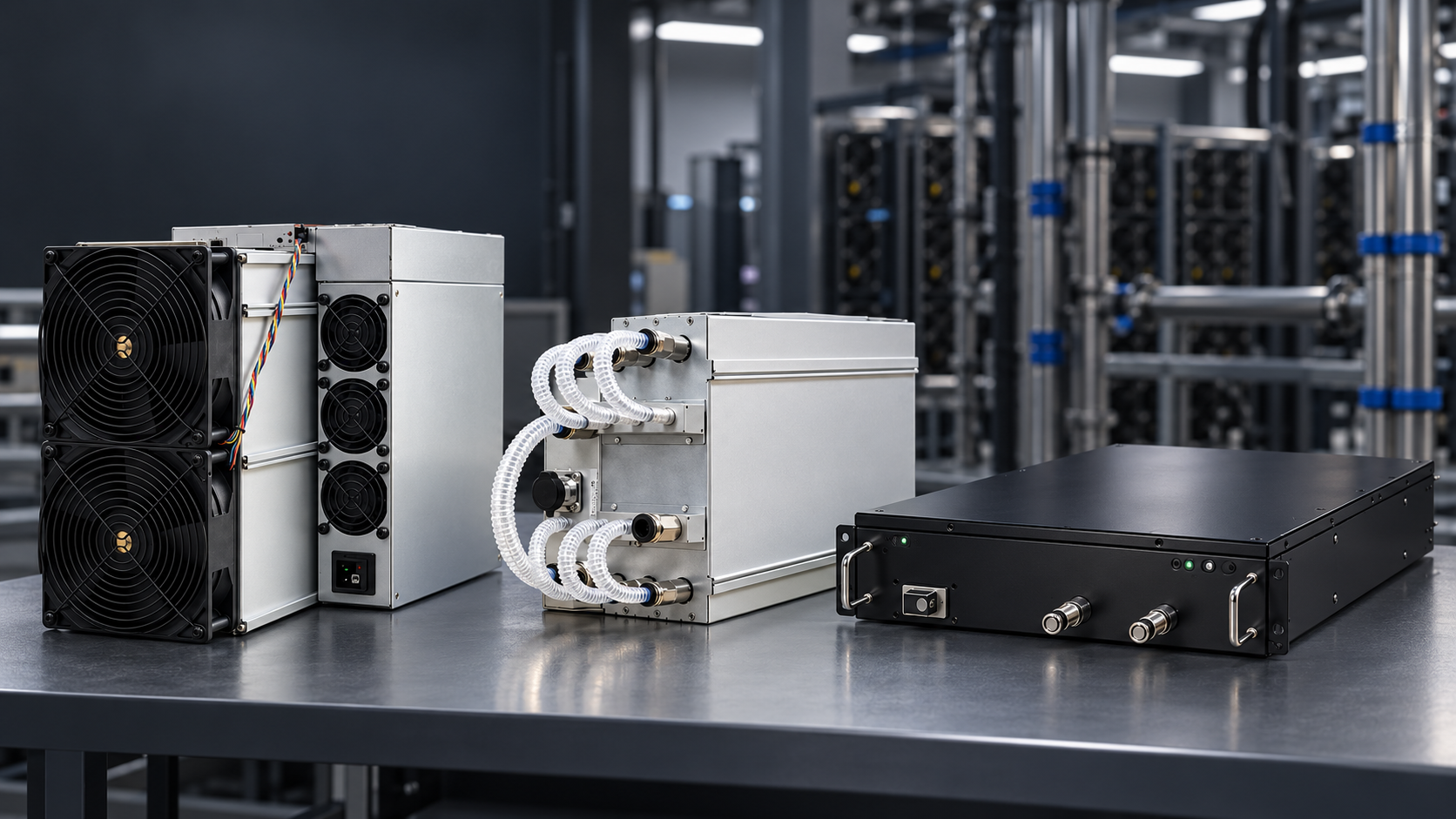
Honnêtement, c'est le point que la plupart des guides de minage ignorent complètement, ce qui est frustrant. Le moyen le plus simple de résoudre un problème de bruit ASIC est de ne pas acheter une machine bruyante au départ. Les mineurs refroidis par eau comme le Bitmain Antminer S23 Hyd utilisent le refroidissement liquide et fonctionnent nettement plus silencieusement que leurs homologues refroidis par air — moins de 45 dB dans une configuration adaptée — car le travail thermique intensif est assuré par l'eau, et non par des ventilateurs rugissants.
Pour les mineurs qui souhaitent quelque chose de vraiment adapté à un appartement, la catégorie des mini mineurs existe précisément pour cette raison. Des machines compactes, à faible consommation, conçues pour les environnements domestiques. Moins de revenus, certes. Mais moins de bruit, une consommation électrique réduite, et aucun risque d'expulsion.
2. Construisez ou achetez une enceinte insonorisée
Une enceinte bien construite peut réduire le bruit perçu de 15 à 25 dB. C'est la différence entre une tondeuse à gazon et une conversation. La physique est simple : la masse absorbe le son, les espaces d'air le réfléchissent, et la mousse acoustique dissipe le bruit haute fréquence des ventilateurs. Un caisson en contreplaqué recouvert de vinyle à masse chargée (MLV) à l'extérieur et de mousse acoustique de 50 mm à l'intérieur, avec une entrée et une sortie d'air pour la ventilation, peut contenir la majeure partie du bruit d'un ASIC.
L'erreur critique que les gens commettent avec les enceintes DIY est de bloquer la circulation d'air pour économiser sur les conduits. Ne faites pas cela. Un ASIC privé d'air frais va throttler, surchauffer et finir par tomber en panne. Vous avez besoin d'une ventilation active — un ventilateur de conduit en ligne qui extrait l'air chaud et le dirige vers l'extérieur (par une fenêtre, un conduit mural ou un espace sous les combles). Prévoyez environ €150–300 pour les matériaux si vous le faites vous-même. Des enceintes préfabriquées existent, mais elles sont onéreuses et rarement adaptées aux dimensions spécifiques des modèles ASIC.
3. Sous-voltez le mineur
Celui-ci surprend les gens. Vous pouvez réduire le bruit de votre mineur ASIC à la maison en faisant fonctionner la machine à une puissance réduite — le sous-voltage diminue la production de chaleur, ce qui signifie que les ventilateurs n'ont pas besoin de tourner aussi vite. Un mineur refroidi par air standard fonctionnant à 80 % de sa puissance nominale peut perdre 5 à 8 dB. C'est réellement perceptible. Vous perdrez un peu de hashrate, mais pas proportionnellement — l'efficacité s'améliore souvent à des tensions plus basses.
Le sous-voltage s'effectue via l'interface web du mineur ou via un firmware tiers comme BraiinsOS. À savoir avant de commencer : tous les modèles ASIC ne prennent pas en charge les firmwares personnalisés de la même façon, et certains fabricants annulent les garanties en cas de firmware modifié. Vérifiez avant de flasher.
4. Remplacez les ventilateurs d'origine
Les ventilateurs ASIC d'origine sont choisis pour un débit d'air maximal au coût minimal, et non pour le silence. Les ventilateurs aftermarket — notamment Noctua ou Delta de taille correspondante — peuvent déplacer des volumes d'air comparables à des RPM plus faibles, réduisant le bruit de 5 à 12 dB selon le modèle. La contrainte est que les emplacements de ventilateurs ASIC utilisent généralement des connecteurs 4 broches PWM, et vous aurez peut-être besoin d'adaptateurs. Le remplacement des ventilateurs sur un Antminer nécessite d'ouvrir l'appareil et annule la garantie. Mais si votre mineur est hors garantie, c'est l'une des modifications les plus impactantes que vous puissiez effectuer pour moins de €50.
5. Isolez les vibrations au point de fixation
La transmission des vibrations est sous-estimée comme source de bruit. Un ASIC posé directement sur une étagère en bois transmet des vibrations basse fréquence dans la structure du bâtiment — et ce bourdonnement se propage plus loin que le bruit des ventilateurs. Des patins anti-vibrations (les mêmes pieds en caoutchouc utilisés sous les machines à laver) placés sous chaque coin du mineur coûtent environ €8 et font une différence mesurable. Si vous montez plusieurs unités en rack, les supports d'isolation des vibrations entre le rack et le sol sont également importants.
6. Évacuez la chaleur hors de la pièce par conduit
Cela semble évident, mais cela présente un avantage acoustique au-delà de la simple gestion thermique. Si vous faites passer un conduit depuis l'échappement du mineur à travers un mur ou une fenêtre vers l'extérieur, vous pouvez partiellement enclore le mineur dans un simple déflecteur — réduisant ainsi le son qui s'échappe dans la pièce. Vous traitez essentiellement le conduit comme un canal acoustique qui dirige à la fois la chaleur et le bruit loin de votre espace de vie. Un conduit flexible de 150 mm et un adaptateur de fenêtre simple (courant dans les kits de ventilation de sèche-linge) vous permettent d'atteindre la plupart des objectifs pour moins de €30.
7. Délocalisez dans un espace séparé
Un garage, un abri de jardin ou une cave change tout. Non pas parce que le mineur devient plus silencieux, mais parce que vous n'avez pas à cohabiter avec lui. D'après notre expérience de livraisons vers des clients dans 27 pays de l'UE, les mineurs qui signalent la meilleure satisfaction à long terme font presque toujours tourner leurs machines quelque part physiquement séparé de leur espace de vie. Même un abri de jardin bien isolé avec une protection météo de base et une alimentation électrique depuis la maison résout entièrement le problème de bruit, et ouvre la voie à des machines plus grandes et plus rentables.
Quels mineurs sont vraiment assez silencieux pour un usage domestique ?
Le Goldshell AE Box Pro est l'une des options véritablement adaptées à la maison disponibles actuellement — 44 MH/s sur le réseau ALEO, format compact, et conçu de A à Z pour les environnements résidentiels. Faible consommation, faible bruit. Cela ne va pas vous rendre riche, mais vous ne risquez pas non plus l'expulsion.
Pour le Bitcoin spécifiquement, les unités refroidies par eau sont ce qui se rapproche le plus d'une solution de minage domestique silencieuse à hashrate élevé. L'Antminer S23 Hyd nécessite une boucle de refroidissement par eau, ce qui ajoute de la complexité et du coût à l'installation — mais une fois en marche, le bruit ambiant est nettement inférieur à celui de tout équivalent refroidi par air. Si vous êtes sérieux au sujet du minage Bitcoin à domicile et disposez d'une cave ou d'un local technique, cela vaut l'infrastructure supplémentaire.
Mineshop.eu fournit des mineurs européens en matériel ASIC authentique depuis 2016, avec une livraison rapide DHL/FedEx dans tous les pays de l'UE. La plupart des commandes sont expédiées depuis l'Irlande et la Lettonie.
Comparaison du bruit : mineurs adaptés à la maison vs mineurs industriels
| Mineur | Hashrate | Consommation électrique | Niveau sonore | Adapté à la maison ? |
|---|---|---|---|---|
| Goldshell AE Box Pro | 44 MH/s (ALEO) | ~230W | ~42 dB | Oui — compatible appartement |
| Antminer S23 Hyd (refroidissement liquide) | 580 TH/s (SHA-256) | ~3,406W | ~40–45 dB (boucle eau) | Oui — avec installation de refroidissement |
| Antminer X9 (XMR) | 1 MH/s (RandomX) | ~1,530W | ~65–70 dB | Enceinte recommandée |
| Antminer Z15 Pro (Zcash) | 820 ksol/s | ~2,650W | ~75 dB | Garage ou abri uniquement |
Les niveaux sonores sont approximatifs et mesurés à 1 mètre dans des conditions de fonctionnement standard. Les résultats réels varient selon le type d'enceinte, la ventilation et la température ambiante. (Source : Bitmain.com, 2025 ; Goldshell.com, 2025)
Conclusion
Vous pouvez réduire le bruit de votre mineur ASIC à la maison — de façon significative, pas seulement marginale — mais cela nécessite de réfléchir au problème avant d'acheter le matériel, et non après. La bonne machine pour un appartement à Amsterdam n'est pas la même que la bonne machine pour un garage en Pologne rurale. Commencer avec une unité conçue pour la maison comme les mineurs domestiques disponibles chez Mineshop, ou ajouter une enceinte insonorisée correctement ventilée à un ASIC de taille moyenne, permet à la plupart des gens d'atteindre un niveau sonore tolérable sans sacrifier tous leurs revenus de minage.
Et si votre tarif d'électricité en Allemagne est de €0,28/kWh et que vos marges sont déjà réduites après le halving — avec la récompense de bloc désormais à 3,125 BTC et le hashrate du réseau oscillant autour de 800–1 000 EH/s — la dernière chose dont vous avez besoin est une plainte pour bruit qui vous force à tout arrêter. Réglez le problème acoustique tôt. Tout le reste devient plus simple ensuite.
Parcourez la gamme complète des mineurs ASIC disponibles sur Mineshop.eu, y compris notre sélection d'options adaptées à la maison et refroidies par eau. Livraison rapide DHL/FedEx dans tous les pays de l'UE. La plupart des commandes sont expédiées depuis l'Irlande et la Lettonie. Pour toute question sur le mineur adapté à votre installation, contactez directement l'équipe — nous faisons cela depuis 2016 et avons vu la plupart des situations au moins deux fois.
Questions fréquemment posées
Quel est le niveau sonore d'un mineur ASIC typique en décibels ?
R : La plupart des mineurs ASIC industriels refroidis par air fonctionnent entre 70 et 85 dB à un mètre. Pour référence, 75 dB est comparable à une tondeuse à essence. Les unités refroidies par eau comme l'Antminer S23 Hyd peuvent descendre jusqu'à 40–45 dB avec une boucle de refroidissement par eau adaptée. Les mini mineurs conçus pour un usage domestique se situent généralement entre 40 et 50 dB. (Source : Bitmain.com, 2025)
Puis-je insonoriser une pièce pour le minage ASIC ?
R : Oui, mais l'insonorisation complète d'une pièce est coûteuse et rarement rentable pour un seul mineur. Une enceinte ciblée — un caisson en contreplaqué et vinyle à masse chargée avec revêtement en mousse acoustique, dimensionné au mineur avec une ventilation active par conduit — est bien plus rentable et peut réduire le bruit perçu de 15 à 25 dB. Prévoyez €150–300 pour les matériaux. L'essentiel est de maintenir une circulation d'air adéquate ; sceller le mineur sans ventilation provoquera un throttling thermique et une défaillance matérielle.
Le sous-voltage d'un mineur ASIC réduit-il vraiment le bruit ?
R : Oui, de façon mesurable. Faire fonctionner un mineur à 80 % de sa puissance nominale réduit la production de chaleur, ce qui abaisse automatiquement le RPM des ventilateurs. Le résultat est généralement une réduction du bruit de 5 à 8 dB. Le hashrate baisse proportionnellement moins que la puissance dans la plupart des cas, ce qui améliore légèrement l'efficacité. Le sous-voltage peut être effectué via l'interface web native du mineur ou via un firmware tiers tel que BraiinsOS, bien que les modifications de firmware puissent annuler la garantie du fabricant.
Quel est le mineur ASIC le plus silencieux disponible pour un usage domestique en 2025 ?
R : Parmi les options actuellement disponibles, les mineurs domestiques compacts comme le Goldshell AE Box Pro (environ 42 dB) sont parmi les ASIC opérationnels les plus silencieux. Pour le Bitcoin spécifiquement, les mineurs refroidis par eau nécessitent plus d'infrastructure mais atteignent le niveau sonore le plus bas à hashrate élevé — environ 40–45 dB lorsque la boucle de refroidissement par eau est correctement configurée. Les ASIC Bitcoin standard refroidis par air ne conviennent pas aux environnements de chambre à coucher ou d'espace de vie ouvert sans enceintes. (Source : Goldshell.com, 2025)
Le bruit d'un ASIC peut-il endommager mon ouïe au fil du temps ?
R : Une exposition prolongée au-dessus de 70 dB peut contribuer à des dommages auditifs à long terme, selon les directives européennes en matière de santé au travail. Un ASIC de 75 à 80 dB fonctionnant dans un espace de vie partagé représente un risque sanitaire légitime en cas d'exposition quotidienne continue. C'est l'une des raisons pratiques pour lesquelles il convient soit d'enclore le mineur, de le délocaliser dans un espace séparé, soit de choisir une unité de minage domestique à faible bruit. Des visites courtes pour vérifier l'équipement ne représentent pas un risque significatif ; dormir dans la même pièce qu'un ASIC industriel, si.
Est-il légal de miner des cryptomonnaies à domicile dans les pays de l'UE ?
R : Oui, le minage de cryptomonnaies à domicile est légal dans tous les États membres de l'UE. Cependant, les réglementations locales sur le bruit résidentiel s'appliquent quelle que soit l'activité de la machine. En Allemagne, en France, aux Pays-Bas et dans la plupart des autres pays de l'UE, les limites de bruit résidentiel à l'intérieur des logements se situent généralement autour de 40–45 dB pendant les heures nocturnes. Un ASIC industriel sans contrainte dépassera ces limites. Le respect de la réglementation acoustique est de la responsabilité du mineur, et non du fabricant de matériel. (Source : Eurostat, T4 2025 ; Directive européenne sur le bruit dans l'environnement 2002/49/CE)
Comments (0)