


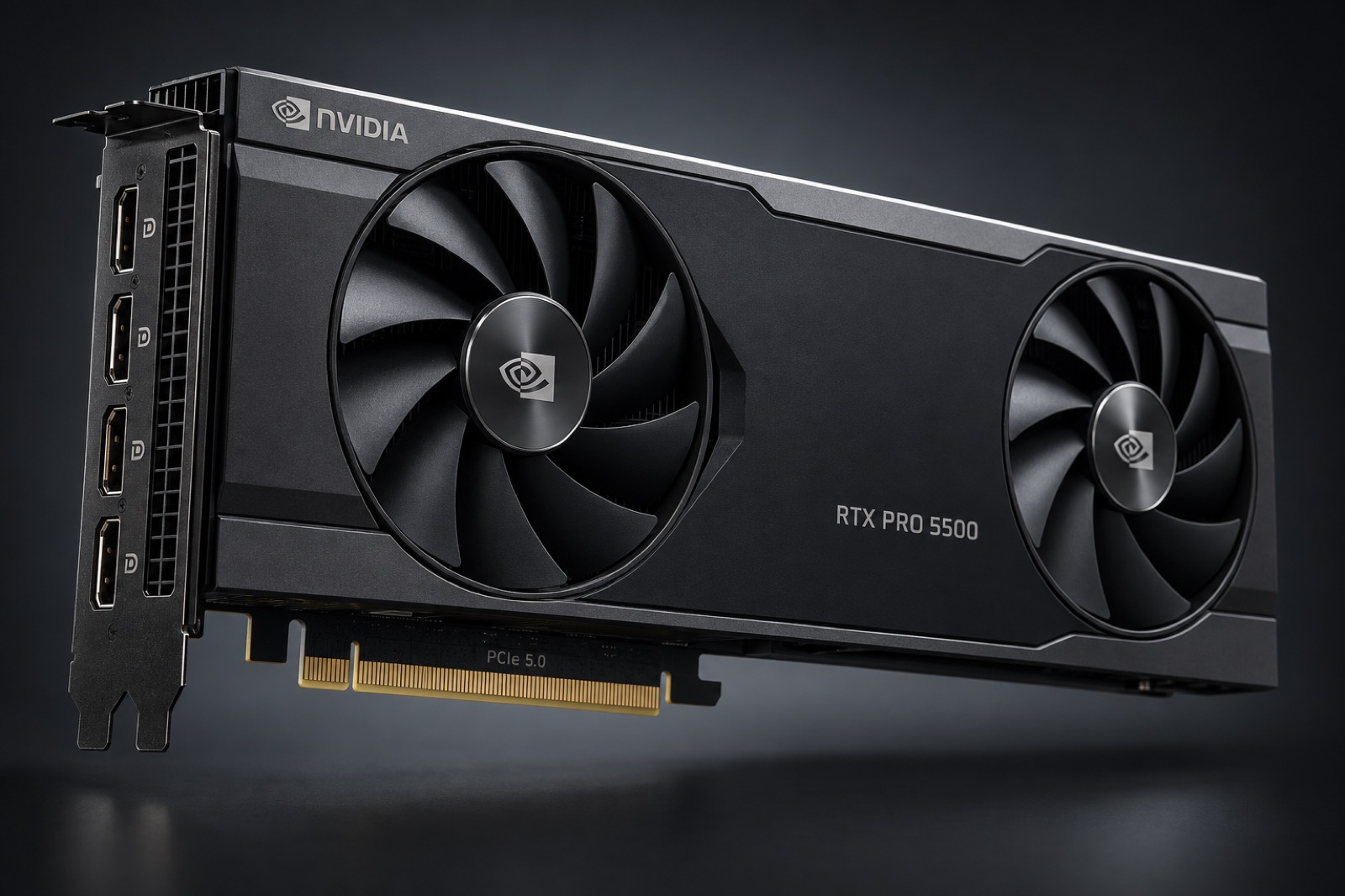
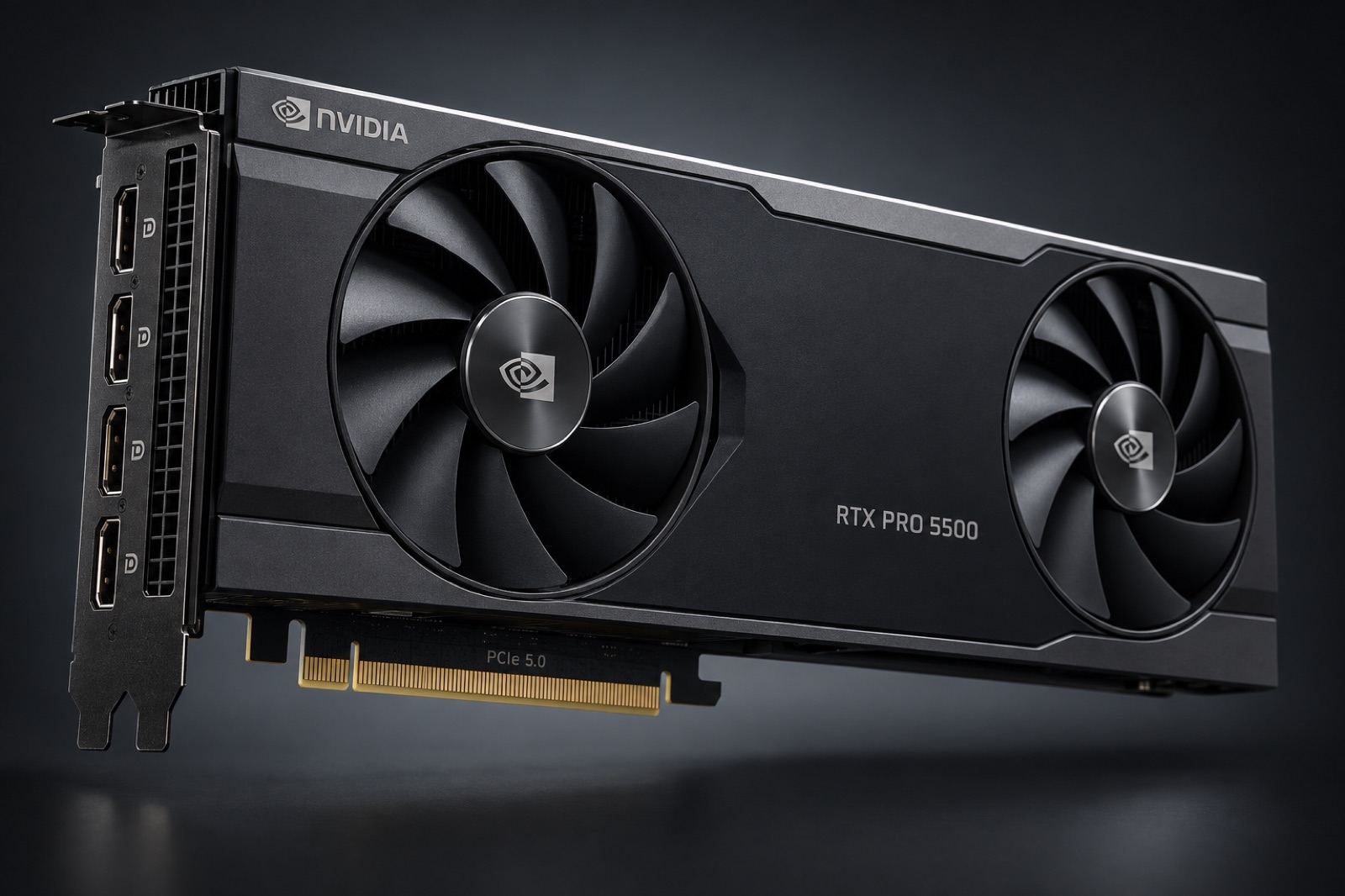
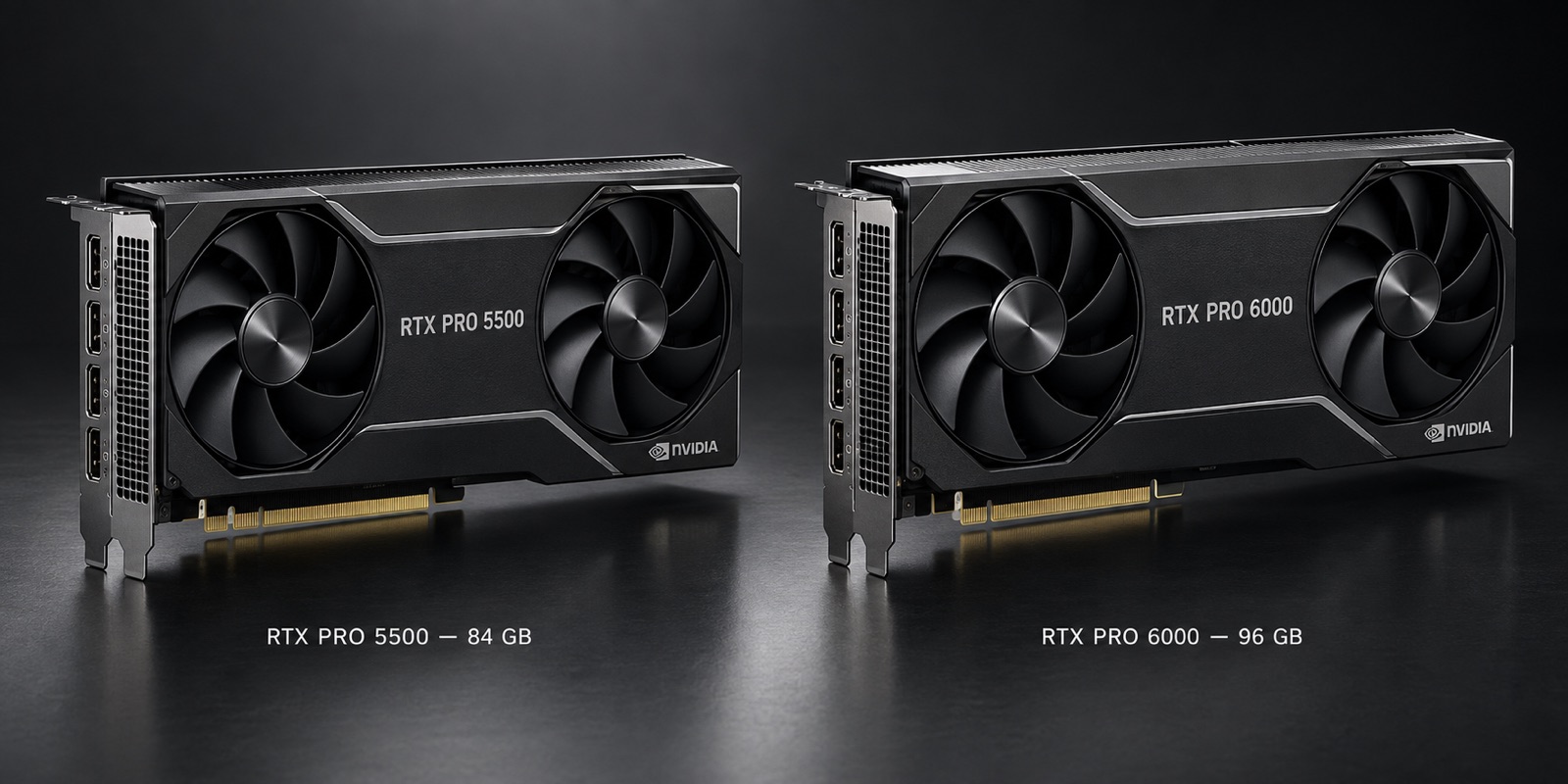
NVIDIA ha aggiunto silenziosamente un nuovo membro alla sua linea professionale Blackwell: la RTX PRO 5500 Blackwell Workstation Edition, elencata sui siti globali di NVIDIA il 14 settembre 2026. Posizionata tra la RTX PRO 5000 e la RTX PRO 6000 di punta, arriva con 84GB di memoria ECC GDDR7 — una scheda tecnica che si avvicina notevolmente alla GPU workstation di fascia alta di NVIDIA e pone immediatamente una domanda a chiunque stia costruendo una workstation AI: RTX PRO 5500 o RTX PRO 6000?
In questo confronto analizziamo le specifiche complete, la VRAM, la banda di memoria, le prestazioni nei carichi di lavoro AI e i prezzi attesi, in modo da poter decidere quale GPU Blackwell meriti un posto nel tuo prossimo build. Su Mineshop.eu costruiamo workstation AI per team in tutta Europa — ecco come il nuovo 5500 cambia l'equazione.
Cosa copriamo
- RTX PRO 5500 Blackwell: Novità
- Tabella di confronto specifiche completa
- 84GB vs 96GB: VRAM per AI locale
- Prestazioni AI: quanto è grande davvero il divario?
- Prezzo e valore nel 2026
- Quale GPU per la tua workstation AI?
- Domande frequenti
RTX PRO 5500 Blackwell: Novità
Prima, le basi. Secondo le specifiche pubblicate da PNY (partner add-in-board di NVIDIA), la RTX PRO 5500 è basata su una versione ridotta del silicio GB202 da 750mm² con 92,2 miliardi di transistor. Questo le conferisce 21.760 CUDA core — esattamente lo stesso numero della GeForce RTX 5090 — ma abbinato a 84GB di ECC GDDR7, più di 2,6 volte la VRAM della GPU consumer di punta (come riportato da VideoCardz e wccftech il 14 settembre 2026).
La scheda accede a questa memoria tramite un'interfaccia da 416-bit per una banda di 1.398 GB/s, assorbe fino a 600W e si collega a uno slot PCIe 5.0 x16. L'I/O include quattro uscite DisplayPort 2.1b, tre motori NVENC di nona generazione e tre motori NVDEC di sesta generazione — un pacchetto serio per i carichi di lavoro video. NVIDIA elenca anche il supporto Multi-Instance GPU (MIG), che consente a una scheda di operare come un'istanza singola da 84GB o due istanze isolate da 42GB per l'inferenza multi-utente, oltre a configurazioni sia con raffreddamento ad aria attivo che con raffreddamento a liquido RXM destinate a workstation rack-mounted.
Le pagine prodotto regionali di NVIDIA mostrano attualmente la scheda come “In arrivo” con prezzi non annunciati e specifiche indicate come preliminari. Puoi seguire l'elenco ufficiale sulla pagina workstation NVIDIA RTX PRO.
RTX PRO 5500 vs RTX PRO 6000: Confronto specifiche completo
| Specifica | RTX PRO 5500 Blackwell | RTX PRO 6000 Blackwell |
|---|---|---|
| Architettura | GB202 Blackwell (ridotta) | GB202 Blackwell (completa) |
| CUDA core | 21.760 | 24.064 |
| Memoria | 84GB GDDR7 ECC | 96GB GDDR7 ECC |
| Bus di memoria | 416-bit | 512-bit |
| Banda di memoria | 1.398 GB/s | 1.792 GB/s |
| Potenza massima scheda | 600W | 600W |
| Interfaccia | PCIe 5.0 x16 | PCIe 5.0 x16 |
| Uscite display | 4× DisplayPort 2.1b | 4× DisplayPort 2.1b |
| Motori video | 3× NVENC (gen 9) / 3× NVDEC (gen 6) | 3× NVENC (gen 9) / 3× NVDEC (gen 6) |
| Multi-Instance GPU | 1× 84GB o 2× 42GB | Supportato |
| Opzioni di raffreddamento | Aria attiva / Liquido RXM | Aria attiva / Liquido RXM |
| Stato | In arrivo (elencata il 14 set 2026) | In spedizione da marzo 2025 |
Il contesto è importante qui: la RTX PRO 5000, posizionata al di sotto, funziona a soli 300W con 48GB o 72GB di memoria. La 5500 colma quindi un divario insolitamente ampio nello stack professionale di NVIDIA — mantenendo al contempo il budget di potenza completo di 600W della GPU di punta.
84GB vs 96GB: VRAM per AI locale
La capacità di memoria è la differenza principale tra queste due schede e, per l'AI locale, è la specifica che determina ciò che puoi eseguire. Un modello con 70B parametri quantizzato a 4-bit richiede circa 40GB di VRAM prima di allocare spazio per KV cache e contesto — entrambe le schede gestiscono questo comodamente. I casi interessanti si trovano più in alto: modelli di classe 120B a 4-bit, 70B a precisione più alta, pipeline RAG a lungo contesto o il servizio di diversi fine-tune affiancati. Lì, i 12GB extra della 6000 fanno la differenza tra far entrare o non far entrare il modello.
La banda di memoria è l'altra metà della storia. I carichi di lavoro vincolati alla memoria — la generazione di token LLM è l'esempio classico — scalano strettamente con la banda di memoria e i 1.792 GB/s della 6000 sono il 22% più alti dei 1.398 GB/s della 5500. Nella pratica, ciò si traduce in un throughput di token misurabilmente più veloce su modelli grandi, anche quando il modello entra in entrambe le schede.
La memoria GPU alimenta anche i carichi di lavoro di rendering, simulazione e CAE, dove scene e dataset massicci traggono vantaggio da ogni gigabyte. E se i tuoi interessi si estendono oltre l'AI al crypto, la nostra gamma di minatori GPU copre hardware progettato appositamente per quel compito.
Prestazioni AI: quanto è grande davvero il divario?
Sulla carta, le differenze sono modeste: il 9,6% in meno di CUDA core, il 12,5% in meno di memoria, il 22% in meno di banda e un limite di potenza identico di 600W. Entrambe le schede condividono la stessa architettura Blackwell e la stessa generazione di tensor core, quindi la storia software è identica — CUDA, cuDNN, TensorRT e ogni framework principale funzionano senza modifiche.
Per i carichi di lavoro vincolati al calcolo — passi di training, rendering, simulazione — aspettati prestazioni che seguano il deficit di core di circa il 10%. Per i carichi di lavoro vincolati alla memoria come l'inferenza LLM, il bus più ampio da 512-bit dà alla 6000 un vantaggio a doppia cifra nel throughput di token. È un vantaggio reale, ma è un divario “stessa lega”, non “classe diversa”.
Il supporto MIG della 5500 è un'arma sottovalutata: due istanze isolate da 42GB consentono a una scheda di servire due utenti, team o VM indipendentemente — utile per endpoint di inferenza e box di sviluppo condivisi.
Prezzo e valore nel 2026
La RTX PRO 6000 Blackwell è stata lanciata il 18 marzo 2025 con un MSRP di $8.565; a settembre 2026, i prezzi di mercato si aggirano tra $7.999 e $9.000 a seconda della regione e del venditore. Il prezzo della 5500 non è ancora stato annunciato — le pagine di NVIDIA dicono semplicemente “In arrivo”.
Il calcolo del posizionamento è semplice: inserire la 5500 tra la RTX PRO 5000 (~$4.500, 72GB) e la 6000, con uno sconto significativo per circa il 10% in meno di core e 12GB in meno di memoria. Se si posiziona al 20–25% sotto la 6000, diventa la scelta predefinita per la maggior parte dei build di workstation AI in Europa; la 6000 rimane la risposta quando i 96GB sono semplicemente non negoziabili.
Quale GPU per la tua workstation AI?
Scegli la RTX PRO 6000 se carichi regolarmente i modelli locali più grandi, hai bisogno del massimo margine di contesto o stai costruendo una box di training o inferenza multi-GPU senza compromessi dove ogni gigabyte e ogni GB/s contano.
Scegli la RTX PRO 5500 se i tuoi modelli entrano in 84GB — il che copre la stragrande maggioranza dei carichi di lavoro AI locali di oggi — e preferisci investire i risparmi in CPU, storage o una seconda scheda. Il suo supporto MIG la rende anche attraente per deployment rack condivisi.
In ogni caso, la piattaforma attorno alla GPU è importante quanto la scheda stessa. Le nostre workstation AI sono progettate attorno a GPU di classe RTX PRO con il raffreddamento, l'alimentazione e il layout PCIe che queste schede da 600W richiedono — configurabili per carichi di lavoro di training, inferenza e rendering, con consegna rapida in tutta l'UE.
Domande frequenti
Quando viene rilasciata la RTX PRO 5500?
NVIDIA ha elencato la RTX PRO 5500 Blackwell Workstation Edition sui suoi siti globali il 14 settembre 2026, indicandola come “In arrivo”. Si prevede che i prezzi finali e la disponibilità seguiranno; le specifiche sono ancora indicate come preliminari (secondo le pagine prodotto di NVIDIA).
RTX PRO 5500 vs RTX PRO 6000 — quale è migliore per l'AI?
La RTX PRO 6000 è in vantaggio su ogni specifica (24.064 vs 21.760 CUDA core, 96GB vs 84GB, 1.792 vs 1.398 GB/s), ma il divario è di circa il 10–20% a seconda del carico di lavoro. Se i tuoi modelli entrano in 84GB, la 5500 dovrebbe offrire prestazioni quasi di punta a un prezzo inferiore, rendendola il miglior rapporto qualità-prezzo per la maggior parte dei build.
La RTX PRO 5500 può eseguire grandi LLM localmente?
Sì. 84GB di ECC GDDR7 ospitano modelli di classe 70B