

How Crypto Mining Really Works: A Plain-English Guide for Beginners
Bitcoin reached $104,000 in December 2024, breaking through the anticipated $100,000 barrier on major exchanges. What role does crypto mining play behind this milestone?
Crypto mining creates new coins and validates transactions on blockchain networks. Mining computers generate over one quintillion random codes per second - that's a number with 18 zeros. These operations require specialized computers with software designed to solve cryptographic mathematical equations.
Cryptocurrency mining functions as a digital competition. The first miner to solve the puzzle adds the newest block to the blockchain. Mining uses specialized computing resources to add blocks to proof-of-work blockchains. Each successful block currently delivers 3.125 bitcoin, worth approximately $315,625 at recent prices.
The process demands significant energy. Bitcoin creation consumes 184.4 terawatt-hours of electricity annually - more than entire countries like Poland or Egypt. The average ASIC miner uses about 72 terawatts of power to create one bitcoin in roughly ten minutes.
This guide explains how crypto mining works, what equipment you need to start, and how miners receive payment for their work.
What Is Crypto Mining and Why It Matters
Cryptocurrency mining forms the backbone of many blockchain networks. Unlike traditional banking systems that rely on central authorities, crypto mining uses decentralized networks of computers to validate transactions and maintain security. Crypto mining activities increased by 230% year over year in 2022, highlighting its growing importance in the digital economy.
What is cryptocurrency mining in simple terms?
Cryptocurrency mining resembles digital gold mining. Gold miners use shovels and pans, while crypto miners use powerful computers to solve complex mathematical puzzles. The term "mining" fits because this process requires resources - computational power and electricity - to obtain rewards in the form of cryptocurrency tokens.
Crypto mining validates and records transactions on a blockchain, the digital ledger that supports cryptocurrencies. Mining also introduces new coins into circulation, serving dual purposes of transaction verification and currency creation.
How does cryptocurrency mining work?
Cryptocurrency mining operates through a competitive process where miners race to solve cryptographic puzzles:
-
Transactions are bundled together into "blocks"
-
Miners compete to solve a complex mathematical problem related to these blocks
-
The first miner to find the solution broadcasts it to the network
-
Other miners verify the solution's accuracy
-
Once verified, the block is added to the blockchain
-
The winning miner receives newly minted cryptocurrency plus transaction fees
Bitcoin follows this process approximately every 10 minutes. The puzzle difficulty adjusts automatically to maintain this timing - becoming harder as more miners join the network and easier if miners leave. Bitcoin's mining difficulty adjusts roughly every 2,016 blocks, about two weeks, to maintain consistency.
Miners need specialized hardware like Application-Specific Integrated Circuits (ASICs) or Graphics Processing Units (GPUs) to compete effectively. These specialized computers search for solutions at incredibly high speeds.
Why mining is essential for blockchain networks?
Mining plays several crucial roles in maintaining healthy blockchain ecosystems. It enhances security through the Proof-of-Work mechanism, making network attacks economically unfeasible.
Mining prevents double-spending - where someone attempts to use the same cryptocurrency twice. It creates a trustless environment where transactions can be verified without relying on central authorities. The decentralized nature of mining means no single entity controls the validation process, preserving the foundational principles of cryptocurrencies.
Mining provides incentives through rewards, encouraging participants to contribute computational power to the network. Bitcoin's current reward stands at 3.125 bitcoins per block following the April 2024 halving. These rewards will continue decreasing over time until all 21 million bitcoins are mined, projected to occur around 2140.
Mining establishes consensus among network participants, ensuring everyone agrees on the transaction history. It creates the foundation for trust in a system designed to operate without intermediaries.
How Blockchain and Proof-of-Work Power Mining
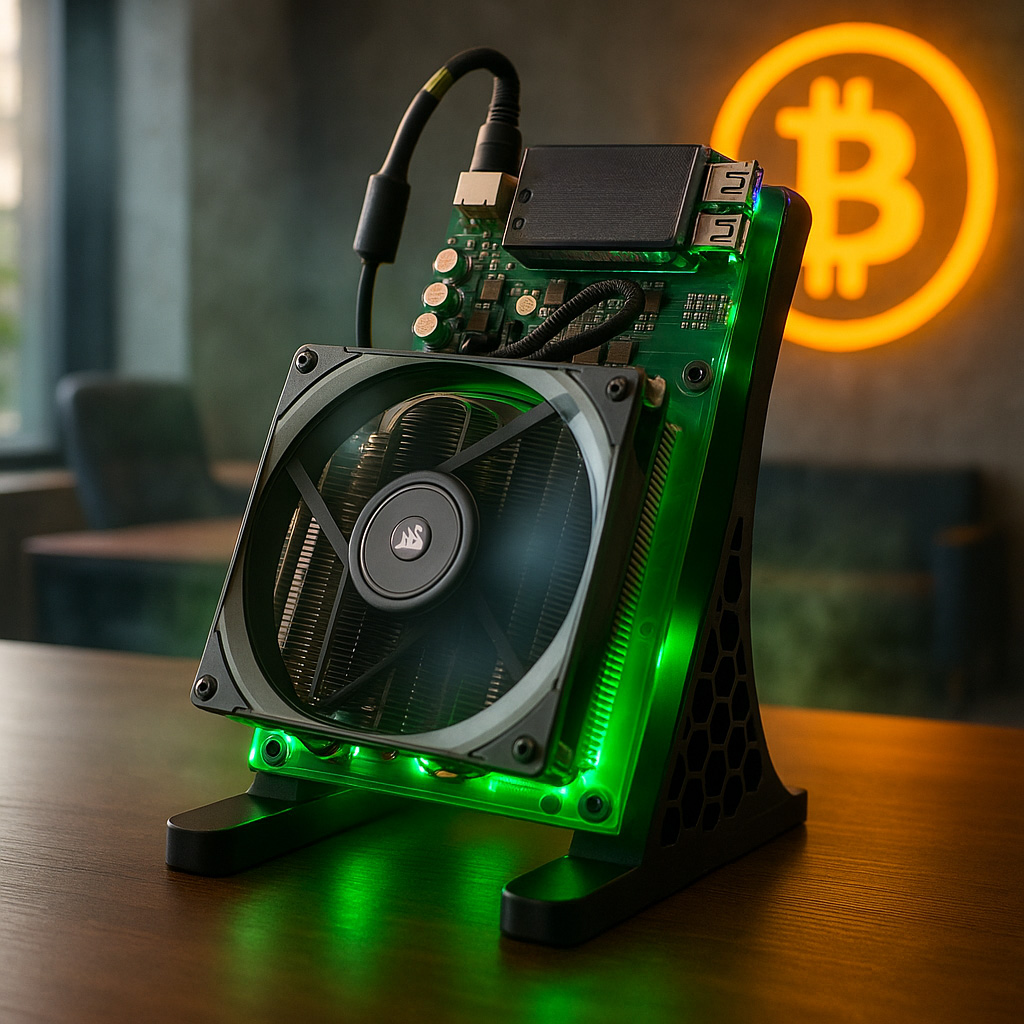
Blockchain technology forms the foundation for cryptocurrency mining operations. Bitcoin introduced this system in 2009, changing how digital transactions get verified and recorded.
What is blockchain and how it stores transactions
Blockchain functions as a distributed digital ledger recording all transactions across a network of computers called nodes. Traditional databases rely on central authorities, but blockchain spreads data across multiple devices, creating a system resistant to tampering and censorship.
Each block contains these key elements:
-
A set of transactions (cryptocurrency transfers)
-
A timestamp recording when the block was created
-
A cryptographic hash of the previous block
-
A unique hash identifier for the current block
The linking of blocks through cryptographic hashes creates an unbroken chain. Altering any information in a previous block would change its hash, breaking the entire chain. This feature makes blockchain data immutable—once recorded, it cannot be modified without network consensus.
When users initiate transactions, these get grouped into blocks that are added to the blockchain. Each node maintains a complete copy of the blockchain, ensuring that new blocks update simultaneously across all copies on every network node.
Understanding proof-of-work (PoW)
Proof-of-work serves as the consensus mechanism enabling miners to validate transactions and secure blockchain networks. Cynthia Dwork and Moni Naor first conceptualized this approach in 1993 to combat email spam. PoW later became the cornerstone of Bitcoin's security model.
Proof-of-work creates an asymmetrical system—difficult for miners to compute but easy for the network to verify. Technical experts note: "The purpose of proof-of-work algorithms is not proving that certain work was carried out, but deterring manipulation of data by establishing large energy and hardware-control requirements".
PoW prevents double-spending by requiring miners to expend significant computational resources before adding blocks. The substantial investment in hardware and electricity makes attacking the network economically unfeasible, securing it against malicious actors.
This mechanism ensures all participants agree on the current blockchain state without relying on central authorities. Every successful block addition reinforces the security of all previous blocks, strengthening the entire chain.
How miners solve cryptographic puzzles
Miners solve cryptographic puzzles by finding specific hash values meeting strict network criteria. The process works as follows:
Miners collect pending transactions and combine them into a block. They add a random number called a "nonce" to this block. The entire block data gets processed through a hashing algorithm (SHA-256 for Bitcoin), producing a 64-character output called a hash.
For validity, the hash must fall below a certain target value defined by the network's difficulty level. This means finding a hash beginning with a specific number of zeros. Miners repeatedly change the nonce value and rehash the block until finding a qualifying hash—a process requiring trillions of attempts per second.
The Bitcoin network automatically adjusts difficulty every 2,016 blocks (approximately two weeks) to maintain consistent block creation at one every 10 minutes. More miners joining increases difficulty; miners leaving decreases it.
This automated adjustment system ensures that regardless of mining hardware advancements or network hashrate changes, new blocks are added at a predictable rate—maintaining the balance between security and transaction processing efficiency.
Step-by-Step: How Does Crypto Mining Work
The mining process operates through four essential stages that transform pending transactions into permanent blockchain records.
1. Transactions are grouped into blocks
When you send cryptocurrency, your transaction enters the mempool (memory pool). Miners collect these pending transactions and organize them into a candidate block. Miners prioritize transactions with higher fees due to limited block space.
Miners add a coinbase transaction first, allowing them to send newly created coins to themselves as rewards. Each transaction gets hashed into a fixed-length string, then arranged in a Merkle tree structure. This creates a single root hash representing all block transactions.
2. Miners compete to solve the hash
Once miners assemble their candidate block, the competition starts. Miners must find a nonce (special number) that, combined with block data and processed through a cryptographic hash function, produces a result below the target value.
This requires enormous computational power with trillions of guesses per second. Mining programs start with nonce zero and increase by one with each attempt. If miners exhaust all possible numbers, they adjust parameters and restart.
3. The winning miner adds the block
The first miner finding a valid hash broadcasts their block network-wide. Other nodes verify:
-
All block transactions are valid
-
The cryptographic puzzle was solved correctly
-
The block properly references the previous blockchain block
Once validated by the majority of nodes (at least 51%), the new block joins the blockchain permanently. All miners abandon current work and begin creating a new candidate block.
4. New coins are released as rewards
Successful miners receive newly created cryptocurrency (block reward) plus transaction fees from included transactions. Bitcoin creates new blocks approximately every 10 minutes.
Bitcoin's current block reward stands at 3.125 BTC per successful block as of April 2024. This reward halves approximately every four years, previously dropping from 6.25 to 3.125 BTC. This reduction continues until all 21 million bitcoins are mined.
What You Need to Start Mining ⚡
Crypto mining requires specific hardware and software components. Standard computers can no longer handle mining operations effectively due to dramatically increased difficulty levels across most cryptocurrencies.
Choosing between CPU, GPU, and ASIC miners
Three main hardware types are available for cryptocurrency mining:
-
CPU Mining: Previously used for Bitcoin mining, CPUs now work only for specific altcoins like Monero. They offer the lowest hash rates and remain unprofitable for most cryptocurrencies.
-
GPU Mining: Graphics cards deliver better performance than CPUs and provide flexibility to mine different cryptocurrencies based on profitability. A multi-GPU rig with four RTX 4090s generates approximately £3.09 per day after electricity costs.
-
ASIC Mining: Application-Specific Integrated Circuits are designed specifically for mining particular cryptocurrencies. They deliver superior hash rates—a Bitcoin ASIC calculates hashes 100,000 times faster than the best CPU.
How ASIC miners work and why they matter
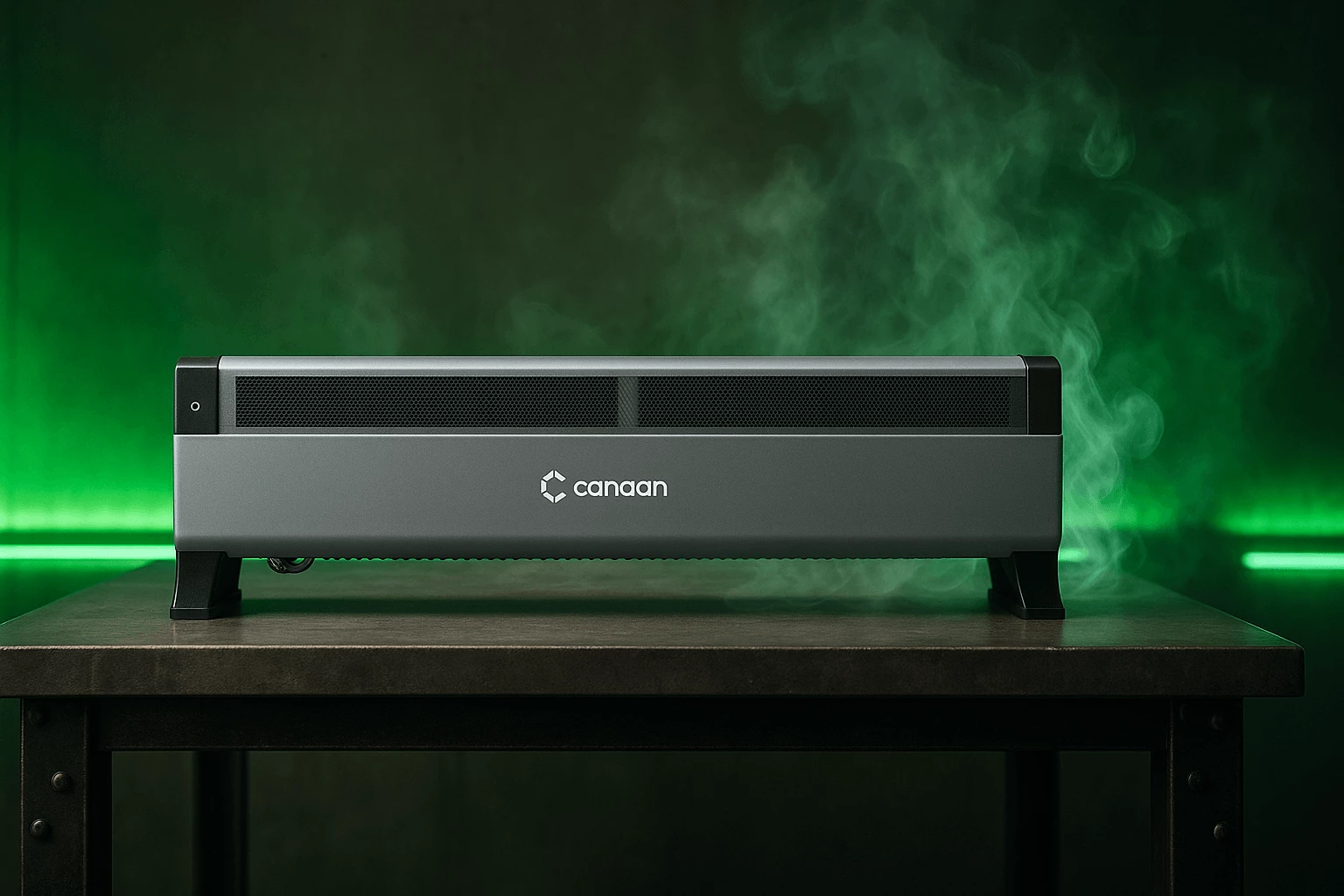
ASIC miners are specialized computers optimized for solving cryptographic proof-of-work puzzles. These devices contain chips designed specifically for generating hashes. They cycle through billions of possible solutions per second, searching for hash values below the network's target.
ASICs dominate Bitcoin mining due to their efficiency—they provide greater computational power while consuming less electricity compared to other options. Popular models include the Bitmain Antminer series and Whatsminer series from MicroBT.
For ASIC mining equipment optimized for maximum efficiency, check out Asic miners offers from mineshop.eu.
Mining software and internet requirements
Specialized software connects your equipment to blockchain networks. Popular options include:
-
CGMiner and BFGMiner: Open-source programs supporting various mining hardware
-
Mining operating systems: RaveOS or Hive OS optimize performance
Internet requirements prioritize stability over speed:
-
Minimum 10-20 Mbps for ASIC mining
-
At least 100 Mbps for GPU mining operations
-
Ping under 50-100 ms for optimal performance
Joining a mining pool to increase chances
Individual mining success rates are extremely low. Major mining pools like FoundryUSA controlled about 29% of Bitcoin's hash rate in October 2024—approximately 197 million TH/s.
Mining pools combine computational resources from multiple miners, distributing rewards proportional to each participant's contribution. This approach provides consistent, smaller payouts rather than infrequent solo mining rewards.
Pool selection factors include size, fee structure, and payout thresholds. Larger pools offer more frequent rewards but may charge higher fees.
Mining Rewards and Profitability 💰
Mining involves solving mathematical puzzles to earn cryptocurrency rewards. The financial aspects determine whether mining becomes profitable or remains an expensive hobby.
How do miners get paid?
Miners receive compensation through two channels. The block reward provides newly minted cryptocurrency for successfully adding blocks to the blockchain. Transaction fees come from users paying to process their transactions. Bitcoin miners currently earn 3.125 BTC per block plus any transaction fees included in that block.
What is Bitcoin halving?
Bitcoin's monetary policy includes "halving" - a mechanism that reduces block rewards by 50% approximately every four years or 210,000 blocks. The April 2024 halving decreased rewards from 6.25 to 3.125 BTC. The final Bitcoin is expected to be mined around 2140, after which miners will depend solely on transaction fees.
How do you calculate mining profitability?
Mining profitability depends on several key factors:
-
Network hashrate and difficulty: Higher network hashrate increases competition
-
Electricity costs: Often the largest ongoing expense
-
Hardware efficiency: Measured in joules or watts per terahash
-
Current cryptocurrency price: Directly impacts revenue
-
Block rewards and transaction fees: Total compensation
Online calculators from platforms like NiceHash or CryptoCompare help estimate potential earnings. A December 2024 calculation showed that at Bitcoin's price of approximately £80,210, a block reward of 3.125 BTC was worth about £250,656.
How do you receive mining payouts?
Mining pools distribute earnings based on your contributed hashrate. Most miners join pools to receive smaller but consistent payouts rather than waiting for infrequent solo mining rewards.
Secure cryptocurrency wallets are essential for storing mining proceeds. Options range from free software wallets to hardware wallets costing between £39 to £119 for enhanced security.
Conclusion
Cryptocurrency mining powers decentralized financial networks through transaction validation and new coin creation. Miners convert computational power into cryptocurrency rewards using blockchain validation systems. The proof-of-work mechanism creates network security that makes attacks economically unfeasible.
Hardware selection determines mining success. ASIC miners provide superior hash rates for Bitcoin mining, while GPUs offer flexibility for altcoin mining. Your choice depends on investment capacity, electricity costs, and target cryptocurrencies.
Mining pools allow individual miners to combine resources for consistent rewards instead of waiting for infrequent solo payouts. Most beginners benefit from joining established pools before attempting solo mining.
Profitability calculations require considering electricity costs, hardware efficiency, network difficulty, and cryptocurrency prices. The halving events, including Bitcoin's recent reduction to 3.125 BTC per block, significantly impact mining economics.
Mining success requires balancing technical knowledge with financial planning. Whether mining Bitcoin with ASICs or exploring altcoins with GPUs, the core process remains the same - solving cryptographic puzzles to secure networks and earn rewards.
FAQs
Q1. Is cryptocurrency mining still profitable for beginners? Profitability for beginners depends on several factors, including hardware costs, electricity prices, and cryptocurrency values. While it's challenging to earn significant rewards solo mining Bitcoin, joining a mining pool can provide smaller but more consistent payouts. Altcoin mining with GPUs may be more accessible for newcomers.
Q2. How long does it typically take to mine one Bitcoin? The time to mine one Bitcoin varies greatly depending on your mining setup and the network's difficulty. With current difficulty levels and advanced hardware, it could take an individual miner about 10 minutes to mine one Bitcoin. However, for most miners, it's more realistic to expect it to take around 30 days or longer.
Q3. What equipment do I need to start cryptocurrency mining? To start mining, you'll need specialized hardware such as ASIC miners for Bitcoin or powerful GPUs for other cryptocurrencies. You'll also require mining software, a stable internet connection, and a cryptocurrency wallet to store your earnings. Joining a mining pool is recommended for more consistent rewards.
Q4. How do miners get paid for their efforts? Miners receive compensation in two ways: newly minted cryptocurrency (block rewards) and transaction fees. For example, Bitcoin miners currently receive 3.125 BTC per block plus any transaction fees included. The exact amount varies depending on the cryptocurrency and network conditions.
Q5. What factors affect mining profitability? Several key factors influence mining profitability, including the network's hashrate and difficulty, your electricity costs, hardware efficiency, current cryptocurrency prices, and the block rewards and transaction fees. Using online calculators can help estimate potential earnings based on these variables.
Related Blog
ASIC racēja pārspīlēšanas ceļvedis: droši palieliniet jaudu 2026. gadā
Jun 25, 2026 by Guntis Vitolins
Asic miner
IceRiver KS3 problēmu novēršana: Hash plates un tīkla kļūdu labošana
Apr 24, 2026 by Guntis Vitolins
Asic miner
Labākā VPN iestatīšana attālai ASIC racēju uzraudzībai 2026. gadā
Apr 22, 2026 by Guntis Vitolins
Asic miner
Liela mēroga ASIC izvietošana: plauktu blīvums, PDU plānošana, dzesēšana
Apr 18, 2026 by Guntis Vitolins
Asic miner