



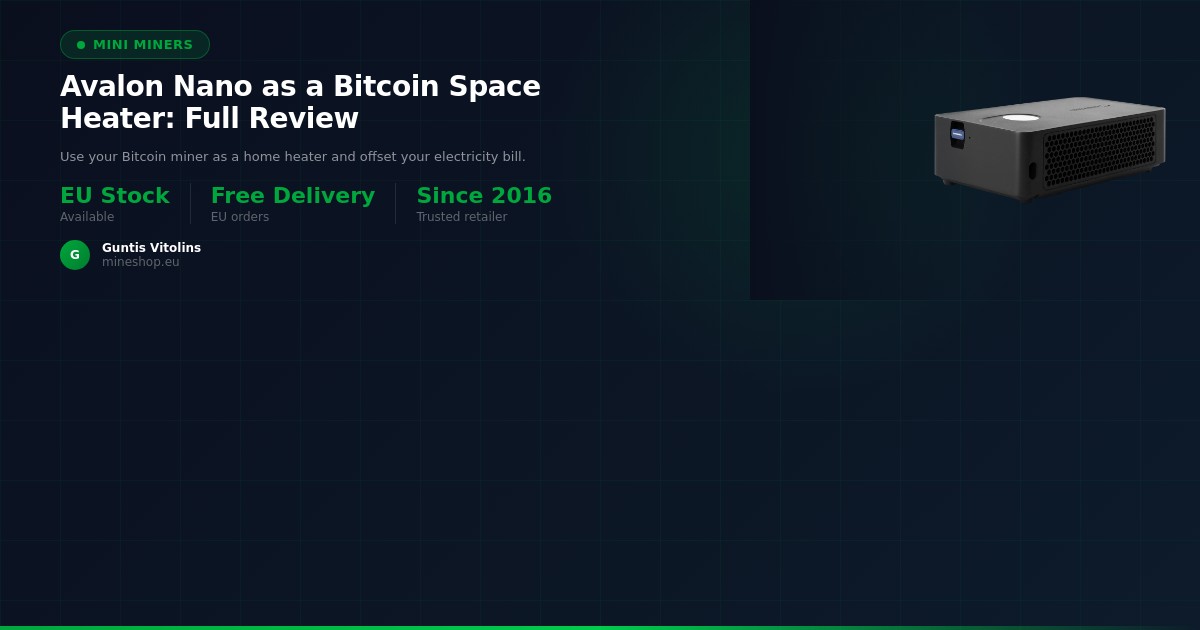
Avalon Nano som Bitcoin-värmelement: Fullständig recension
Avalon Nano 3 drar 140 watt och står på ditt skrivbord. Det är ungefär samma som två ljusa glödlampor — och Canaan marknadsför den som ett värmelement som råkar mina Bitcoin. Den vinkeln är smart. Den är också något vilseledande, och du förtjänar att veta varför innan du lägger pengar på en.
Grundidén är genuin nog: alla miners omvandlar el till värme med 100% effektivitet. Ett element gör exakt samma sak. Varför inte värma din lägenhet och mina Bitcoin samtidigt? Logiken håller. Matten fungerar däremot bara under specifika förutsättningar — och de flesta europeiska köpare kontrollerar aldrig dessa förutsättningar först. Det är den del de flesta mining-guider hoppar över helt, vilket är frustrerande.
Vad vi går igenom
- Vad Avalon Nano 3 faktiskt är — specifikationer och ärlig positionering
- Hur Avalon Nano fungerar som ett element i ett europeiskt hem
- Verklig lönsamhet vid EU:s elpriser 2025–2026
- Avalon Nano vs andra hemminers: jämförelse sida vid sida
- Vem som faktiskt bör köpa Avalon Nano — och vem som inte bör
- Vanliga frågor
Vad Avalon Nano 3 faktiskt är
Avalon Nano 3 är en SHA-256 Bitcoin ASIC miner som producerar ungefär 4 TH/s vid 140W effektförbrukning, i en kompakt enhet ungefär i storleken på en tjock inbunden bok. Effektiviteten ligger på cirka 35 J/TH — vilket, för att vara direkt, inte är konkurrenskraftigt med industriell hårdvara. Bitmain Antminer X9, till exempel, är byggd för helt andra effektivitetsmål på en annan algoritm. Inom kategorin hemminer är dock 35 J/TH för en fläktlös eller nästan tyst enhet den avvägning man medvetet gör för tyst drift.
Den driftar på ungefär 45–50 dB — tystare än en laptopfläkt under belastning. Ingen vattenkylning. Ingen industriell strömkontakt. Den kopplas in i ett standard EU Schuko-uttag. Installationen tar ungefär tio minuter via ett webbläsargränssnitt. Ärligt talat är det inte illa för en nybörjarenhet.
Canaan positionerar den tydligt mot hemminer som vill kompensera uppvärmningskostnader snarare än att driva ett vinstcenter. Den vinkeln är viktig, eftersom det missar poängen att enbart bedöma den på mining-ROI — men att ignorera ROI-frågan helt vore ohederligt.
Hur Avalon Nano fungerar som ett element i ett europeiskt hem
140 watt kontinuerlig värme är verklig. Den är varm vid beröring och kommer att märkbart höja temperaturen i ett litet rum — exempelvis ett hemmakontor på 10–12 m² — över flera timmar. Tänk på det som ett mycket milt panelelement som körs permanent i bakgrunden.
För perspektivets skull: ett typiskt oljeelement körs på 1 000–2 500W. Avalon Nano ger 14% av den lägre gränsen av det intervallet. Den kommer inte att värma ett vardagsrum. Den tar av kylan i ett litet arbetsrum, särskilt på våren eller hösten när du inte behöver aggressiv värme. I en skandinavisk januari behöver du fortfarande ett ordentligt element — Nano är ett komplement, inte primärkälla.
Ljudnivån är det verkliga säljargumentet här. Industriella ASICs — allt över 1 000W — körs på 70–80 dB. Det är en dammsugare som körs permanent. Nano på 45–50 dB sitter bekvämt i samma rum som dig utan att störa samtal eller sömn. För ett hemmakontor i en lägenhet i Amsterdam eller ett gästrum i Dublin spelar det enorm roll.
Placering och luftflöde
Eftersom enheten passivt eller halvpassivt avger värme påverkar placeringen både prestanda och komfort. Ställ den på en öppen yta med minst 15 cm fritt utrymme på alla sidor. Stoppa inte in den i ett skåp i hopp om en varmskåpseffekt — du stryper chipsen och minskar hashrate. Ett skrivbordshörn eller en liten hylla fungerar bra. Tänk på det mindre som ett element och mer som en varm lampa.
Verklig lönsamhet vid EU:s elpriser 2025–2026
Säg att du bor i Tyskland och betalar €0,28/kWh — det ungefärliga riksgenomsnittet (Eurostat, kvartal 4 2025). Avalon Nano 3 vid 140W dygnet runt förbrukar 3,36 kWh per dag. Det är €0,94 per dag i el, eller ungefär €28,70 per månad.
Vid 4 TH/s mot ett nätverkets hashrate på ungefär 850 EH/s och ett Bitcoin-pris på runt $67 471 USD (per kvartal 1 2026), ligger dagliga mining-intäkter på ungefär €0,08–0,12. Per månad är det ungefär €2,50–3,60. Du spenderar €28,70 för att tjäna €3,00. Det är en förlust på runt €25 per månad i rent mining-hänseende.
Det är här värmeelementargumentet blir viktigt — och där du måste vara ärlig mot dig själv. Om du ändå skulle köra ett 140W-panelelement betalar du ingen extra el. Du byter ut en värmekälla mot en annan. I det perspektivet är €3/månad i mining-intäkt genuint gratis pengar. Men om du bor i Portugal med €0,17/kWh, eller Lettland med €0,18/kWh, förändras ekvationen något — din elkostnad sjunker till runt €18/månad, vilket gör gapet mindre, om än fortfarande negativt på mining ensamt.
Efter halvningen i april 2024 som sänkte blockkompensationen till 3,125 BTC känner småminers med lågt hashrate av pressen ordentligt. Med nätverkets svårighetsgrad på ungefär 110–115 biljoner är 4 TH/s statistiskt obetydligt. Oddsen för solo mining är i princip lotteriterritorium. De flesta Nano-användare pool-minar, vilket åtminstone ger ett litet men förutsägbart flöde. Värt att veta innan du köper.
Beräkningen av värmekompensation
Räkna istället så här: om din lägenhet behöver 140W kompletterande värme i, säg, 6 månader per år (oktober till mars i det mesta av Nordeuropa), och du ändå spenderade €28,70/månad på el för att producera den värmen, kostar Nano dig ingenting extra på vintern. Du tjänar €3/månad ovanpå det. Det är €18 under uppvärmningssäsongen. Inte pensionspengar — men inte ingenting heller, och enheten sitter tyst och tjänar pengar medan du jobbar.
Baserat på vår erfarenhet av att leverera till kunder i alla 27 EU-länder är det vanligaste misstaget för nybörjare att köpa en hemminer med förväntningar om mining-ROI utan att först ta hänsyn till elkostnaden. Avalon Nano är en av de få enheter där den beräkningen faktiskt kan fungera — men bara om du ersätter värme du ändå redan betalade för.
Avalon Nano vs andra hemminers: jämförelse sida vid sida
| Miner | Hashrate | Effektförbrukning | Effektivitet | Ljud | Hemvänlig? |
|---|---|---|---|---|---|
| Avalon Nano 3 | 4 TH/s | 140W | 35 J/TH | ~45 dB | Ja — skrivbord/hylla |
| Goldshell AE Box Pro | 44 MH/s (ALEO) | ~220W | 5 J/MH | ~50 dB | Ja — kompakt |
| Pinecone INIBOX | Varierar (INI algo) | ~200W | Algoritmspecifik | ~48 dB | Ja — plug-and-play |
| Bitmain Antminer S23 Hyd 3U | 580 TH/s | ~5 676W | ~9,78 J/TH | Vattenkylning | Nej — industriell |
Kontrasten med S23 Hyd är belysande. S23 Hyd är en seriös mining-maskin — 580 TH/s, vattenkylning, byggd för ett lagerlokal. Den hör inte hemma i en lägenhet. Nano finns i en helt annan kategori: låg värme, lågt ljud, låg avkastning. Kategorin mini Bitcoin miner är genuint sin egen sak och bör utvärderas på sina egna villkor.
Vem som faktiskt bör köpa Avalon Nano — och vem som inte bör
Köp Avalon Nano om: du vill lära dig hur Bitcoin-mining fungerar praktiskt, du har ett litet rum som behöver kompletterande värme under vintermånaderna, och du accepterar att den finansiella avkastningen är minimal men icke-noll. Det är ett läromedel och en nyhet som ger en liten utdelning. Det är ingenting fel med det.
Köp den inte om ditt primära mål är vinst. Vid EU:s elpriser — särskilt över €0,20/kWh — täcker inte mining-intäkten elkostnaden, punkt slut. Kategorin hemminer har bättre alternativ för dem som vill ha verklig avkastning på alternativa algoritmer, inklusive Goldshell AE Box Pro som minar ALEO och vid nuvarande svårighetsgrad visar märkbart bättre ekonomi än SHA-256 vid 4 TH/s.
Också: köp inte Nano med förväntningen att värma ett rum genom en nordisk vinter. 140W är omgivningsvärme, inte uppvärmning. Hantera förväntningarna därefter.
Mineshop.eu har levererat äkta ASIC-hårdvara till europeiska miners sedan 2016, med snabb DHL/FedEx-leverans till alla EU-länder. De flesta beställningar skickas från Irland och Lettland.
Är Avalon Nano-värmeelementet värt det 2026?
För en specifik typ av köpare — någon som ersätter 140W elektrisk värme de redan betalade för, och som vill ha en nybörjarvänlig introduktion till Bitcoin-mining — ja. Maskinen är tyst, enkel och genuint varm. Mining-intäkten är en liten bonus, inte ett affärscase.
För alla andra? Siffrorna fungerar inte vid europeiska elpriser efter halvningen. Nätverkets hashrate på ~850 EH/s och 4 TH/s är ett avrundningsfel. Köp den med öppna ögon, eller titta på hemminers med alternativa algoritmer som har bättre nuvarande ekonomi. Oavsett vilket, gå in med verkliga siffror snarare än marknadsföringslöften.
Bläddra bland hela utbudet av mini Bitcoin miners och hemmining-hårdvara på Mineshop.eu — EU-lager, snabb leverans och ingen merförsäljning. Om du vill jämföra alternativ innan du bestämmer dig är den fullständiga ASIC miner-katalogen ett bra ställe att börja.
Vanliga frågor
Hur mycket värme producerar Avalon Nano 3 faktiskt?
S: Avalon Nano 3 drar 140W kontinuerligt, allt omvandlas till värme. Det räcker för att ge mild kompletterande värme i ett rum på 10–12 m², liknande ett litet skrivbordslampelement. Den ersätter inte ett element i ett större rum, men i ett litet hemmakontor ger den en märkbar, konsekvent värme under vintermånaderna.
Kan Avalon Nano 3 mina Bitcoin lönsamt i Europa?
S: Vid typiska EU-elpriser på €0,20–0,28/kWh (Eurostat, kvartal 4 2025) kostar Nano 3 ungefär €20–29/månad att köra och genererar ungefär €2,50–3,60/månad i mining-intäkter vid nuvarande nätverkssvårighetsgrad (~112 biljoner) och Bitcoin-priser (~$67 471 USD, kvartal 1 2026). Det är inte lönsamt på mining ensamt. Skälet att köpa den vilar på att ersätta befintliga uppvärmningskostnader, inte att generera mining-intäkt.
Är Avalon Nano 3 tillräckligt tyst för ett hemmakontor eller sovrum?
S: Ja. Avalon Nano 3 arbetar på ungefär 45–50 dB — jämförbart med en tyst laptopfläkt. Det är betydligt tystare än industriella ASICs (70–80 dB) och de flesta tycker att det är acceptabelt i en hemmakontor-miljö. Den är inte helt tyst, men den stör inte sömn eller samtal på normala avstånd.
Hur jämförs Avalon Nano med Goldshell AE Box Pro för hemmining?
S: De minar olika algoritmer. Avalon Nano 3 minar SHA-256 Bitcoin vid 4 TH/s. Goldshell AE Box Pro minar ALEO vid 44 MH/s och drar ungefär 220W. Vid nuvarande svårighetsgrad och myntpriser tenderar AE Box Pro att visa bättre ekonomi 2025–2026, men ALEO bär sin egen prisvolatilitetsrisk. Nano är det bättre valet om du specifikt vill ha Bitcoin-exponering och ett uppvärmningsanvändningsfall.
Behöver Avalon Nano speciell elektrisk installation eller en dedikerad krets?
S: Nej. Vid 140W kopplas Avalon Nano 3 in i ett standard EU Schuko-vägguttag utan någon modifiering. Den drar väl under 1A vid 230V, vilket är försumbart. Du kan köra den tillsammans med en laptop, skärmar och annan typisk hemmakontorutrustning utan några bekymmer om kretslast.
Vilken pool bör jag använda med Avalon Nano 3 i Europa?
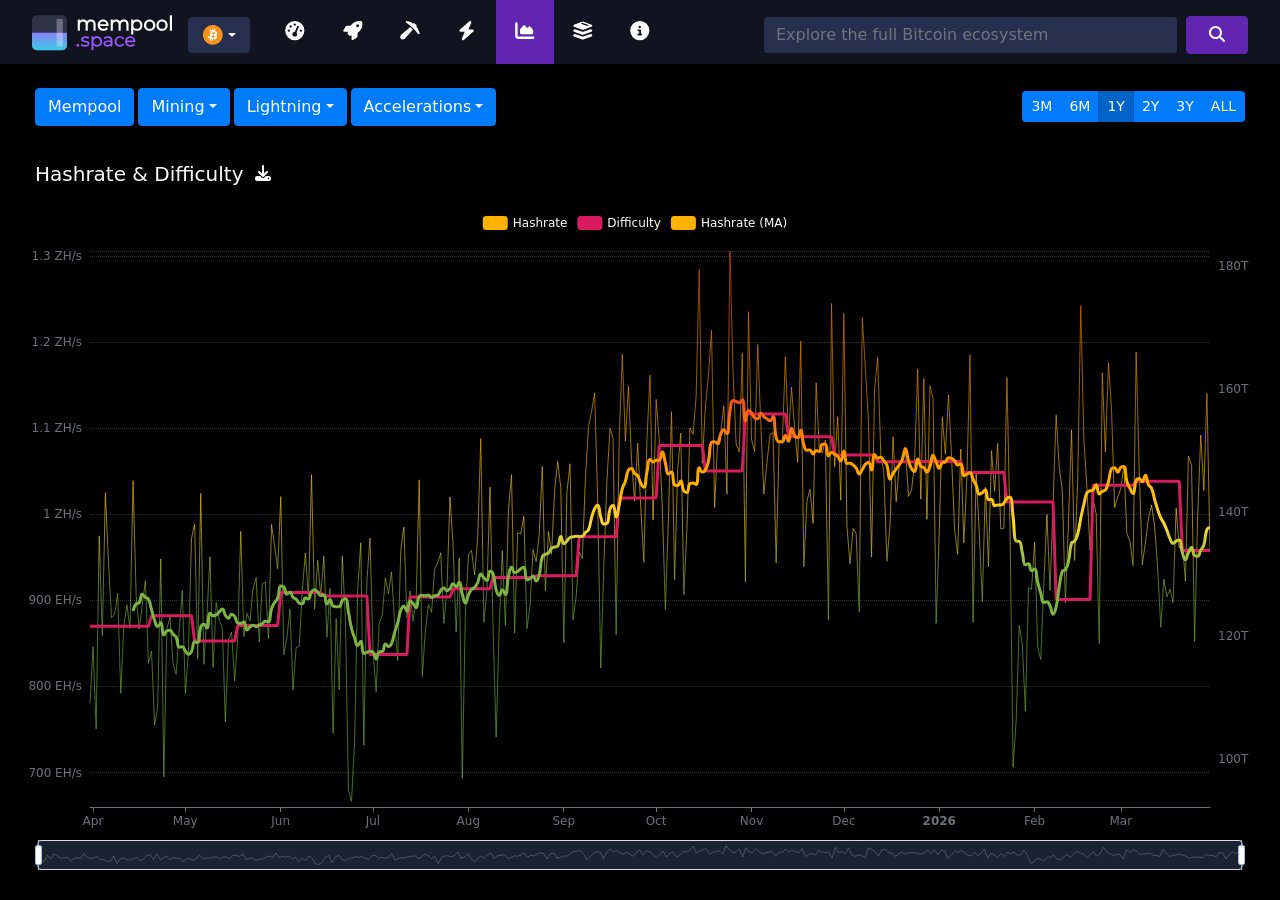
S: Vid 4 TH/s är solo mining av Bitcoin statistiskt nästan omöjligt — oddsen för att hitta ett block ensamt är astronomiskt låga vid nuvarande nätverkets hashrate på ~850 EH/s. De flesta Nano-användare ansluter till etablerade pooler som Braiins Pool eller ViaBTC, som ger proportionella utbetalningar oavsett hashrate-storlek. Installationen innebär att du anger poolens stratum-adress och din Bitcoin-plånboksadress i Nano:s webbgränssnitt, vilket tar under tio minuter.
Comments (0)