

Whatsminer M60S Review: Home Mining Beast or Overkill?
Whatsminer M60S Review: Home Mining Beast or Overkill?
The Whatsminer M60S delivers 170 TH/s at 18.5 J/TH — and if your electricity rate in Ireland, Germany, or the Netherlands is above €0.22/kWh, you will struggle to make this machine pay for itself in any reasonable timeframe. That is not a knock on MicroBT's engineering. It is just maths, and most reviews refuse to do it.
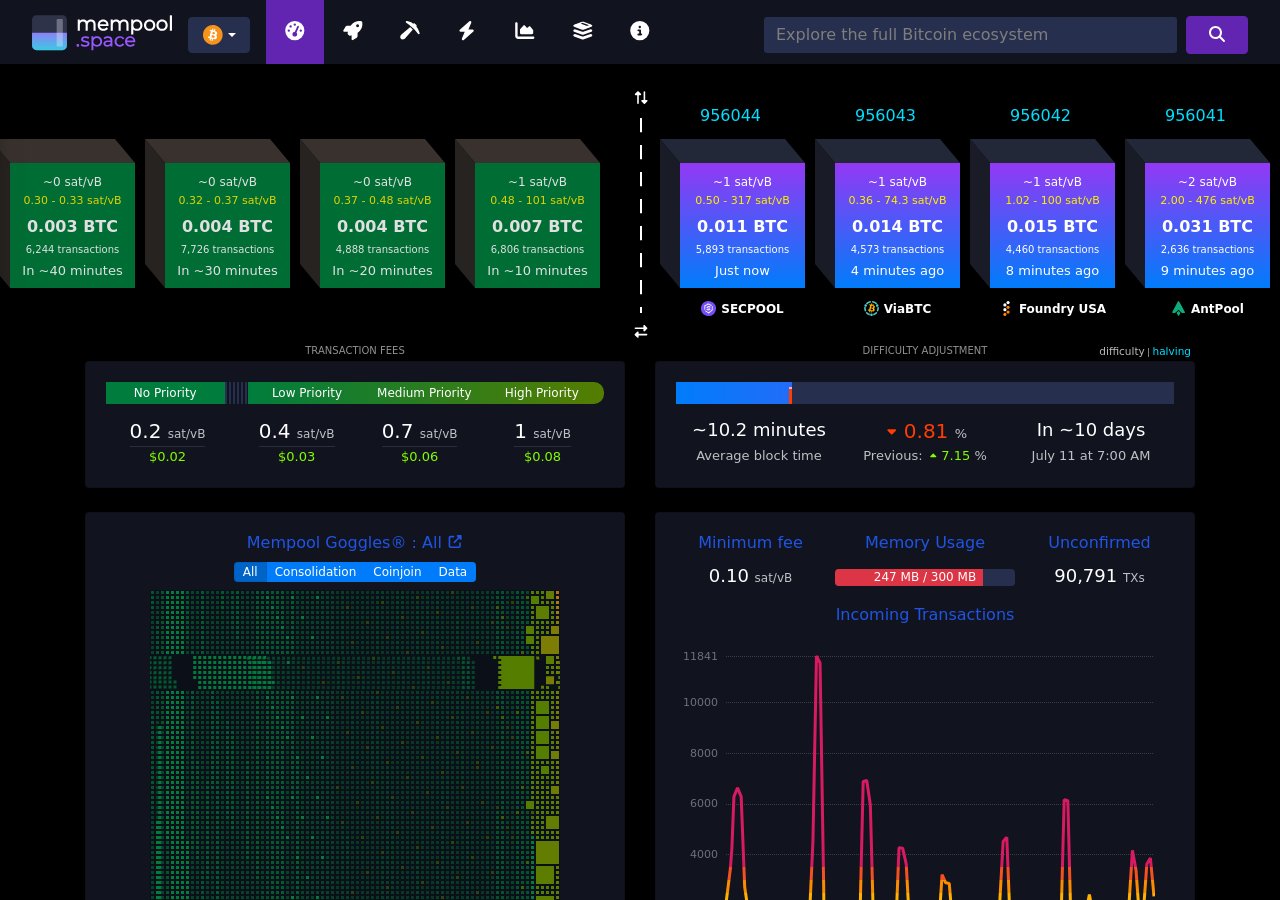
After the April 2024 halving dropped the block reward to 3.125 BTC, margins across the entire SHA-256 mining sector compressed hard. Network hashrate is now sitting between 800–1,000 EH/s (as of Q1 2026, mempool.space), which means competition for each block has never been fiercer. A machine that looked profitable in late 2023 may be treading water today. The M60S sits right on that edge — capable, but unforgiving if your power costs are high.
This review is for European home miners who want the honest picture: what the M60S actually costs to run, where it genuinely excels, and whether a different machine might serve you better.
What We Cover
- M60S Specs — And What They Actually Mean for Your Bill
- Real Profitability at European Electricity Rates
- How the M60S Compares to Other Miners Worth Considering
- Home Use Reality: Noise, Heat, and Your Neighbours
- Who Should Actually Buy One
- Frequently Asked Questions
M60S Specs — And What They Actually Mean for Your Bill
The MicroBT Whatsminer M60S is a SHA-256 ASIC miner that produces 170 TH/s of hashrate at a power draw of 3,344W, with an efficiency rating of 18.5 J/TH. It ships in a sealed immersion-ready form factor and runs on 240V single-phase power — meaning most European households can, in theory, plug one in.
In theory. The 3,344W draw is the detail most guides gloss over.
That is roughly equivalent to running three electric ovens simultaneously, continuously, every hour of every day. At €0.20/kWh — the lower end of European residential rates (Eurostat, Q4 2025) — you are spending €16.05 per day, or about €482 per month, on electricity alone. At Germany's average of €0.28/kWh, that jumps to €676 per month. Those are mortgage-sized numbers.
Efficiency at 18.5 J/TH is genuinely competitive for a machine in this class — better than older generation hardware but not class-leading in 2026. The Antminer S21 XP Hyd, for comparison, operates at 12 J/TH. That gap translates to a meaningful difference in monthly running cost over a 12-month horizon.
Key Specifications at a Glance
- Algorithm: SHA-256 (Bitcoin)
- Hashrate: 170 TH/s (±5%)
- Power consumption: 3,344W (±10%)
- Efficiency: 18.5 J/TH
- Operating temperature: 0°C to 40°C
- Noise level: 75 dB
- Dimensions: 400 × 195 × 290 mm
- Connectivity: Ethernet
Real Profitability at European Electricity Rates in This Whatsminer M60S Review 2026
Say you live in Latvia and pay €0.18/kWh. With 170 TH/s and a network hashrate of roughly 900 EH/s, you are earning approximately 0.00028 BTC per day before electricity costs — at a Bitcoin price of $59,436 USD (approximately €54,800 at current exchange rates), that is around €15.34 per day in gross revenue. Your electricity cost at €0.18/kWh is €14.45 per day. Daily profit: under €1. That is not a business. That is a rounding error.
At €0.12/kWh — the kind of rate you might negotiate with an industrial landlord or get in parts of Poland or Bulgaria — the picture changes materially. Electricity drops to €9.63/day, leaving roughly €5.70/day in profit, or about €170/month. Still thin, but real. (Source: asicminersprofitability.com, Q1 2026)
Honestly, that is not great for a machine that retails in the €3,000–€4,000 range. Break-even at €170/month takes 18–24 months in a best-case scenario — assuming Bitcoin price holds, difficulty does not spike further, and the machine does not need repair. Three big assumptions.
If your electricity runs above €0.22/kWh, this machine is running at a loss in current market conditions. Full stop. Most mining guides skip this part, which is maddening, because it is the only number that actually matters.
How the M60S Compares to Other Miners Worth Considering
| Miner | Hashrate | Power Draw | Efficiency | Est. Daily Cost (€0.20/kWh) |
|---|---|---|---|---|
| Whatsminer M60S | 170 TH/s | 3,344W | 18.5 J/TH | €16.05 |
| Antminer S21 XP Hyd | 473 TH/s | 5,676W | 12.0 J/TH | €27.24 |
| IceRiver ALEO AE3 | 2,000 MH/s (Aleo) | 2,400W | — | €11.52 |
| Goldshell AE Max | Aleo network | Lower draw | — | Lower |
The counterintuitive advice most articles will not give you: in 2026, Bitcoin SHA-256 mining is not automatically the best use of an ASIC budget. Coins like Aleo, mined by machines like the IceRiver ALEO AE3 or the Goldshell AE Max, carry different risk profiles, lower power draws, and in some cases better current margins — precisely because they are less saturated. Worth knowing before you buy.
Browse the full range on our Whatsminer series page or compare options across all brands at our ASIC miners catalogue.
Home Use Reality: Noise, Heat, and Your Neighbours
75 dB. That is what MicroBT quotes for the M60S — roughly the volume of a vacuum cleaner running continuously, 24 hours a day. In an apartment, that is not mining. That is a noise complaint waiting to happen.
In a detached garage or basement with proper ventilation, the M60S is manageable. But it demands dedicated 16A circuit capacity, ambient temperatures below 40°C (harder than it sounds in a sealed room with 3.3kW of heat output), and good airflow design. This is not a machine you slide under a desk. The heat output alone — over 11,400 BTU/hr — will warm a small room uncomfortably without active exhaust.
In our experience shipping to customers across 27 EU countries, the biggest mistake beginners make is underestimating infrastructure costs. A PDU, proper cabling, ventilation fans, and potentially a dedicated circuit installation can add €400–€800 to your total setup cost — money that almost never appears in break-even calculations.
If you are genuinely constrained on space and noise, our home miners category and mini Bitcoin miners section list machines built specifically for residential use — quieter, lower draw, and honestly more honest about what home mining actually looks like in 2026.
Who Should Actually Buy One
The Whatsminer M60S is a serious piece of hardware for serious operators. It is not overkill by design — it is overkill for most home setups in Western Europe right now.
The buyer who gets value from this machine is someone with negotiated electricity below €0.15/kWh, a proper outbuilding or industrial space, and either a technical background or access to local support. That person exists — but it is not the majority of people reading this review.
If you are paying standard residential rates in France, Germany, or Ireland (€0.20–0.30/kWh, Eurostat Q4 2025), the M60S will cost you more to run than it earns at current Bitcoin prices of approximately $59,436 USD. That may change if Bitcoin price rises sharply — but betting hardware ROI on price appreciation is speculation, not mining.
Mineshop.eu has been supplying European miners with genuine ASIC hardware since 2016, with EU warehouse stock in Ireland and fast DHL/FedEx delivery across all EU countries. We have seen firsthand that the miners who do well long-term are the ones who matched machine to electricity rate before they bought — not after.
For those still committed to SHA-256 Bitcoin mining, the M60S is a legitimate choice — just go in with accurate numbers. Check current profitability data at asicminersprofitability.com before committing. And if you want to explore machines better suited to European home use, our full ASIC catalogue has options across multiple algorithms and power tiers.
Frequently Asked Questions
Is the Whatsminer M60S profitable in 2026?
A: At electricity rates below €0.15/kWh, the M60S can generate modest profit — approximately €150–€200/month at €0.12/kWh with Bitcoin at ~$59,436 USD and a network hashrate of 900 EH/s. Above €0.20/kWh, it is operating at a loss under current conditions. Profitability is highly sensitive to electricity cost, Bitcoin price, and mining difficulty, which sits around 110–120 trillion as of Q1 2026. (Source: asicminersprofitability.com, Q1 2026)
How loud is the Whatsminer M60S?
A: MicroBT rates the M60S at 75 dB — comparable to a running vacuum cleaner. That level of noise is unsuitable for most apartments or shared living spaces. A detached garage, basement, or dedicated outbuilding with sound dampening is the realistic minimum for residential deployment. It is not a quiet machine by any standard.
What power supply does the Whatsminer M60S need?
A: The M60S draws 3,344W and requires a 240V connection with at least a 16A dedicated circuit. It has an integrated PSU — you do not need to purchase a separate power supply. However, your electrical installation must be able to handle sustained high-draw operation safely. Budget for a qualified electrician to assess your setup before installation.
How does the Whatsminer M60S compare to older Whatsminer models?
A: The M60S represents a meaningful efficiency improvement over earlier Whatsminer generations. The M30S++, for reference, ran at approximately 31 J/TH — nearly 70% less efficient than the M60S at 18.5 J/TH. That efficiency gap translates to substantial electricity savings over time. However, the M60S still trails the most efficient SHA-256 machines available in 2026, which operate below 13 J/TH.
Can I mine Bitcoin at home with the Whatsminer M60S?
A: Technically yes. Practically, it depends on your setup. You need a 240V circuit capable of 16A sustained draw, a space that can handle 75 dB of noise, and active cooling to manage 3.3kW of heat output. Many European home miners find smaller, lower-draw machines from our home miners category better suited to residential environments — they are quieter, draw less power, and do not require industrial-grade infrastructure.
What is the Whatsminer M60S hashrate and efficiency?
A: The Whatsminer M60S produces 170 TH/s of SHA-256 hashrate at an efficiency of 18.5 J/TH, with a total power draw of 3,344W. These are MicroBT's rated figures with a ±5% variance on hashrate and ±10% on power. Real-world performance typically lands within those tolerances, though ambient temperature and firmware version can affect results. (Source: MicroBT official specifications, microbt.com)
Related Blog
Solo Bitcoin ieguve mājās 2026. gadā
Jul 13, 2026 by Guntis Vitolins
Mineshop mini bitcoin miner
Canaan Avalon A15 Pro apskats: Labākais lielais mājas kalnracis 2026. gadā?
Jul 1, 2026 by Guntis Vitolins
mini bitcoin miner
Whatsminer M60S apskats: Mājas ieguves zvērs vai pārspīlējums?
Jun 30, 2026 by Guntis Vitolins
mini bitcoin miner
Antminer S21 XP apskats: Visefektīvākais mājas kalnracis 2026. gadā?
Jun 29, 2026 by Guntis Vitolins
mini bitcoin miner