



Most home miners across Europe are losing money right now — not because mining is dead, but because they are running machines that burn €0.28/kWh electricity rates into dust. The Antminer S21 XP, at 13.5 J/TH, changes that calculation in a way very few miners actually have.
After the April 2024 halving dropped the block reward to 3.125 BTC, efficiency stopped being a nice-to-have. It became the only number that matters. At a network hashrate sitting between 800 and 1,000 EH/s and mining difficulty around 110–120 trillion, the margin between a profitable home miner and an expensive space heater is razor-thin. The S21 XP sits on the right side of that line — barely, and only if you buy smart.
This is not a spec sheet rewrite. This is an honest look at whether the Antminer S21 XP makes financial sense for a European home miner in 2026, with real electricity costs, real euro figures, and the trade-offs nobody else bothers to mention.
What We Cover
- What the Antminer S21 XP Actually Is
- Why 13.5 J/TH Is the Number That Matters Most
- S21 XP vs the Competition: A Real Spec Comparison
- Home Mining Reality: Noise, Heat, and Your Neighbours
- Is the S21 XP Profitable in Europe in 2026?
- Who Should Actually Buy This Machine
- Frequently Asked Questions
What the Antminer S21 XP Actually Is
The Antminer S21 XP is a SHA-256 Bitcoin ASIC miner manufactured by Bitmain, delivering 270 TH/s at a power draw of approximately 3,645W, with an efficiency rating of 13.5 J/TH — making it one of the most power-efficient Bitcoin miners available to retail buyers as of 2026. (Source: Bitmain.com, 2026)
That 270 TH/s figure is serious hashrate for a single unit. To put it in context: an older-generation machine running at 25 J/TH would consume nearly double the electricity for the same output. The S21 XP is not small — it is a full-size rack unit, roughly 400mm × 195mm × 290mm, and it runs hot and loud. More on that shortly.
You can browse the full Bitmain Antminer range at Mineshop to see current stock and pricing across the S21 series.
Why 13.5 J/TH Is the Number That Matters Most
Efficiency — measured in joules per terahash — tells you how much electricity you burn to produce one unit of mining work. Lower is better. Much lower is much better.
Say you live in Germany and pay €0.28/kWh. Running the S21 XP at 3,645W for 24 hours costs roughly €24.47 per day, or about €745 per month in electricity alone. That sounds painful. But compare it to running a machine at 25 J/TH with similar hashrate — you would be paying closer to €1,370/month. That is a €625 monthly gap. Real money. Not a rounding error.
At 13.5 J/TH, the S21 XP makes European electricity rates survivable in a way that previous generations simply did not. The break-even electricity rate shifts, meaningfully, in the miner's favour.
Most mining guides skip the J/TH explanation entirely and jump straight to daily profit estimates — which is maddening, because the efficiency figure is the one number that stays relevant regardless of Bitcoin's price. Price fluctuates. Your electricity bill does not.
S21 XP vs the Competition: A Real Spec Comparison
Here is how the S21 XP stacks up against other miners currently available through Mineshop's ASIC miner catalogue. These are real published specs, not marketing estimates.
| Miner | Hashrate | Power Draw | Efficiency | Algorithm |
|---|---|---|---|---|
| Antminer S21 XP | 270 TH/s | 3,645W | 13.5 J/TH | SHA-256 (BTC) |
| IceRiver ALEO AE3 | 2,000 MH/s | TBC | ALEO-specific | Aleo (ALE0) |
| Goldshell AE Max | Aleo-optimised | Varies | Competitive | Aleo (ALE0) |
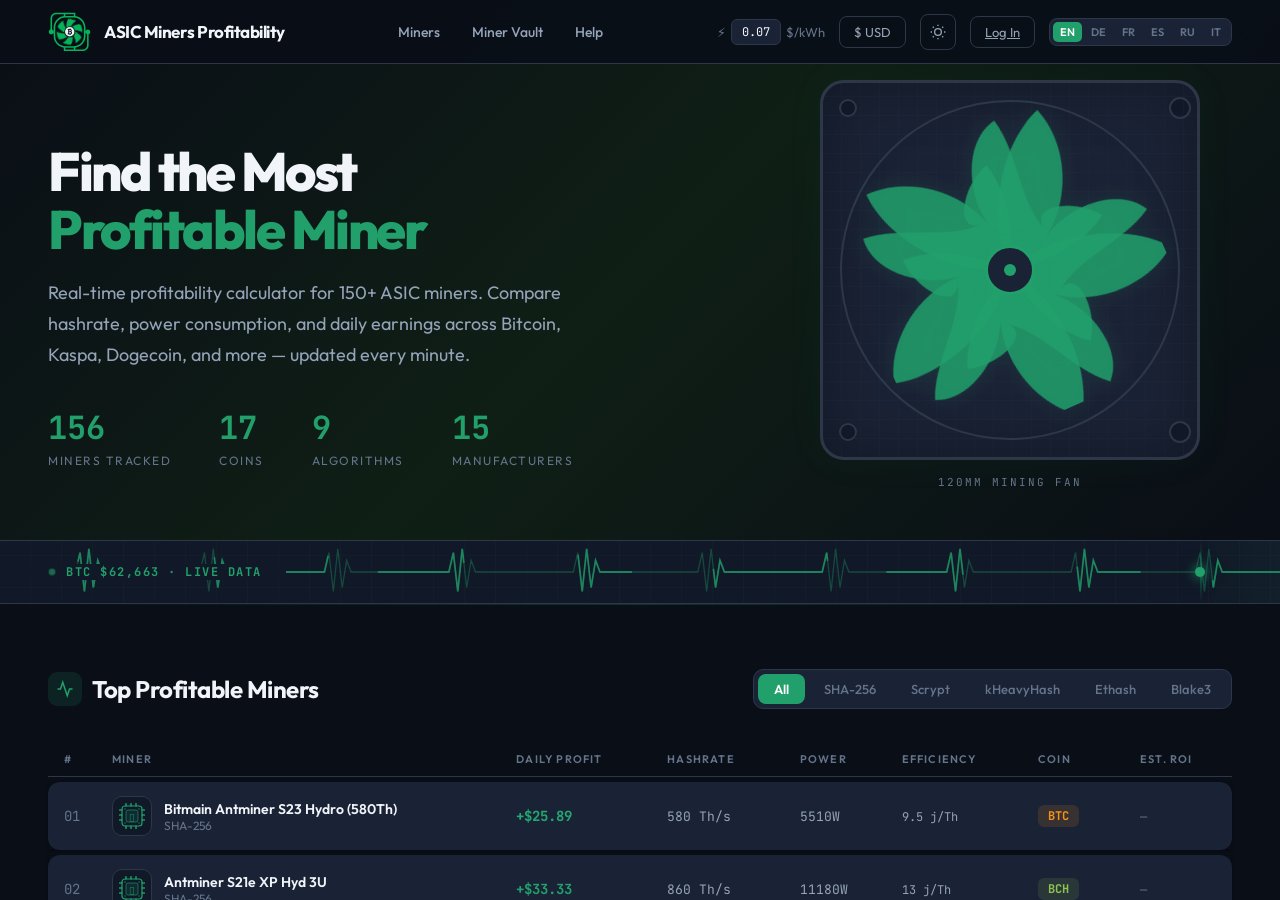
The S21 XP is in a category of its own on SHA-256 efficiency. No consumer-grade Bitcoin miner currently available comes close to 13.5 J/TH at this hashrate. The Aleo miners above operate on a completely different algorithm — they are not direct competitors, but they are worth knowing about if Bitcoin margins feel tight at your electricity rate. (Source: asicminersprofitability.com, 2026)
Home Mining Reality: Noise, Heat, and Your Neighbours
Honest answer: the S21 XP is loud. Very loud. Bitmain rates it at around 75 dB — that is somewhere between a vacuum cleaner running continuously and a busy restaurant kitchen. Living with it in a spare bedroom is possible. Running it in a flat with thin walls is a neighbourly dispute waiting to happen.
Heat is the other issue nobody mentions in the glossy reviews. The unit exhausts significant warm air. In winter, in a northern European climate, that is sometimes a benefit — free heating, essentially. In summer, or in a small room, you need active airflow management or the unit will throttle itself to avoid thermal damage.
If noise and heat are dealbreakers, the better option is something from the home miner category — smaller, quieter units designed for residential use. They do not match the S21 XP on hashrate or efficiency, but they will not cost you a neighbour or a security deposit either.
For anyone planning a small dedicated mining setup — a garage, basement, or outbuilding — the S21 XP is a serious candidate. Pair it with proper ventilation and a dedicated 16A circuit, and it runs reliably. We have seen firsthand that customers who skip the electrical infrastructure planning are the ones who send the most support tickets.
Is the S21 XP Profitable in Europe in 2026?
The Core Profitability Maths
At a Bitcoin price of approximately $59,963 USD (as of early 2026), a block reward of 3.125 BTC, and roughly 144 blocks mined per day, total daily Bitcoin issuance sits around 450 BTC. Network hashrate at 900 EH/s means a single S21 XP at 270 TH/s represents an extraordinarily small slice of the pie — roughly 0.00003% of global hashrate.
That translates to approximately 0.000425 BTC per day at current difficulty, or around €23–24/day in revenue before electricity costs. (Source: asicminersprofitability.com, 2026)
The Electricity Rate Cliff
This is where it gets uncomfortable. At €0.20/kWh — the low end of the Eurostat Q4 2025 EU average — daily electricity cost runs roughly €17.50. Daily profit: around €5.50–6.00. Thin, but real. (Eurostat, Q4 2025)
At €0.28/kWh — what many German and Danish households actually pay — you are spending €24.47/day on electricity against €23–24 in revenue. You are mining at a loss. Full stop.
The S21 XP is profitable in Europe, but only below roughly €0.22–0.23/kWh. If your rate is above that, you need either a cheaper power source — solar, industrial tariff, off-peak rates — or a different machine. Honestly, that eliminates a large chunk of Western European home miners right now.
Counterintuitive Advice Most Articles Miss
Here is the take you will not find in most S21 XP reviews: buying the most efficient miner does not automatically make you profitable. Efficiency reduces your cost floor, but it does not eliminate it. A miner at €0.18/kWh running an older, less efficient machine might outperform a miner at €0.26/kWh running an S21 XP, purely because the electricity rate gap overwhelms the efficiency advantage. The S21 XP is a tool. Your electricity contract is the strategy.
Mineshop.eu has been supplying European miners with genuine ASIC hardware since 2016; most orders ship from Ireland and Latvia, both in the EU, with fast DHL/FedEx delivery across all EU countries. In our experience shipping to customers across 27 EU countries, the biggest mistake beginners make is buying hardware first and checking their electricity rate second. Get that number right before anything else.
Who Should Actually Buy This Machine
The S21 XP earns a place in a serious home or small-scale mining setup — under specific conditions. You need an electricity rate below €0.22/kWh, a space that can handle 75 dB of continuous noise, and enough ventilation to prevent thermal throttling. If all three are true, this is currently the most efficient Bitcoin miner a retail buyer can get their hands on.
If you are above €0.25/kWh and mining from a flat in Amsterdam or Munich, this machine will not save you. You would be better served looking at alternative algorithms — the IceRiver ALEO series or the Goldshell AE Max are producing strong returns on Aleo right now, with lower electricity demands and smaller form factors.
The S21 XP is not for everyone. But for the miner with the right conditions, it is the best efficiency argument available on SHA-256 in 2026. That matters.
Ready to explore your options? Browse the full range of ASIC miners at Mineshop.eu, check current stock on the Bitmain Antminer series, or contact our team if you want a straight answer on whether the S21 XP makes sense at your electricity rate. We will tell you honestly if it does not.
Frequently Asked Questions
What is the hashrate and efficiency of the Antminer S21 XP?
A: The Antminer S21 XP delivers 270 TH/s of SHA-256 hashrate at a power draw of approximately 3,645W, giving it an efficiency rating of 13.5 J/TH. As of 2026, this makes it one of the most power-efficient retail Bitcoin miners available. (Source: Bitmain.com, 2026)
Is the Antminer S21 XP profitable in Europe in 2026?
A: At a Bitcoin price of approximately $59,963 USD and EU electricity rates between €0.20–0.30/kWh (Eurostat, Q4 2025), the S21 XP is profitable only at electricity costs below roughly €0.22–0.23/kWh. At €0.20/kWh, expect net daily profit of approximately €5.50–6.00 after electricity. At €0.28/kWh, the machine operates at a daily loss. Industrial tariffs, solar, or off-peak pricing can change this calculation significantly.
How loud is the Antminer S21 XP?
A: Bitmain rates the S21 XP at approximately 75 dB under load — comparable to a vacuum cleaner running continuously. It is not suitable for bedroom or open-plan living use. A dedicated space with sound dampening, good ventilation, and a separate electrical circuit is the minimum setup for comfortable long-term operation.
What electricity rate do I need to mine profitably with the S21 XP in 2026?
A: Based on current Bitcoin price (~$59,963 USD), network difficulty (~110–120 trillion), and the S21 XP's power draw of 3,645W, you need an electricity rate below approximately €0.22/kWh to generate a positive daily margin. Many Western European residential rates — particularly in Germany (€0.28–0.30/kWh) and Denmark — sit above this threshold, making profitability difficult without a subsidised or industrial power source.
How does the Antminer S21 XP compare to older Bitmain miners?
A: Compared to earlier generation SHA-256 miners operating at 25–30 J/TH, the S21 XP at 13.5 J/TH uses roughly half the electricity per terahash of work produced. At €0.25/kWh, that efficiency gap translates to hundreds of euros per month in reduced electricity costs — enough to meaningfully shift the profitability picture for miners who were previously operating at a loss.
Can I run the Antminer S21 XP at home without industrial electrical infrastructure?
A: The S21 XP draws approximately 3,645W, which requires a dedicated 16A circuit at 230V — standard in most European homes, but it should be a dedicated circuit, not shared with other appliances. A qualified electrician should assess your setup before installation. The heat output is also significant, requiring active ventilation. It is manageable at home with the right preparation, but it is not plug-and-play in the way smaller home miners are.
Comments (0)