

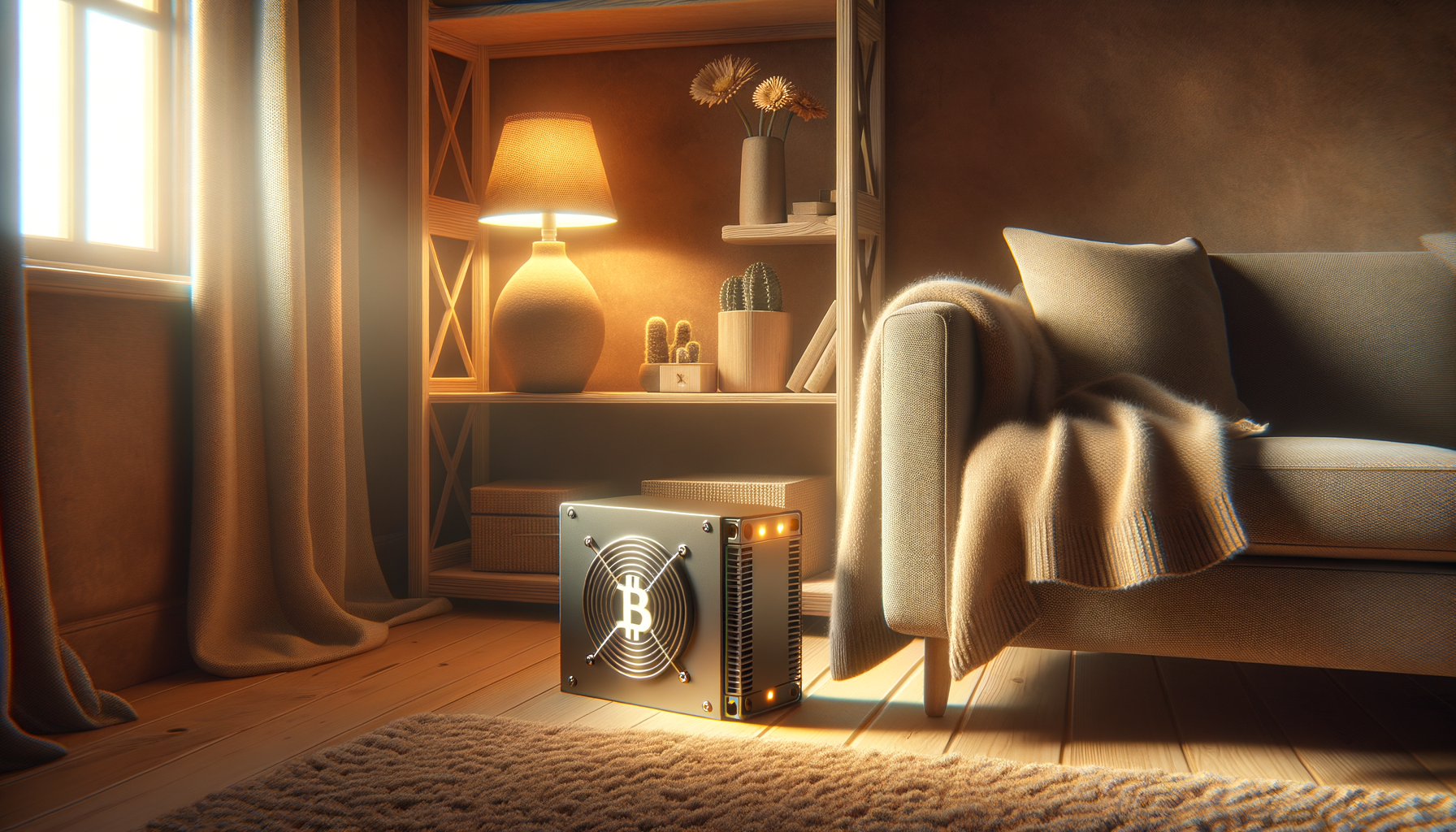
Calefactor Bitcoin: Usar un Mini Minero para Calentar una Habitación
¿Qué es un Calefactor Bitcoin?
Un calefactor bitcoin es exactamente lo que parece: un pequeño dispositivo de minería de bitcoin que también funciona como fuente de calor para tu hogar. Los mineros de bitcoin convierten la electricidad en dos cosas: bitcoin y calor. En una instalación tradicional de centro de datos, ese calor es un problema costoso que hay que evacuar. Pero cuando colocas un minero compacto en una habitación que ya estás calentando, obtienes calor útil como beneficio adicional. No pagas extra por la calefacción; estás redirigiendo energía que habrías gastado de todas formas.
Este concepto ha ido ganando popularidad entre los aficionados. Si vas a calentar una habitación de todas formas, ¿por qué no dejar que un minero lo haga y acumule una pequeña cantidad de bitcoin de paso? La matemática no siempre resulta obvia a primera vista, pero se vuelve más clara cuando empiezas a pensar en el minero como un calefactor primero y un dispositivo de minería segundo.
Cómo Producen Calor los Mini Mineros
Cada vatio de electricidad que entra en un minero de bitcoin sale como calor. Esto es termodinámica básica: el hardware de minería es esencialmente un calefactor resistivo con el efecto secundario de asegurar la red Bitcoin. Un dispositivo que consume 30 vatios produce el mismo calor total que una bombilla incandescente de 30 vatios. Los chips realizan trabajo computacional útil, pero desde el punto de vista de la física, toda la energía acaba como calor en la habitación.
Pocos Vatios, Calor Real
Los mini mineros de bitcoin de nivel de entrada como el Avalon Nano 3S consumen alrededor de 140–150 vatios, comparable a un pequeño calefactor de ventilador en su ajuste más bajo. Eso no va a calentar un salón grande, pero en una oficina en casa, el rincón de un dormitorio o un pequeño taller, marca una diferencia real en un día frío. El BitAxe consume apenas 15–20 vatios, más cercano a una lámpara de escritorio en cuanto a calor generado: un calor suave y ambiental más que una fuente de calor principal.
Ruido del Ventilador y Flujo de Aire
La mayoría de los mineros compactos usan pequeños ventiladores para mover el aire sobre los chips. No son silenciosos: espera entre 35 y 55 dB según la carga y la temperatura ambiente. Es tolerable en una oficina en casa o taller, pero probablemente no es lo ideal en un dormitorio mientras duermes. Una estantería bien ventilada, el rincón de un escritorio o una sala de uso técnico suelen funcionar mejor que la mesita de noche. Conseguir un buen flujo de aire también mantiene el minero funcionando con la máxima eficiencia, así que una buena ubicación beneficia tanto al confort como al rendimiento.
¿Qué Mini Mineros Funcionan Mejor como Calefactor Bitcoin?
No todos los mineros son iguales para calentar el hogar. Quieres algo que equilibre la producción de calor, los niveles de ruido y la facilidad de configuración. Aquí tienes tres opciones populares que merece la pena considerar:
Avalon Nano 3S
Fabricado por Canaan, el Avalon Nano 3S es uno de los mineros ASIC más aptos para el hogar disponibles. Consume alrededor de 140W, produce un calor modesto y constante, y es suficientemente silencioso para espacios habitables. Se conecta por Wi-Fi, no requiere una fuente de alimentación especial y se enchufa a una toma de corriente estándar. Para la mayoría de las personas que buscan un minero doméstico que también funcione como calefactor bitcoin, este es el punto de entrada más práctico disponible hoy en día.
BitAxe
El BitAxe es un minero de código abierto construido por la comunidad que usa chips ASIC recuperados de hardware Antminer más antiguo. Consume alrededor de 15–20 vatios y cabe en la palma de la mano. La producción de calor es mínima pero constante: piensa en él como una luz nocturna cálida para tu escritorio. El atractivo es la filosofía hacker: lo construyes tú, es tuyo, lo entiendes. No va a calentar tu habitación de forma notable, pero es un componente satisfactorio y educativo.
NerdMiner
El NerdMiner ocupa su propia categoría. Es un dispositivo de minería en solitario basado en microcontrolador que funciona con solo unos pocos vatios y produce casi ningún calor significativo. No lo compras para calentar una habitación, sino porque es un boleto de lotería en la red Bitcoin y un hardware de aficionado genuinamente ingenioso. Merece una mención aquí porque representa el punto de entrada absolutamente más bajo a la minería doméstica de bitcoin.
¿Vale la Pena? Analizando los Números
Un minero de 140 vatios no va a reemplazar tu calefacción central. La economía solo tiene sentido cuando lo ves correctamente: no como una inversión de minería aislada, sino como una compensación del coste de calefacción combinada con una recompensa de minería.
Si ya estás pagando para calentar una habitación y pones en marcha un minero junto a un calefactor convencional, el coste neto de la calefacción se reduce en lo que ganes en bitcoin. La calculadora de minería en solitario de bitcoin te ofrece una imagen realista de las ganancias esperadas con la dificultad actual de la red. Para tener una visión más completa de si recuperar el calor del minero realmente ahorra dinero en tu factura eléctrica, la calculadora de reutilización de calor modela tu situación específica según tu tarifa eléctrica local y tus necesidades de calefacción.
Cuando los Números Juegan a tu Favor
- Tu tarifa eléctrica es baja (idealmente por debajo de 0,15 EUR/kWh)
- De todas formas estás calentando una habitación, así que los vatios del minero no son un coste extra
- Te sientes cómodo con horizontes temporales largos: esto no es un retorno rápido
- Valoras la experiencia de aprendizaje y la conexión con la red Bitcoin
Cuando la electricidad es cara y no necesitas calefacción, los números se complican. Sé honesto con tus cifras antes de comprometerte con el hardware.
Configurar tu Calefactor Bitcoin Doméstico
Empezar es más sencillo de lo que la mayoría espera. Un dispositivo como el Avalon Nano 3S u otro minero ASIC compacto necesita tres cosas: una fuente de alimentación, una conexión de red y una configuración de pool de minería o minería en solitario.
- Alimentación: La mayoría de los mini mineros funcionan con corriente doméstica estándar. No se necesita un circuito especial de 240V para dispositivos de menos de 200W.
- Red: Conéctate por Wi-Fi o ethernet. El minero necesita acceso a internet para enviar shares a un pool o nodo en solitario.
- Pool o solitario: Apunta el minero a un pool de minería para cobros pequeños y regulares, o configúralo para minería en solitario si prefieres el enfoque de lotería. La minería en solitario con un dispositivo pequeño tiene estadísticamente pocas probabilidades de ganar, pero hay quien lo consigue.
- Ubicación: Asegura un buen flujo de aire alrededor del dispositivo. Una estantería con los laterales abiertos o un escritorio cerca de una ventana funcionan bien. Evita los armarios cerrados.
La mayoría de los mini mineros tienen una interfaz web basada en navegador: navega a la dirección IP del dispositivo en tu red local y configúralo desde allí. No se requiere línea de comandos.
El Panorama General: Reutilización del Calor en Casa
El concepto de calefactor bitcoin forma parte de una tendencia más amplia en la comunidad de minería doméstica: tratar a los mineros como fuentes de calor deliberadas en lugar de proyectos secundarios. Algunos aficionados canalizan el aire de escape del minero hacia sistemas de conductos en invierno. Otros usan configuraciones con refrigeración por inmersión para calentar el agua caliente doméstica. La mayoría simplemente coloca un minero en una estantería y deja que caliente un rincón de la habitación: el enfoque más sencillo y accesible.
La reutilización del calor a gran escala sí ocurre a nivel industrial —proyectos piloto de calefacción urbana en Escandinavia han integrado el calor de la minería en sistemas residenciales— pero la oportunidad real para la mayoría de las personas es mucho más simple. Una sola habitación, un pequeño minero, una factura de calefacción algo más baja y una conexión pasiva con la red Bitcoin. Esa es la propuesta honesta.
Explorar la gama de mini mineros de bitcoin es un buen punto de partida si estás valorando tus opciones. Los datos de rentabilidad están disponibles en asicminersprofitability.com. Más guías prácticas y artículos de configuración están en el blog de Mineshop.
Related Blog
Mineros de Bitcoin de bajo consumo para el invierno de 2026: BC01, Thor P2 y Bitaxe Gamma
Aug 31, 2026 by Mineshop Team
Mineshop mini bitcoin miner Asic miner
¿Cómo puedo minar Bitcoins? Guía completa de métodos de minería
Aug 29, 2026 by Mineshop Team
Mineshop Asic miner Bitcoin mining machine