

Buying a Refurbished ASIC Miner: What to Check Before You Buy
Buying a Refurbished ASIC Miner: What to Check Before You Buy
A used Antminer S19j Pro listed at €900 sounds like a bargain — until you discover it draws 3,050W, runs at 88% of its rated hashrate, and costs you €197 per month in electricity at German residential rates of €0.28/kWh. You are not saving money. You are paying slowly to lose it.
Buying refurbished ASIC miners is genuinely one of the smarter ways to enter Bitcoin mining in Europe without committing to the full price of a new machine. The key word is smarter — not cheaper, not easier, not guaranteed. A refurbished machine from a reliable source, with the right specs for your electricity rate, can return real money. The same machine from a shady reseller with a bent fan housing and a replaced hash board? That is a different story entirely.
Most guides on this topic give you vague checklists. This one gives you specific things to look for, specific numbers to run, and specific reasons why the conventional wisdom — buy the cheapest used miner you can find — is often wrong.
What We Cover
- What a refurbished ASIC miner actually is
- Why efficiency matters more than price when buying refurbished
- The physical and performance checks that matter
- Refurbished vs new: a real numbers comparison
- Frequently Asked Questions
- What you should actually do now
What a Refurbished ASIC Miner Actually Is
A refurbished ASIC miner is a second-hand cryptocurrency mining device — typically a Bitcoin SHA-256 machine or an altcoin ASIC — that has been returned, inspected, repaired if necessary, and resold, usually at 30–60% below the original retail price, with hashrate and power draw that may deviate slightly from factory specifications.
That definition matters because the word "refurbished" covers a huge range. A unit returned after three months of light home use is not the same as a miner pulled from a commercial farm after 18,000 hours of continuous 40°C operation. Both get called refurbished. The difference between them — in real terms — could be six months of usable life, or it could be a failed hash board inside the first week.
Sellers rarely tell you which category you are buying. That is why you need to ask — and know what to ask.
Why Efficiency Matters More Than Price When Buying Refurbished
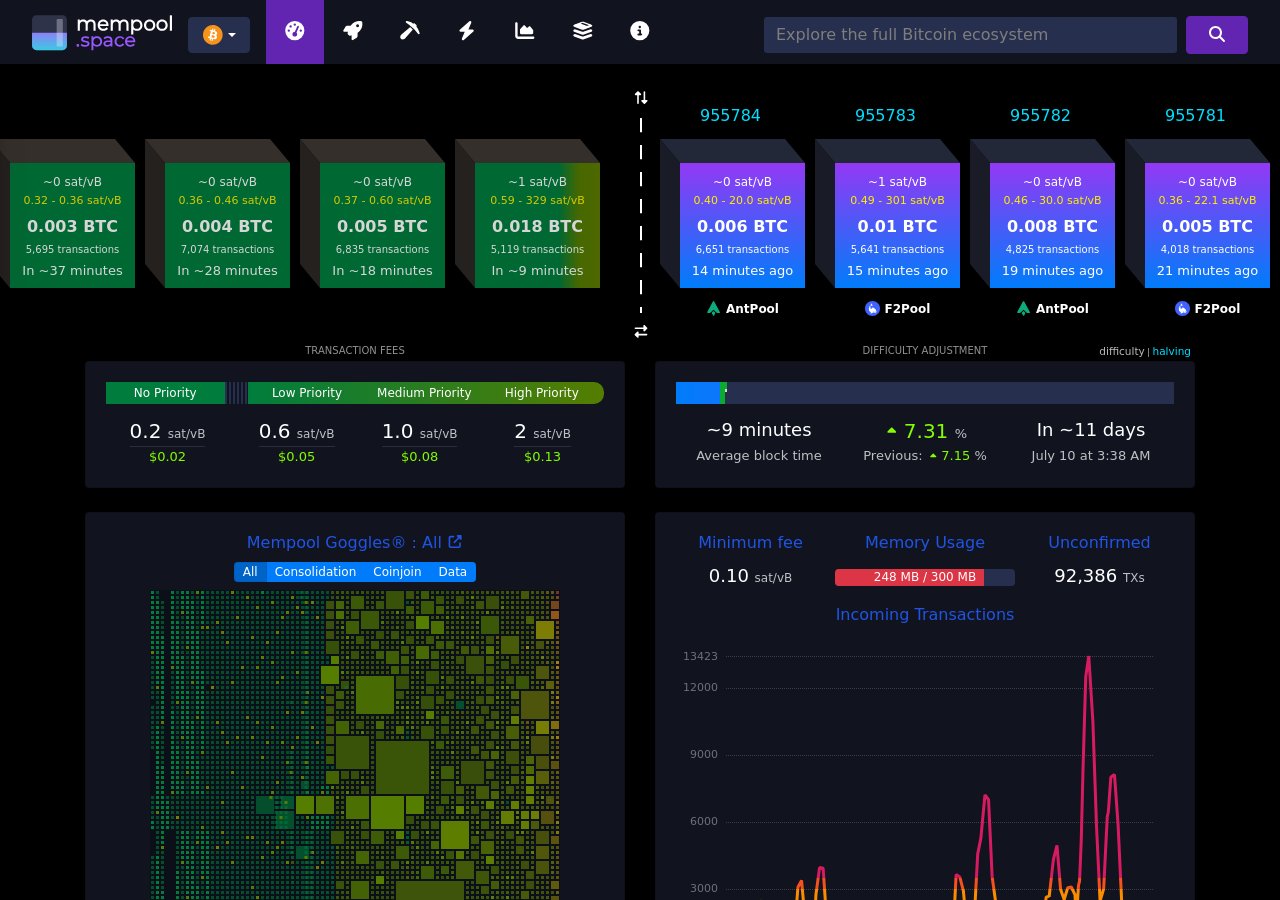
After the April 2024 halving, Bitcoin's block reward dropped to 3.125 BTC. Network hashrate is currently sitting between 800 and 1,000 EH/s (Source: mempool.space, Q1 2026). Mining difficulty is in the range of 110–120 trillion. This is not 2021. Margins on inefficient hardware are thin at best and negative at realistic European electricity prices.
The single number that decides whether a refurbished miner makes money for you is joules per terahash — J/TH. Lower is better. An older machine at 30 J/TH running at €0.25/kWh will cost you roughly €540 per month in electricity for every 100 TH/s of hashrate. A newer machine at 17 J/TH costs €306 for the same output. That €234 monthly gap does not disappear because you paid less upfront. It compounds, month after month, until the cheaper machine has cost you more in total.
Say you live in Latvia and pay €0.18/kWh — one of the lower residential rates in Europe (Eurostat, Q4 2025). Even there, an older S19-era machine at 29.5 J/TH barely breaks even against current difficulty. One upward difficulty adjustment and you are in the red. The refurbished S19 Pro is not the deal it looks like on paper.
In our experience shipping to customers across 27 EU countries, the biggest mistake beginners make is treating the purchase price as the only cost that matters. Electricity is the subscription fee that never stops. Get the J/TH wrong and you pay that subscription fee forever.
The Physical and Performance Checks That Matter
Before You Buy: Ask These Specific Questions
- How many hours has the unit run? Ask for a log if available. Above 20,000 hours, fan replacement is likely imminent.
- Have any hash boards been replaced? A replaced board is not automatically a problem — but you should know, because aftermarket boards vary in quality significantly.
- What is the actual measured hashrate, not the rated hashrate? Ask for a screenshot from the miner's dashboard. Anything below 95% of rated is worth negotiating on — or walking away from.
- What firmware is running? Outdated firmware can cause instability and can also indicate the unit was used for undervolting or overclocking, which stresses components.
Physical Inspection Points
If you are buying in person, or if the seller provides photos, check the fan housing for cracks or warping — a bent housing changes airflow and causes hotspots on the hash boards. Check the heatsinks for dust compaction. Compacted dust between fins is a sign the machine ran hot for extended periods. Look at the PCB around the ASIC chips: any discolouration, burn marks, or corrosion around solder joints is a red flag.
The power supply unit (PSU) deserves separate attention. Many used miners are sold without PSUs, or with third-party PSUs of unknown provenance. A failing PSU does not always show obvious signs — it just delivers unstable voltage that slowly degrades hash board performance. If buying a unit with a bundled PSU, ask whether it is the original APW series or a replacement.
The 24-Hour Test
Any reputable seller of refurbished ASICs should have run the machine for at least 24 hours post-inspection and be able to show you the results. Consistent hashrate, stable temperature readings (ideally below 75°C on the chips), and zero error-rate spikes are what you want. A machine that hits rated hashrate for ten minutes and then drops 15% is thermal throttling — it has a cooling problem that will only get worse.
Refurbished vs New: A Real Numbers Comparison
Here is a direct comparison of three scenarios a European home miner might actually consider. Prices are approximate as of Q1 2026. Profitability assumes BTC at $60,117, electricity at €0.22/kWh, and current network difficulty.
| Option | Hashrate | Efficiency | Est. Price | Monthly Elec. Cost | Est. Monthly Revenue |
|---|---|---|---|---|---|
| Refurbished older SHA-256 (~29 J/TH) | 100 TH/s | 29 J/TH | €500–700 | ~€153 | ~€145–160 |
| Whatsminer M30S++ (refurbished) | 112 TH/s | 31 J/TH | €600–800 | ~€183 | ~€163–178 |
| New Antminer S21 series (new) | 200 TH/s | 17.5 J/TH | €2,800–3,400 | ~€185 | ~€290–320 |
The older refurbished machine at €600 does not look terrible until you realise it is producing roughly the same monthly gross revenue as a machine that costs €3,000 — and that the newer machine produces twice the hashrate for nearly the same electricity bill. That is not a coincidence. Efficiency is the whole game at current difficulty levels. Honestly, that is not great news for cheap refurbished hardware.
The counterintuitive advice here: sometimes a newer, pricier refurbished machine from a recent generation is a better buy than a deeply discounted older one. A lightly used recent-generation ASIC at 15–18 J/TH sold refurbished at 25% off new price will outperform a three-generation-old machine at 29 J/TH bought at 65% off. The discount is bigger on the old machine because the market correctly values it less.
Worth knowing before you buy: Mineshop.eu has been supplying European miners with genuine ASIC hardware since 2016, with EU warehouse stock in Ireland and fast DHL/FedEx delivery across all EU countries.
Frequently Asked Questions
Is buying a refurbished ASIC miner worth it in 2026?
A: It depends entirely on the machine's efficiency rating and your electricity cost. At €0.22/kWh — close to the EU average (Eurostat, Q4 2025) — a refurbished miner at 17–20 J/TH can still generate positive returns. Anything above 28 J/TH at that rate is marginal at best under current network difficulty of 110–120 trillion. Run the numbers on asicminersprofitability.com before committing.
What is the most important spec to check on a refurbished ASIC?
A: Efficiency — measured in joules per terahash (J/TH). This determines your monthly electricity cost more than any other single figure. A machine rated at 17 J/TH running 200 TH/s draws 3,400W. At €0.25/kWh, that is roughly €612 per month in electricity. Know this number before you buy, not after.
How do I verify a refurbished ASIC miner's actual hashrate?
A: Ask the seller for a live screenshot of the miner's web interface showing real-time hashrate, temperature, and fan speed. Reputable sellers run machines for 24–48 hours post-inspection and document the results. If a seller cannot or will not provide this, that is your answer.
Are refurbished ASIC miners covered by warranty?
A: Manufacturer warranties do not transfer to second-hand buyers. Reputable retailers often offer a 30–90 day seller warranty on refurbished units. This varies significantly — always ask specifically what is covered and for how long, and get it in writing before purchase.
What are the risks of buying a refurbished ASIC from a private seller?
A: The main risks are undisclosed hash board replacements, hidden thermal damage, missing or third-party PSUs, and no recourse if the unit fails within days of arrival. Private sellers have no accountability beyond what you can enforce legally, which in cross-border EU transactions is slow and expensive. Buying from an established EU retailer eliminates most of these risks.
Which refurbished ASIC miners make sense for European home miners right now?
A: For Bitcoin SHA-256 mining, look for machines in the 15–20 J/TH range. For altcoin mining, the IceRiver ALEO AE3 and Goldshell AE Max are among the more actively discussed machines for ALEO mining at current profitability levels (Source: asicminersprofitability.com, Q1 2026). Always check live profitability before buying any machine.
What You Should Actually Do Now
Buying refurbished ASIC miners is not a lottery. It is a checklist problem — and you now have the checklist. Get the J/TH figure. Get the actual measured hashrate in writing. Ask about hash board history. Check whether the PSU is original. Run the electricity numbers at your specific rate before you look at the purchase price.
The machines that make money in 2026 are the ones with efficiency ratings that survive difficulty increases. A refurbished miner priced attractively because it is two generations old is priced attractively for a reason — the market has already done the maths on its future profitability.
Browse our full range of ASIC miners at Mineshop.eu, including new and available stock from Bitmain and MicroBT, shipped from our EU warehouse in Ireland. If you have questions about a specific machine's suitability for your electricity rate, our team is reachable at mineshop.eu/en/contact-us — and we will give you a straight answer, not a sales pitch.
Related Blog
RTX PRO 6000 vs RTX PRO 6000D: Care GPU Blackwell să cumperi în 2026?
Sep 7, 2026 by Guntis Vitolins
Mineshop
RTX PRO 6000 vs RTX PRO 6000D: Kuru Blackwell GPU iegādāties 2026. gadā?
Sep 7, 2026 by Guntis Vitolins
Mineshop
RTX PRO 6000 vs RTX PRO 6000D: Który GPU Blackwell wybrać w 2026?
Sep 7, 2026 by Guntis Vitolins
Mineshop
RTX PRO 6000 vs RTX PRO 6000D: Welches Blackwell GPU kaufen Sie 2026?
Sep 7, 2026 by Guntis Vitolins
Mineshop