


Alemania tiene algunos de los precios de la electricidad doméstica más altos de Europa — con una media de €0.28–0.32/kWh según tu tarifa y región (Eurostat, T4 2025) — y ese único hecho determina casi todo sobre si la minería de bitcoin en Alemania en casa tiene sentido financiero. La mayoría de las guías entierran esto. Te mostrarán gráficos de hashrate y calculadoras de ROI, pero nunca te dirán que a €0.30/kWh, una máquina de minería de gama media ASIC que consume 24/7 te cuesta aproximadamente €150–200 al mes solo en electricidad, antes de minar un solo satoshi que valga la pena conservar.
Eso no es una razón para dejar de leer. Es una razón para leer con atención.
El halving de abril de 2024 redujo la recompensa por bloque a 3.125 BTC. La hashrate de la red se sitúa entre 800–1,000 EH/s. La dificultad de minería está en torno a 110–120 billones. Estos números suenan abstractos hasta que te das cuenta de que significan que tu máquina de minería doméstica en Frankfurt compite con granjas industriales que operan miles de máquinas con contratos de energía por debajo de €0.05/kWh. Un planteamiento honesto es importante aquí. La minería doméstica en Alemania es posible, pero requiere la máquina adecuada, una tarifa de electricidad realista y ninguna ilusión sobre riquezas de la noche a la mañana.
Lo que cubrimos
- Costes de la electricidad en Alemania y lo que realmente significan para la minería
- ¿Es legal la minería doméstica de Bitcoin en Alemania?
- Qué máquinas de minería funcionan con las tarifas eléctricas alemanas
- Las realidades prácticas de operar una máquina de minería en casa
- Lo que ahora sabes cómo responder
- Preguntas frecuentes
Costes de la electricidad en Alemania y lo que realmente significan para la minería
El hardware de minería de Bitcoin es una categoría de dispositivo ASIC (Circuito Integrado de Aplicación Específica) diseñado exclusivamente para calcular hashes SHA-256, medidos en terahashes por segundo (TH/s), con la eficiencia expresada en julios por terahash (J/TH) — y ese número de eficiencia es la única especificación que importa cuando tu electricidad cuesta €0.28–0.32/kWh.
Digamos que vives en Múnich y pagas €0.29/kWh, que es aproximadamente la media para un hogar alemán ahora mismo. Una máquina de minería que consume 3,500W funciona 24 horas al día. Eso son 84 kWh al día, o aproximadamente 2,520 kWh al mes. Multiplica por €0.29 y estás gastando €730.80 al mes en electricidad por esa única máquina. Eso no es un proyecto secundario. Eso es un segundo pago de alquiler en algunas ciudades alemanas.
Por eso la eficiencia — J/TH — lo es todo. Una máquina de minería a 13.5 J/TH frente a una a 23 J/TH no es una diferencia marginal. Con la misma hashrate, la máquina menos eficiente te cuesta cientos de euros más cada mes. La mayoría de las guías de minería omiten por completo esta aritmética, lo cual es exasperante, porque es el juego entero.
Si tienes acceso a una tarifa más barata, digamos, a través de una tarifa empresarial, un contrato de bomba de calor o paneles solares que compensan el consumo diurno, la matemática cambia significativamente. Algunos hogares alemanes con instalaciones fotovoltaicas informan de costes efectivos de minería más cercanos a €0.10–0.15/kWh durante las horas pico de sol. Eso es una conversación completamente diferente.
¿Es legal la minería doméstica de Bitcoin en Alemania?
Sí. La minería de bitcoin en el hogar es completamente legal en Alemania. No se requiere licencia para operar un minero ASIC como individuo.
El aspecto fiscal es más matizado. El Bundeszentralamt für Steuern (Oficina Central Federal de Impuestos) de Alemania trata el bitcoin minado como ingreso de una actividad comercial o privada, dependiendo de la escala. Si su operación de minería genera beneficio, es decir, si el BTC que mina tiene un valor superior a sus costos de electricidad, ese beneficio está sujeto a impuestos como Ingresos de actividad empresarial (ingresos empresariales) si se realiza con intención comercial, o potencialmente como ingresos privados en caso contrario. Las pérdidas de la minería a veces pueden compensarse con otros ingresos, pero necesita un asesor fiscal que entienda de criptomonedas, no un contador general que adivine.
No existe obligación de registro para configuraciones domésticas pequeñas, pero una vez que los ingresos superan ciertos umbrales, un Registro comercial (registro comercial) puede ser obligatorio. Conviene saberlo antes de comprar: si operas una o dos máquinas como afición, el tratamiento fiscal es más favorable. Operar diez máquinas se parece mucho más a una empresa a ojos del Finanzamt.
También importan las normativas de ruido. Alemania tiene estrictas ordenanzas de ruido residencial. Un Bitmain Antminer S21 XP funciona a unos 75 dB, más ruidoso que una aspiradora, de forma sostenida e indefinida. Los apartamentos son entornos casi imposibles para mineros estándar ASIC. Las casas con un garaje o sótano independiente son mucho más viables.
Qué mineros funcionan con las tarifas eléctricas alemanas
Con €0.28–0.30/kWh, necesitas las máquinas más eficientes disponibles. No hay margen para hardware de generaciones anteriores. A continuación, una comparación de mineros actualmente disponibles en Mineshop.eu que son relevantes para configuraciones domésticas, incluida la eficiencia como filtro principal.
| Minero | Algoritmo | Hashrate | Consumo de energía | Eficiencia | Coste estimado mensual de energía (€0.29/kWh) |
|---|---|---|---|---|---|
| IceRiver ALEO AE3 | AleoBFT | 2,000 MH/s | 2,200W | 1.1 W/MH | ~€461 |
| IceRiver ALEO AE2 | AleoBFT | 1,000 MH/s | 1,100W | 1.1 W/MH | ~€231 |
| Goldshell AE Max | AleoBFT | 720 MH/s | 750W | 1.04 W/MH | ~€157 |
| IceRiver ALEO AE1 Lite | AleoBFT | 300 MH/s | 350W | 1.17 W/MH | ~€73 |
Fuente: asicminersprofitability.com, 2026. Estimaciones del coste de la energía basadas en un funcionamiento continuo a €0.29/kWh.
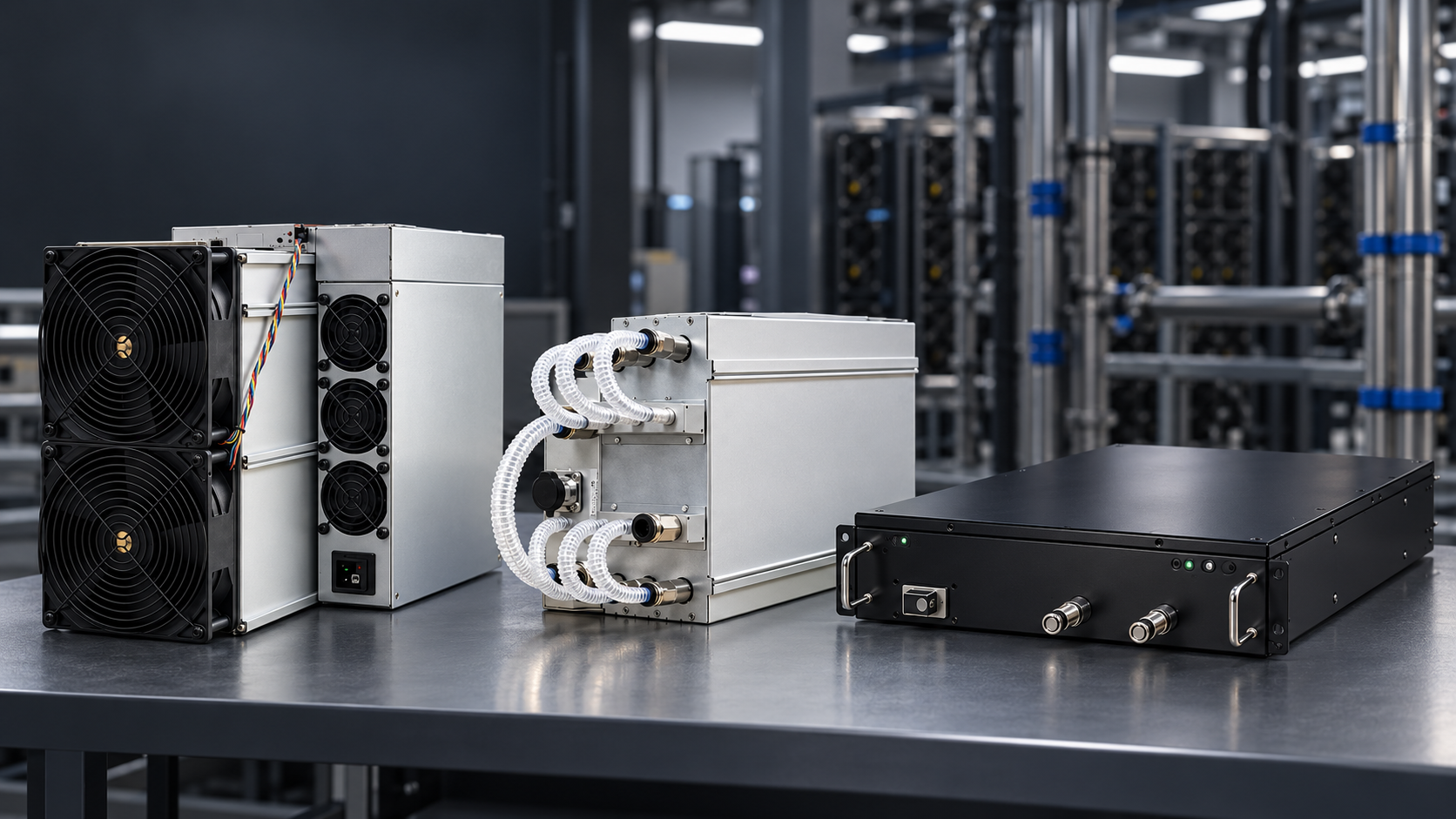
En el caso específico de los mineros domésticos alemanes, el IceRiver ALEO AE1 Lite merece atención, no porque sea la máquina más rentable, sino porque a 350W consume menos energía que muchos PC de sobremesa para juegos, lo que lo hace realmente viable en un entorno doméstico. La categoría de mineros domésticos a Mineshop incluye opciones seleccionadas específicamente por su menor nivel de ruido y consumo de energía.
Un punto contraintuitivo que la mayoría de los artículos pasan por alto: para los mineros domésticos alemanes, no minar Bitcoin SHA-256 directamente puede ser la jugada más inteligente en este momento. La minería de SHA-256 a los precios de la electricidad alemana es extremadamente ajustada. Los algoritmos alternativos de prueba de trabajo con una dificultad de red menor y hardware competitivo, como el ecosistema Aleo, pueden ofrecer mejores retornos por euro de electricidad a los precios de mercado actuales. Eso no es herejía. Eso es aritmética. (Fuente: asicminersprofitability.com, 2026)
Las realidades prácticas de operar un minero en casa
En nuestra experiencia enviando a clientes en 27 países de la UE, el mayor error que cometen los principiantes es subestimar los requisitos de infraestructura. La máquina es la parte más pequeña del problema.
Necesita un circuito dedicado. La mayoría de los enchufes residenciales en Alemania están calificados para 16A a 230V, lo que equivale a un máximo de 3,680W, sin otros dispositivos en el mismo disyuntor. Una sola ASIC de alto rendimiento saturará ese circuito. Operar dos máquinas implica trabajos eléctricos y potencialmente una conversación con su casero o administrador del edificio.
El calor es real. Una máquina de minería 2,200W emite 2,200W de calor, constantemente. En un invierno alemán, eso es calefacción gratuita. En un verano alemán, es un problema: las temperaturas ambientales superiores a 35°C provocarán la reducción de rendimiento (throttling) en la mayoría de los ASIC, y algunos se apagan por completo por encima de 40°C. Un sótano o garaje con ventilación resuelve esto. Un dormitorio no.
Los requisitos de conectividad a Internet son mínimos: una conexión cableada estable a 1 Mbps es más que suficiente. La selección de la piscina de minería es más importante: para los mineros europeos, las piscinas con servidores en la UE reducen la latencia y las tasas de participaciones obsoletas. Las comisiones de la piscina suelen ser del 1–2% de los ingresos.
Mineshop.eu ha estado suministrando a los mineros europeos hardware ASIC auténtico desde 2016, con entrega rápida mediante DHL/FedEx en todos los países de la UE. La mayoría de los pedidos se envían desde Irlanda y Letonia.
Lo que ahora sabe responder
La pregunta no es si la minería de bitcoin en Alemania es legal o técnicamente posible. Es si su tarifa eléctrica específica, su elección de hardware específica y su tolerancia al riesgo específica suman algo que valga la pena hacer.
A €0.29/kWh con una tarifa estándar alemana, las grandes máquinas de minería SHA-256 son marginales como mucho. Las máquinas más pequeñas y eficientes que apuntan a algoritmos alternativos con menor competencia ofrecen mejores probabilidades ahora mismo. Si tiene paneles solares, una tarifa comercial favorable o acceso a un edificio anexo dedicado, las cifras cambian significativamente a su favor.
Lo que no funciona: comprar una máquina de gama media de segunda mano, enchufarla a un enchufe de la cocina y esperar que se pague sola. Eso no es una estrategia de minería. Es un calentador de ambiente caro con acceso a Internet.
Explore la gama completa de máquinas de minería ASIC disponibles en Mineshop.eu, o vaya directamente a la categoría de máquinas de minería domésticas si desea máquinas específicamente adecuadas para uso residencial. Si tiene preguntas sobre qué hardware tiene sentido para su configuración, el equipo de Mineshop está disponible a través de la página de contacto — y han enviado suficiente hardware por toda Alemania para saber lo que realmente funciona allí.
Preguntas frecuentes
¿Es legal la minería de bitcoin en casa en Alemania?
A: Sí, la minería de bitcoin en casa es legal en Alemania y no requiere licencia. Sin embargo, las ganancias de la minería son ingresos gravables según la ley alemana. Si su operación se considera de naturaleza comercial, es posible que necesite registrar un comercio (Gewerbeanmeldung) en su autoridad local. Consulte a un asesor fiscal familiarizado con las criptomonedas para su situación específica.
¿Cuánto cuesta minar bitcoin en casa en Alemania?
A: Con la tarifa media de electricidad de los hogares en Alemania, de aproximadamente €0.29/kWh (Eurostat, T4 2025), una unidad de minería que consume 2,200W cuesta alrededor de €461 al mes en electricidad. Las máquinas más pequeñas orientadas al uso doméstico, que consumen 350W, cuestan cerca de €73 al mes. Si los ingresos por minería superan ese coste depende del precio de Bitcoin, de la dificultad de la red (actualmente ~110–120 billones) y de la tasa de hash de la unidad de minería específica.
¿Cuál es la mejor unidad de minería ASIC para uso doméstico en Alemania?
A: Para los mineros domésticos alemanes que se enfrentan a altos costes de electricidad, las máquinas eficientes de menor vatios son más prácticas que las unidades industriales de máxima tasa de hash. El IceRiver ALEO AE1 Lite de 350W y el Goldshell AE Max de 750W son opciones realistas para entornos residenciales. Ambos están disponibles en Mineshop.eu con entrega desde almacén de la UE.
¿Tengo que pagar impuestos por el bitcoin minado en Alemania?
A: Sí. La autoridad fiscal alemana (Finanzamt) trata el bitcoin minado como ingreso gravable. Para las personas físicas, las monedas minadas suelen evaluarse a su valor de mercado en el momento de la recepción. Si la minería se realiza como actividad empresarial, se rige por las normas de ingresos comerciales. Alemania sí tiene una exención por periodo de tenencia de 1 años para las ganancias en criptomonedas de monedas que fueron compradas, pero las monedas minadas tienen un tratamiento diferente. Se recomienda encarecidamente consultar con un asesor fiscal especializado en criptomonedas.
¿Puedo operar una unidad de minería ASIC en un apartamento alemán?
A: En la práctica, es muy difícil. Las unidades de minería ASIC estándar producen 70–80 dB de ruido continuo, comparable a una aspiradora en funcionamiento, todo el día, todos los días. Las normas de ruido residencial alemanas y las relaciones con los vecinos hacen que esto sea problemático. Las unidades de minería más pequeñas, como el IceRiver ALEO AE1 Lite, son más silenciosas y de menor potencia, lo que las hace más compatibles con apartamentos, pero incluso estas son más adecuadas para una habitación dedicada con ventilación.
¿Es rentable la minería de bitcoin en Alemania en 2026?
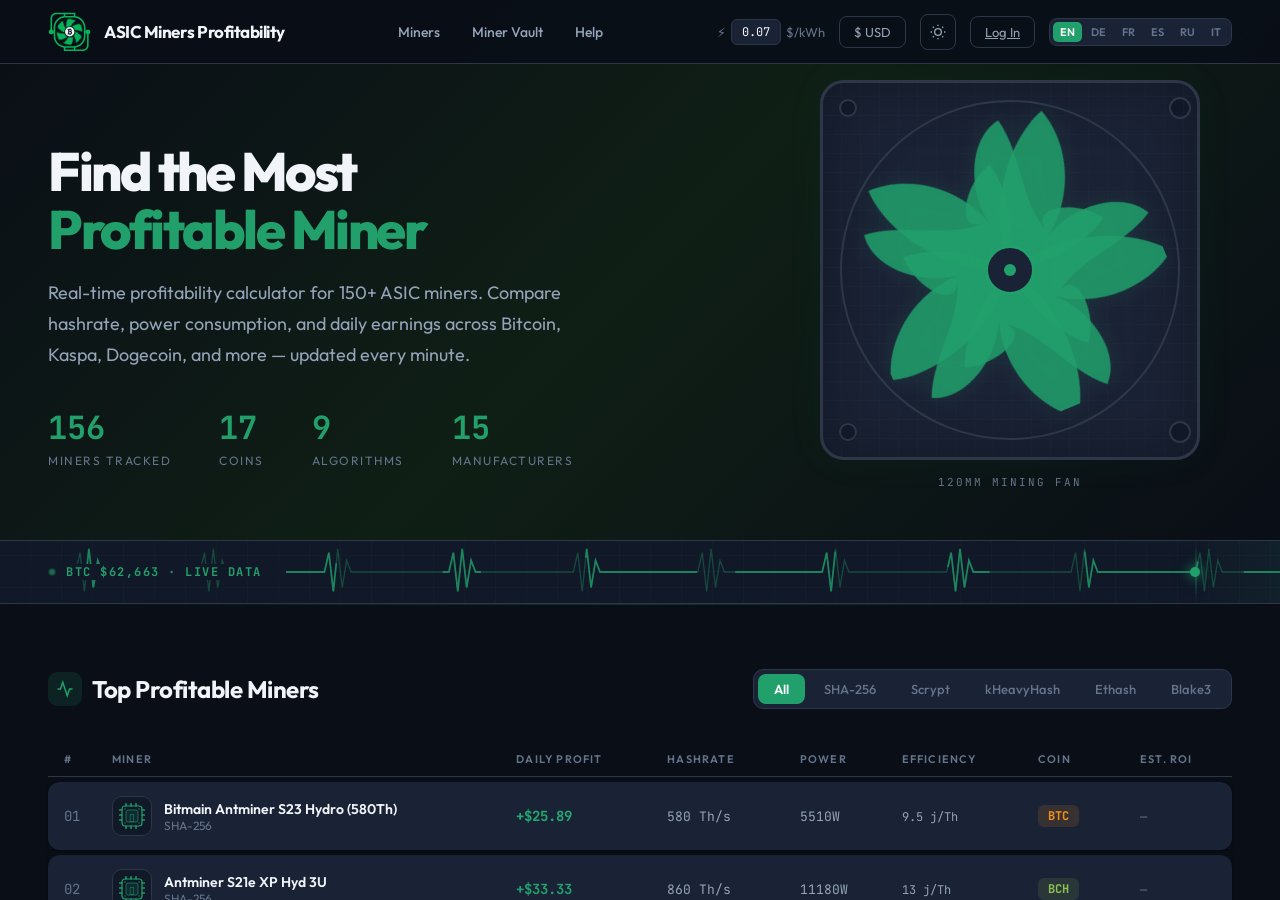
A: A €0.28–0.32/kWh, la minería directa de SHA-256 Bitcoin con tarifas domésticas estándar es escasa; existen márgenes, pero son estrechos. Con Bitcoin en aproximadamente $60,455 USD, una recompensa de bloque de 3.125 BTC y una tasa de hash de red de 800–1,000 EH/s, una unidad de minería doméstica representa una fracción extremadamente pequeña de la tasa de hash total de la red. Las unidades de minería de algoritmos alternativos que apuntan a redes menos competitivas pueden ofrecer mejores rendimientos por vatio con las tarifas eléctricas alemanas. (Fuente: asicminersprofitability.com, 2026)
Comments (0)