



Bitcoin Thuis Minen in 2026: Beginnersgids
De meeste thuisminers in Europa verliezen momenteel geld — niet omdat mining dood is, maar omdat ze de verkeerde machine kochten bij het verkeerde stroomtarief. Na de halving van april 2024, waarbij de blokbeloning werd teruggebracht naar 3,125 BTC, zijn de marges krapper geworden en is het verschil tussen een goede en een slechte keuze aanzienlijk groter geworden. Dat verschil loopt inmiddels op tot honderden euro's per maand.
De netwerk-hashrate bevindt zich ergens tussen de 800 en 1.000 EH/s in Q1 2026 (Bron: mempool.space, Q1 2026). De mining-moeilijkheidsgraad is gestegen naar ongeveer 110–120 biljoen. Bitcoin handelt rond de $85.000 USD. Dit maakt thuismining niet onmogelijk — maar het betekent wel dat de miner die je kiest en het stroomtarief dat je betaalt de enige twee variabelen zijn die er echt toe doen. Al het andere is ruis.
Deze gids is bedoeld voor Europese beginners die eerlijke cijfers willen, geen verkooppraatje. We bespreken welke hardware zinvol is, wat je energierekening echt doet met je marges, en wat de meeste gidsen gemakshalve vergeten te vermelden.
Wat We Behandelen
- Wat bitcoin thuis minen eigenlijk inhoudt — en wat het kost
- Waarom het stroomtarief het enige getal is dat telt
- De juiste hardware kiezen voor een thuisopstelling
- Hardwarevergelijking: welke miners zinvol zijn in 2026
- Aan de slag: pools, wallets en basisinstallatie
- Veelgestelde Vragen
- Wat je realistisch kunt verwachten van thuismining in 2026
Wat Bitcoin Thuis Minen Eigenlijk Inhoudt — en Wat Het Kost
Bitcoin thuis minen is het proces waarbij je een gespecialiseerde ASIC (Application-Specific Integrated Circuit) machine draait die SHA-256 hashberekeningen uitvoert, in competitie met het wereldwijde netwerk om transacties te valideren en een aandeel te verdienen in de huidige blokbeloning van 3,125 BTC — waarbij het netwerk ongeveer 144 blokken per dag produceert.
Die definitie is belangrijk omdat ze de inzet duidelijk maakt. Je downloadt geen software op je laptop. Je draait gespecialiseerde hardware die continu tussen de 400W en 3.500W verbruikt, 24 uur per dag. Een gemiddelde thuisminer die 1.200W verbruikt kost ruwweg €52–€86 per maand aan stroom, afhankelijk van of je in Frankrijk zit met €0,22/kWh of in Denemarken met €0,36/kWh (Eurostat, Q4 2025). Die kosten lopen door, of je nu één satoshi mint of niet.
De meeste mining-gidsen slaan de kostenkant volledig over, wat ronduit frustrerend is. Ze tonen je hashrate-grafieken en ROI-calculators, maar zeggen nooit: bij €0,28/kWh — wat een gemiddeld Duits huishouden betaalt — draaien veel machines van de oudere generatie momenteel met verlies. Punt.
Waarom het Stroomtarief het Enige Getal Is dat Telt
Stel je woont in Letland en betaalt €0,18/kWh. Dat is een van de betere woontarieven in de EU en verandert de berekening drastisch vergeleken met iemand in Duitsland die €0,28/kWh betaalt of Nederland met €0,25/kWh. De hardware is hetzelfde. De Bitcoin-beloning is hetzelfde. Maar de ene opstelling is winstgevend en de andere niet.
Efficiëntie — gemeten in joules per terahash (J/TH) — is hoe je stroomkosten vertaalt naar echt geld. Een machine die op 20 J/TH draait is twee keer zo duur in gebruik als een machine op 10 J/TH, bij dezelfde hashrate-output. Dat verschil is op schaal significant. We hebben het over €60–€120 per maand per machine — geld dat ofwel in jouw zak gaat of in die van je energieleverancier.
Dit is het tegendraadse advies dat de meeste artikelen missen: voor Europese thuisminers verslaat een machine met lagere hashrate maar uitstekende efficiëntie vaak een machine met hoge hashrate maar matige efficiëntie. Een luid beest van 3.500W dat 300 TH/s produceert op 11,7 J/TH ziet er misschien indrukwekkend uit, maar als je thuisnet de belasting niet aankan, je verhuurder het opmerkt, of je buren klagen over het lawaai — en dat zullen ze doen — dan is het geen praktische thuisopstelling. Kleinere, stillere en efficiëntere machines die zijn ontworpen voor thuisgebruik bestaan precies om die reden.
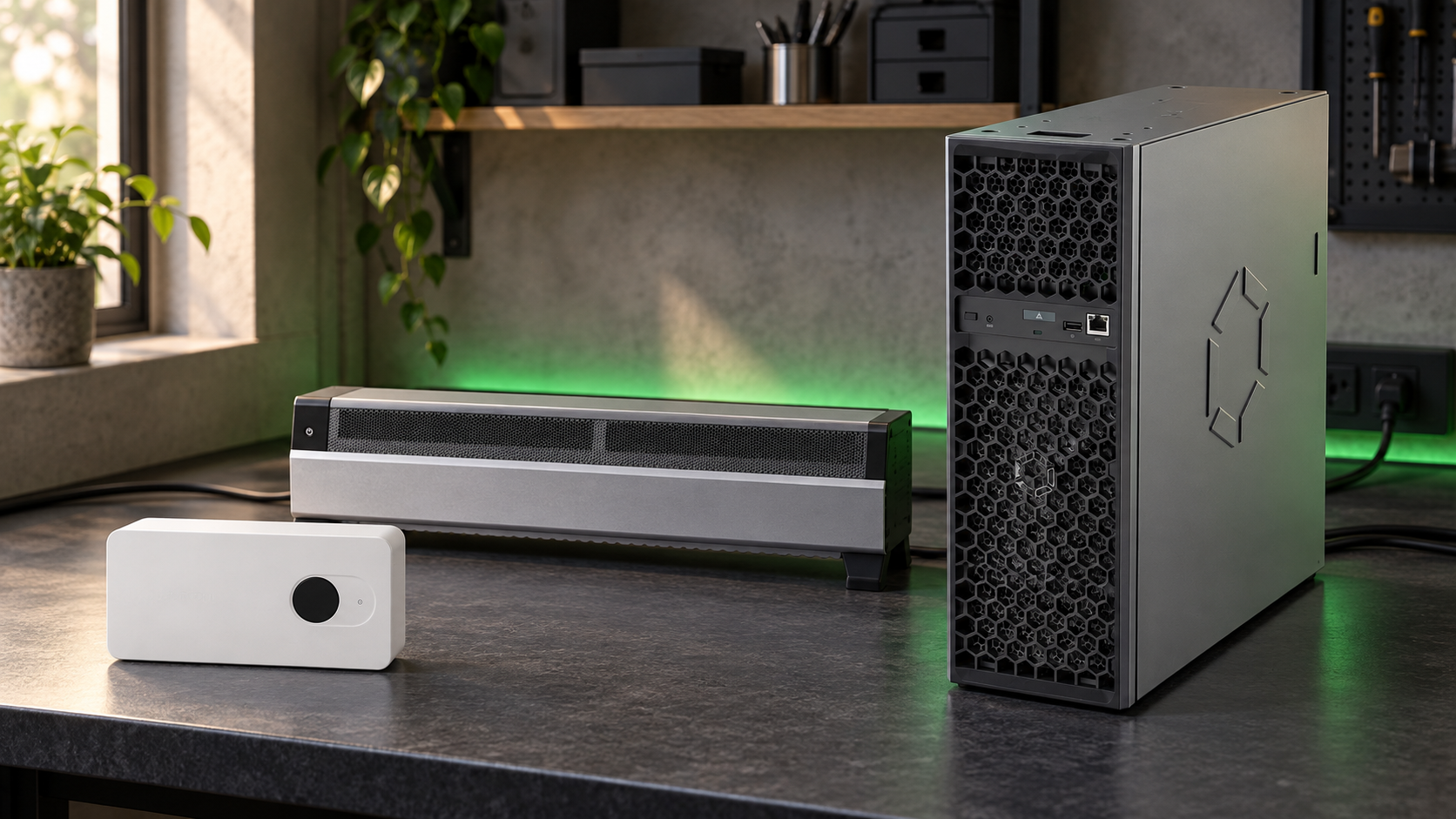
De categorie mini Bitcoin miners verdient serieuze aandacht als je net begint. Deze machines zijn ontworpen om in een thuisomgeving te draaien — stillere ventilatoren, lager stroomverbruik, geen industriële driefasevereisten.
De Juiste Hardware Kiezen voor een Thuisopstelling
Lawaai en Warmte — de Twee Problemen Waar Niemand je voor Waarschuwt
Een standaard Antminer of Whatsminer die op vol vermogen draait klinkt als een stofzuiger die nooit stopt. Niet ideaal als je in een flat woont, een slapend kind in de buurt hebt, of simpelweg je verstand wilt behouden. Eerlijk gezegd elimineert dit alleen al de meeste industriële miners voor thuisgebruik.
Warmte is het tweede probleem. Een miner van 3.000W blaast ruwweg het equivalent van drie elektrische radiatoren die tegelijk draaien naar buiten. In de winter is dat gratis verwarming. In de zomer is het een probleem dat ventilatie vereist waarvoor je waarschijnlijk niet hebt gepland.
Waar Je Echt op Moet Letten
- Stroomverbruik onder de 1.500W voor de meeste thuisopstellingen op een standaard 16A circuit
- Efficiëntie van 15 J/TH of beter — alles boven de 25 J/TH is moeilijk te rechtvaardigen bij EU-stroomtarieven
- Ventilatorgeluid onder de 65dB als de machine ergens in de buurt van woonruimte staat
- Compatibiliteit met enkelfasig 220–240V — standaard in alle EU-huishoudens
- Een machine die Mineshop.eu daadwerkelijk op voorraad heeft en binnen een week kan leveren via DHL of FedEx, zodat je niet twee maanden wacht op hardware van een grijze-markt wederverkoper
In onze ervaring met verzendingen naar klanten in alle 27 EU-landen is de grootste fout die beginners maken: de machine met de hoogste hashrate kopen die ze kunnen vinden, zonder te controleren of die fysiek geschikt is voor hun woning — om drie weken later te ontdekken dat hun meterkast eruit vliegt elke keer dat hij opstart, of dat hun huisgenoten een ultimatum hebben gesteld.
Hardwarevergelijking: Welke Miners Zinvol Zijn in 2026
| Miner | Algoritme | Hashrate | Stroomverbruik | Efficiëntie | Geschikt voor Thuis? |
|---|---|---|---|---|---|
| Goldshell AE Box Pro | Aleo (AleoBFT) | 44 MH/s | ~350W | ~8 W/MH | ✅ Ja — stil, laag verbruik |
| Bitmain Antminer X9 | RandomX (XMR) | Hoog-efficiënte XMR | ~1.200W | Sterk voor RandomX | ⚠️ Matig — beheersbaar geluid |
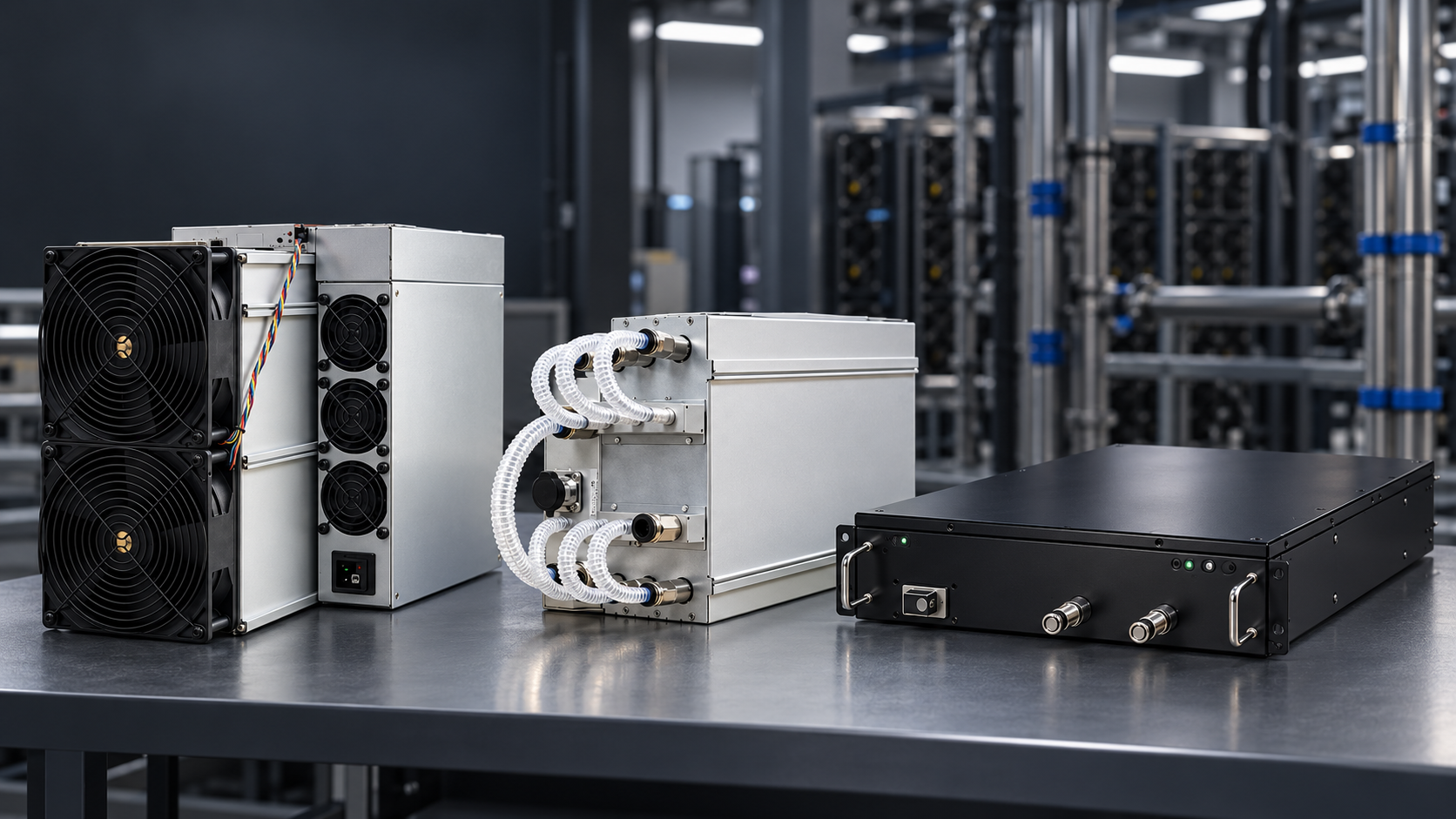
| Bitmain Antminer S23 Hyd | SHA-256 (BTC) | Hoge SHA-256 | ~3.000W+ | Uitstekend (watergekoeld) | ⚠️ Vereist waterkoelingsinstallatie |
| Pinecone INIBOX | INI | Compact thuismodel | Laag verbruik | Goed voor thuisgebruik | ✅ Ja — ontworpen voor thuis |
De categorie thuisminers bij Mineshop filtert specifiek op machines die werken in woonomgevingen. Het loont om daar te beginnen in plaats van door de volledige industriële catalogus te bladeren en maar te gokken.
Aan de Slag: Pools, Wallets en Basisinstallatie
Mining Pools vs. Solo Mining
Solo Bitcoin minen thuis in 2026 is — laten we eerlijk zijn — een lot in de loterij. Met het netwerk op 800–1.000 EH/s is de kans dat één thuisminer zelfstandig een blok vindt statistisch verwaarloosbaar. Je kunt de exacte kansen voor jouw hashrate berekenen op soloblocks.io/calculator. De cijfers zijn ontnuchterend.
Sluit je aan bij een pool. Punt. Pools bundelen de hashrate van duizenden miners, vinden regelmatig blokken en verdelen de beloningen evenredig. Braiins Pool, Foundry USA Pool en ViaBTC accepteren allemaal EU-miners. Kosten bedragen doorgaans 1–2% van de inkomsten — een redelijke prijs voor voorspelbare uitbetalingen.
Wallet Instellen
Je hebt een Bitcoin wallet-adres nodig voordat je ook maar één satoshi mint. Hardware wallets (Ledger, Trezor) zijn de veiligste optie voor langetermijnopslag. Voor pool-uitbetalingen volstaat een software wallet. Mine nooit rechtstreeks naar een exchange — als de exchange opnames bevriest, zijn je inkomsten onbereikbaar.
De Fysieke Opstelling
Verbind de miner via ethernet met je router — nooit via Wi-Fi. Open de webinterface van de miner via het lokale IP-adres, voer je pool-inloggegevens en wallet-adres in, en hij begint binnen enkele minuten te hashen. De daadwerkelijke configuratie is eenvoudig voor iedereen die vertrouwd is met een thuisrouter instellen.
Mineshop.eu levert Europese miners al sinds 2016 van echte ASIC-hardware, met snelle DHL/FedEx-levering naar alle EU-landen. De meeste bestellingen worden verzonden vanuit Ierland en Letland.
Veelgestelde Vragen
Is bitcoin thuis minen winstgevend in Europa in 2026?
A: Dat hangt bijna volledig af van je stroomtarief. Bij €0,18–0,20/kWh met een efficiënte moderne machine kan thuismining een bescheiden positief rendement opleveren. Bij €0,28/kWh of hoger — gebruikelijk in Duitsland, Denemarken en België — zijn de marges dun tot negatief voor de meeste SHA-256 miners. Miners op alternatieve algoritmen (RandomX, Aleo) kunnen betere marges bieden bij hogere stroomtarieven. Bereken altijd je cijfers op asicminersprofitability.com voordat je hardware aanschaft.
Wat is het minimumbudget om thuis te beginnen met bitcoin minen?
A: Een echte instapopstelling voor thuismining begint rond de €300–€600 voor een compacte, zuinige machine. Industriële SHA-256 miners kosten €1.500–€8.000+. Reken ook een stekkerdoos met overspanningsbeveiliging mee (€30–€60) en goede ventilatie waar nodig. Vermijd gebruikte miners van onbekende verkopers — versleten hash boards zijn een veelvoorkomend en kostbaar probleem.
Hoe luid zijn thuis bitcoin miners?
A: Industriële ASIC miners draaien doorgaans op 70–80dB — vergelijkbaar met een stofzuiger die continu loopt. Dat is onaanvaardbaar in de meeste woonruimtes. Machines die specifiek zijn ontworpen voor thuisgebruik, zoals die in de mini miners categorie, draaien op 40–55dB, wat haalbaar is in een garage, bijkeuken of aparte werkkamer.
Heb ik speciale elektrische bedrading nodig voor een thuisminer?
A: Standaard EU 220–240V enkelfasige stopcontacten zijn geschikt voor de meeste thuisminers die tot 1.500–1.800W verbruiken. Een dedicated 16A circuit is aan te raden om te voorkomen dat je zekering eruit vliegt. Machines boven de 2.500W hebben mogelijk een 32A circuit of driefasestroom nodig — niet gebruikelijk in woningen. Controleer de stroomspecificaties van de miner vóór aankoop.
Wat gebeurt er met mijn mining-inkomsten na de halving?
A: De halving van april 2024 verlaagde de blokbeloning van 6,25 BTC naar 3,125 BTC. Dit betekent dat elk gevonden blok de helft minder uitbetaalt dan voorheen. Mining-inkomsten worden deels gecompenseerd door hogere Bitcoin-prijzen na de halving — historisch gezien zijn de prijzen over 12–18 maanden voldoende gestegen om dit te compenseren. De volgende halving wordt verwacht rond 2028 en verlaagt de beloning naar ongeveer 1,5625 BTC.
Kan ik Bitcoin thuis ook minen met een GPU in plaats van een ASIC?
A: Nee. GPU-mining van Bitcoin is economisch zinloos in 2026. De netwerk-hashrate is 800–1.000 EH/s, bijna volledig samengesteld uit speciaal gebouwde ASIC-machines. Een high-end GPU produceert ruwweg 0,1 GH/s op SHA-256. Een middenklasse ASIC produceert 100.000+ GH/s (100 TH/s). Het verschil is zes grootteordes. GPU's zijn nog steeds bruikbaar voor bepaalde altcoin-algoritmen, maar niet voor Bitcoin.
Wat Je Realistisch Kunt Verwachten van Thuismining in 2026
Bitcoin thuis minen in 2026 is geen passief inkomen. Het is een bedrijf met echte operationele kosten, echte hardwarekeuzes en echte blootstelling aan Bitcoin-prijsschommelingen. Voor een Europese miner die €0,20/kWh betaalt met een goed gekozen, efficiënte machine kan het over een horizon van 12–18 maanden een betekenisvol rendement opleveren. Bij €0,28/kWh met een oudere of inefficiënte machine is het op zijn best een dure hobby.
Het eerlijke antwoord is: bereken je cijfers voordat je iets koopt. Ken je stroomtarief. Ken het stroomverbruik van de machine. Ken de huidige moeilijkheidsgraad. Besliss dan. Wie je een miner verkoopt zonder je door die berekening heen te leiden, doet je geen plezier.
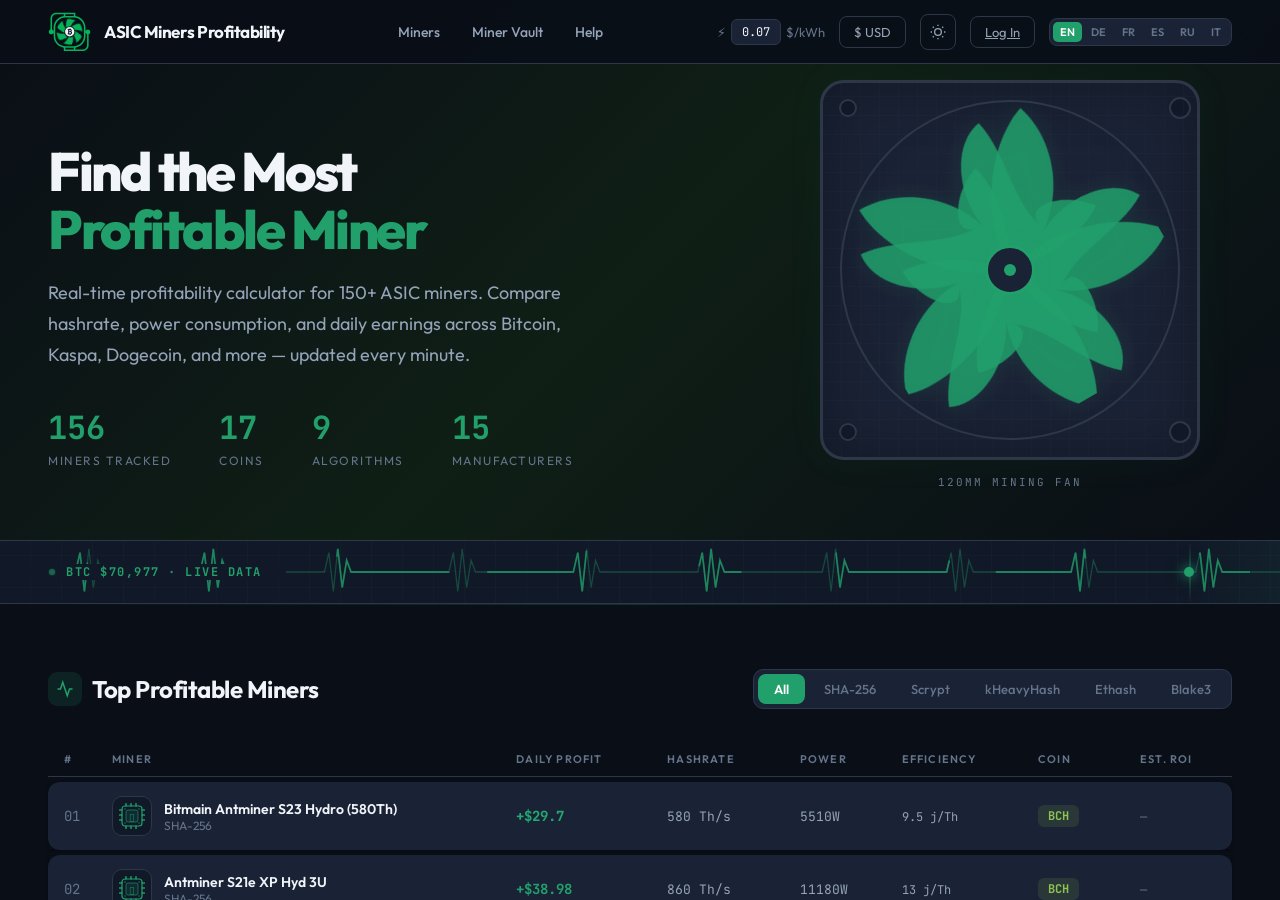
De miners die in 2026 echt zinvol zijn voor thuisgebruik zijn degenen die daarvoor zijn ontworpen — laag geluidsniveau, beheersbaar stroomverbruik, echte efficiëntiecijfers. Bekijk het volledige ASIC miner-aanbod bij Mineshop.eu, filter op wat je thuisopstelling daadwerkelijk aankan, en begin daar. Als je er niet zeker van bent, is het Mineshop-team rechtstreeks bereikbaar — en ze geven je een eerlijk antwoord in plaats van te pushen wat die week de hoogste marge heeft.
Comments (0)