



Två namn dominerar ASIC-brytningsvärlden: Bitmains Antminer och MicroBTs Whatsminer. Tillsammans står de för den stora majoriteten av världens Bitcoin-hashrate. Men om du ska starta en hemmabrytningsoperation år 2026, vilket märke ska du köpa? Svaret är inte så enkelt som att välja den med högst hashrate — ljudnivåer, strömförbrukning, garantistöd och återförsäljningsvärde spelar alla en roll i huruvida en miner faktiskt fungerar för dig hemma.
I den här guiden bryter vi ner de viktigaste skillnaderna mellan Antminer och Whatsminer tvärs över de metrik som betyder mest för hembrytare, så du kan investera i rätt hårdvara med förtroende.
Vad vi täcker
- Bitmain vs MicroBT: Företagen bakom minern
- Effektivitetsjämförelse: Vem vinner på J/TH?
- Ljud och värme: Att leva med din miner
- Tillförlitlighet och eftermarknadsstöd
- Lönsamhet: Vilket märke tjänar mer?
- Slutsatsen: Vilken bör du köpa?
Bitmain vs MicroBT: Företagen bakom minern
Bitmain, grundat 2013 i Beijing, är det äldre och mer etablerade av de två. Det uppfann den moderna ASIC-miner-kategorin med den ursprungliga Antminer S1 och har sedan dess itererat genom mer än 20 generationer av hårdvara. Bitmain driver också två av världens största Bitcoin-brytningspooler (Antpool och BTC.com), vilket ger det djup insikt i vad brytare faktiskt behöver i fältet.
MicroBT grundades 2016 av tidigare Bitmain-ingenjörer och lanserade sin Whatsminer-linje som en direkt utmanare till Antminers dominans. MicroBT:s ingenjörer förde med sig en ny designfilosofi — särskilt runt integrering av strömförsörjning och termisk hantering — och deras M-serie miners har vunnit en lojal följarskara bland professionella brytare som värdesätter byggkvalitet och drifttid.
Båda företagen säljer globalt och har auktoriserade återförsäljare över hela Europa. Du kan bläddra bland båda märkena i vår ASIC miner-katalog på Mineshop.
Effektivitetsjämförelse: Vem vinner på J/TH?
Effektivitet — mätt i joule per terahash (J/TH) — är den enskilt viktigaste specifikationen för en hembrytare. En mer effektiv miner genererar mer Bitcoin per euro av elektricitet, vilket direkt avgör om du är lönsam eller inte.
Aktuella flaggskeppsmodeller (2026)
För Bitmain-sidan ligger Antminer S21 XP på toppen av konsumentlinjen, rankad till cirka 270 TH/s vid 20.0 J/TH i standardläge. Den nyare Antminer S21 Pro pressar ännu längre, med sikte på sub-17 J/TH effektivitet i kontrollerade förhållanden.
| Spec | Antminer S21+ (216 TH/s) | Whatsminer M60S (186 TH/s) |
|---|---|---|
| Hashrate | 216 TH/s | 186 TH/s |
| Power | 3,555W | 3,441W |
| Efficiency | 16.5 J/TH | 18.5 J/TH |
| Noise | 75 dB | 75 dB |
| Cooling | Air (fan) | Air (fan) |
| Algorithm | SHA-256 | SHA-256 |
| Manufacturer | Bitmain (China) | MicroBT (China) |
| Firmware | Bitmain proprietary + 3rd party | MicroBT proprietary |
| EU availability | ✓ In stock | ✓ In stock |
Källa: Bitmain.com och MicroBT.com officiella specifikationer, Q1 2026.
MicroBT:s svar är Whatsminer M60S, som levererar omkring 186 TH/s vid 18.5 J/TH i dess mest effektiva variant, med M66S på väg mot 20+ J/TH vid högre hashrates. MicroBT har historiskt varit konkurrenskraftigt på effektivitet och har i vissa generationer tillfälligt hållit J/TH-kronan.
I råa effektivitetstermer för 2026 är Bitmain och MicroBT jämbördiga på flaggskeppsnivå, med specifika modeller som byter ledning beroende på firmware-revisioner. Skillnaden i lönsamhet mellan den bästa Antminern och den bästa Whatsminer vid motsvarande inköpspris är typiskt mindre än 5%.
För en aktuell lönsamhetsjämförelse med din faktiska elektricitetskostnad, anslut båda modeller till ASIC miners lönsamhetskalkylator.
Ljud och värme: Att leva med din miner
Detta är där de verkliga skillnaderna för hemmabrytare uppstår. Båda flaggskeppsminerna kör industriella fläktar under full belastning och är verkligen höga — men det finns meningsfulla skillnader i hur varje märke hanterar termisk hantering.
Antminer ljudprofil
Antminers under full belastning kör typiskt mellan 72–78 dB beroende på modell och omgivningstemperatur. S21-serien använder en dubbel fläktdesign som accelererar aggressivt under belastning. Vid lägre temperaturer (sval källare, garage på vintern) kan du ofta köra undervoltade profiler som sänker ljudet till 60–65 dB — fortfarande märkbart men hanterbart i ett dedikerat rum. Bitmains nyare modeller stödjer även anpassade frekvenstabeller via Braiins OS+ eller HiveOS, vilket ger dig finjusterad kontroll över ljud/hashrate byteoffret.
Whatsminer ljudprofil
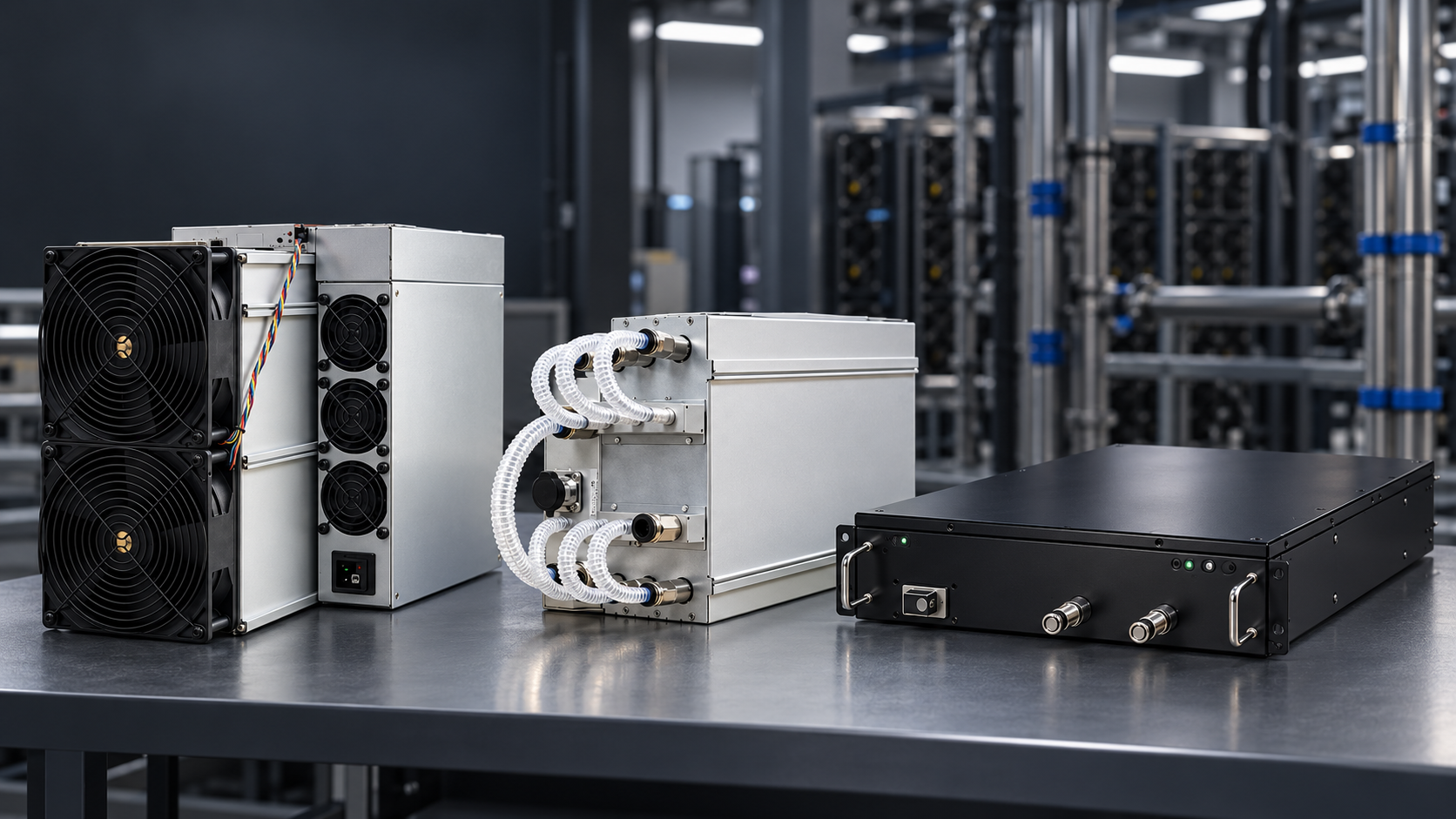
MicroBT:s M60-serie kör likvärdigt högt vid 72–76 dB under full belastning. En fördel med Whatsminer-designen är integrerad PSU (kraftförsörjningsenhet) — den är inbyggd i miner-chassit istället för att vara en separat enhet. Detta betyder färre kablar, något enklare installation och en sak mindre som kan gå sönder. Den integrerade PSU:n tenderar också att köras något svalare än externa enheter, vilket kan hjälpa i en hemmainstallation med begränsad ventilation.
Värmeutsläpp
Båda flaggskeppsminerna avger ungefär 3,000–5,500W av värme beroende på modell och överklockningsprofil. Om du kör en S21 XP på full effekt i ett sovrum, förvänta dig att behöva seriös ventilation eller luftkonditionering. Många hemmabrytare finner att underklockning till 50–70% effekt träffar den optimala punkten: fortfarande mycket lönsam vid rimliga elektricitetspriser, medan ljud och värme minskar avsevärt.
Om du vill ha en hemtrevlig miner som körs tyst direkt ur lådan, överväg vårt urval av mini Bitcoin miners — enheter som Avalon Nano 3S är designade speciellt för hembruk och opererar på bibliotekstysta ljudnivåer.
Tillförlitlighet och eftermarknadsstöd
Antminer tillförlitlighet
Bitmains kvalitetskontroll har förbättrats avsevärt sedan S9-eran. S19- och S21-generationerna har generellt visat solid tillförlitlighet när de körs inom specifikationer. Hash board fel är det vanligaste problemet, och Bitmains garanti täcker tillverkningsfel i 180 dagar från inköp. Tjänster för tredjepartsreparation av Antminers finns i stor utsträckning i Europa, vilket betyder om du någonsin behöver en hash board utbytt utanför garanti.
Whatsminer tillförlitlighet
MicroBT:s Whatsminers har förvärvat ett starkt rykte för tillförlitlighet, särskilt kring PSU:n — den integrerade designen eliminerar en vanlig felpunkt. M30S- och M60-serien har visat konsekvent låga felprocent i stora distributioner. MicroBT erbjuder en liknande 180-dagars garanti, men att hitta auktoriserade reparationscenter i Europa kan vara något svårare än för Bitmain-hårdvara.
Firmware och mjukvaruekosystem
Bitmain har det större mjukvaruekosystemet. Braiins OS+ stödjer hela S19- och S21-serien, erbjuder autotuning, lägre effektprofiler och detaljerad telemetri. De flesta tredjeparts brytplattformar (HiveOS, Foreman, etc.) listar Antminer-stöd först. Whatsminer-stöd finns i alla stora plattformar men är ibland en version eller två bakom när det gäller nya firmwareegenskaper.
Lönsamhet: Vilket märke tjänar mer?
Vid motsvarande inköpspriser är skillnaden i lönsamhet mellan en toppklass Antminer och en toppklass Whatsminer minimal år 2026. Vad som betyder mycket mer är:
- Din elektricitets kostnad — vid €0.10/kWh kan du köra nästan vilken flaggskepps som helst lönsamt; över €0.15/kWh behöver du de mest effektiva modellerna
- Inköpspris vs nuvarande andrahandsmarknad — en väl underhållen begagnad M60S för €2,000 kan överträffa en ny S21 för €3,500 på ROI-tidslinje
- Din förmåga att undervolta — Antminer + Braiins OS ger mer granulär kontroll för lågkostnadsmiljöer
Båda märkena svarar liknande på Bitcoin-prisrörelser och svårighetsjusteringar. Inget märke har en påtaglig fördel när det gäller brytningspoolkompatibilitet — båda fungerar perfekt med alla större pooler inklusive Antpool, F2Pool, ViaBTC och andra.
Slutsatsen: Vilken bör du köpa?
För de flesta hemmabrytare år 2026 är här den enkla sammanställningen:
- Välj Antminer om: du vill ha det största mjukvaruekosystemet, planerar att köra Braiins OS+ för finkalibrerad effektivitet eller prioriterar enkel åtkomst till tredjepartsreparationstjänster i Europa
- Välj Whatsminer om: du värdesätter den renare allt-i-ett PSU-designen, har haft tillförlitlighetsproblem med externa PSUs tidigare, eller hittar en Whatsminer till ett bättre andrahandspris
Båda är utmärkta val. Om du hittar båda till samma pris med liknande specifikationer, välj den som har bättre europeiskt garantistöd vid köptillfället. Du kan utforska båda sortimenten i vår Bitmain Antminer-kollektion och vår fulla ASIC miner-katalog på Mineshop.eu.
För detaljerade specifikationer på specifika modeller, kolla in de officiella sidorna på Bitmain.com och MicroBT.com.
Vanliga frågor
Är Antminer bättre än Whatsminer för hemmabrytning år 2026?
S: För hemmabrytning ligger Antminer S21+ före i rå effektivitet vid 16.5 J/TH jämfört med Whatsminer M60S vid 18.5 J/TH. Men båda är industriell-maskiner. För genuint tyst hembruk, överväg mini miner-kategorin — enheter som NerdQAxe++ (4.8 TH/s) eller Avalon Nano 3S (4 TH/s) körs tyst vid under 25W.
Vilket märke har bättre firmware-stöd — Bitmain eller MicroBT?
S: Bitmains Antminer har bredare tredjeparts firmware-stöd (Braiins OS+, BOS+, Vnish) som kan låsa upp ytterligare effektivitetlägen och bättre poolhantering. MicroBT:s firmware är mer låst, men pålitlig. För seriösa solobrytare är Braiins OS+ på en Antminer den föredragna setupen (Källa: Braiins.com, 2026).
Kan jag använda en Antminer eller Whatsminer för solobrytning av Bitcoin?
S: Ja — båda fungerar perfekt med solobrytningspooler som CKPool Solo, Public Pool och FutureBit. Du riktar minerens pool-URL till solo-poolen och anger din egen plånboksadress. Vilken SHA-256 ASIC som helst kan tävla om 3.125 BTC blockbelöningen. Sannolikheten är väldigt låg individuellt, men den är statistiskt sett samma som en lotteribiljett som körs 24/7.
Vad är ROI-tidslinjen för en Antminer S21+ år 2026?
S: Vid nuvarande Bitcoin-priser (~$85,000) och nätverkssvårighet genererar Antminer S21+ vid €4,099 ungefär €8–12 per dag (beroende på el-kostnad). ROI är typiskt 12–18 månader vid €0.08/kWh EU-industriella priser. Vid hjemmepriser (€0.20–0.30/kWh), sträcker sig ROI till 24–36 månader (Källa: asicminersprofitability.com, mars 2026).
Säljer Mineshop.eu både Antminer och Whatsminer?
S: Ja — Mineshop.eu lager för båda märkena med EU-lageruppfyllning. Inga tullavgifter, DHL/FedEx-leverans inom 2–4 arbetsdagar. Modeller inkluderar S21-serien, XP-serien (Antminer) och M60-serien (Whatsminer). Alla enheter är nya, förseglade och inkluderar standardgaranti.
Klar att börja bryta?
Utforska vårt fulla sortiment av ASIC Bitcoin miners på Mineshop.eu, inklusive de senaste Antminer och Whatsminer-modellerna. Vi levererar över hela Europa med snabb leverans och erbjuder expertstöd för hem- och småskalig brytning.
Inte säker på vilken modell som passar din installation? Kontakta vårt team — vi hjälper gärna till att välja rätt miner för ditt el-kostnad, utrymme och budget.
Comments (0)