



Container Mining: The Complete Guide for 2026
A 40-foot shipping container packed with 200 ASICs draws roughly 800 kW of power continuously. That is not a typo. At Germany's average household rate of €0.28/kWh, that container costs you €5,376 per day in electricity alone. Before you buy a single machine, that number should reframe everything you think you know about container bitcoin mining.
Container mining is not a home miner's upgrade. It is a different category of operation entirely — closer to running a small industrial facility than plugging in a few rigs in your garage. But for the right buyer, with access to sub-€0.10/kWh industrial power and a piece of land in a permissive jurisdiction, it is one of the most capital-efficient ways to mine Bitcoin at scale in Europe right now. The problem is that most guides skip the uncomfortable specifics, which is maddening when you are trying to make a €100,000+ decision.
This guide gives you the actual numbers.
What We Cover
- What container bitcoin mining actually is (and the citable definition)
- The real economics: power costs, hashrate, and what the April 2024 halving changed
- Which hardware belongs in a mining container in 2026
- Setting up a container mine in Europe: permits, cooling, and grid connection
- Honest trade-offs most sellers won't tell you
- Is container mining right for you?
- Frequently Asked Questions
What Container Bitcoin Mining Actually Is
Container bitcoin mining is a large-scale ASIC deployment method that uses modified shipping containers as self-contained mining facilities, typically housing 100–300 miners per unit and consuming between 400 kW and 1.5 MW of electrical power depending on configuration and hardware density. A standard 20-foot container fits roughly 80–120 miners; a 40-foot unit can hold 200 or more when fitted with custom racking, industrial ventilation, and PDU infrastructure.
The container format exists because it solves three real problems simultaneously: it is modular (you can add capacity by adding containers), it is portable (technically — though moving a live mining container is not trivial), and it creates a controlled environment that protects hardware from dust, moisture, and physical interference far better than most improvised indoor setups.
Mineshop.eu has been supplying European miners with genuine ASIC hardware since 2016; most orders ship from Ireland and Latvia, both in the EU, with fast DHL/FedEx delivery across all EU countries. We stock mining containers and can advise on configuration — but the honest truth is that containers are not the right starting point for most people asking about them.
The Real Economics After the April 2024 Halving
After the April 2024 halving, the block reward dropped to 3.125 BTC. With Bitcoin trading at roughly $80,000–$90,000 USD (as of Q1 2026) and network hashrate sitting between 800–1,000 EH/s, mining difficulty has climbed to approximately 110–120 trillion. That combination — lower block reward, higher difficulty, moderate BTC price — means efficiency is everything. A miner burning 3,500W to produce 400 TH/s is not a mining asset anymore. It is a space heater with a USB port.
Say you are operating a 40-foot container in Poland with 200 units of a mid-tier miner pulling 3,276W each at 335 TH/s. Total draw: ~655 kW. If you have negotiated industrial power at €0.07/kWh — which is achievable in parts of Eastern Europe and Scandinavia with the right setup — your daily electricity cost is approximately €1,100. At current BTC prices and difficulty, 200 units at 335 TH/s each (67,000 TH/s total or 67 PH/s) generates roughly 0.05–0.07 BTC per day, worth approximately €4,000–€5,600 at €85,000/BTC. Margins exist, but they are not fat.
At €0.20/kWh — closer to what you pay in Ireland or France — that same container costs €3,144/day in electricity. The economics collapse. This is not a matter of optimisation; the math simply does not work above roughly €0.12/kWh for most air-cooled setups at current difficulty. (Source: asicminersprofitability.com, Q1 2026)
Why Electricity Rate Is the Only Number That Matters
Hardware is a one-time cost. Electricity is forever. A container operation running at €0.07/kWh versus €0.15/kWh is not twice as profitable — it is the difference between a viable business and a guaranteed loss. Before you spend a single euro on containers or miners, get a written quote from an industrial energy supplier. Everything else is secondary.
Which Hardware Belongs in a Mining Container in 2026
Container deployments demand the most efficient hardware you can source, because inefficiency compounds brutally at scale. The Bitmain Antminer S23 Hyd 3U is worth serious attention for container builds — it uses hydro-cooling rather than air fans, which dramatically reduces thermal management complexity inside a container and allows higher packing density. Hydro-cooled units also run significantly quieter than air-cooled equivalents, which matters less inside a steel box in an industrial yard but still affects maintenance conditions.
For operators who want air-cooled simplicity, the Bitmain Antminer X9 targets the XMR RandomX algorithm — a reminder that container mining does not have to mean Bitcoin exclusively. Algorithm diversification is a genuine hedge against Bitcoin-specific difficulty spikes.
Honestly, the hardware choice matters less than most people think compared to electricity cost — but within the constraint of having good power, choose the lowest J/TH unit you can afford. Every watt saved per terahash is money you keep permanently.
| Miner | Hashrate | Power Draw | Efficiency | Cooling Type | Container Fit |
|---|---|---|---|---|---|
| Antminer S23 Hyd 3U | 335 TH/s | 3,276W | ~9.8 J/TH | Hydro | Excellent — high density |
| Antminer X9 (XMR) | 1,770 KH/s | 1,550W | N/A (diff. algo) | Air | Good — lower power per unit |
| Goldshell AE Box Pro | 44 MH/s (ALEO) | ~220W | 5 J/MH | Air | Niche — alt-coin only |
Specs sourced from manufacturer datasheets (Bitmain.com, 2026; Goldshell.com, 2026). Profitability figures vary with network conditions.
Setting Up a Container Mine in Europe: The Parts Nobody Explains
Grid Connection and Planning Permission
A 40-foot container mining operation drawing 600–800 kW requires a dedicated industrial grid connection. In most EU jurisdictions, that means applying to your national distribution system operator (DSO) — think ESB Networks in Ireland or Enedis in France. Lead times for a new industrial connection can run 6–18 months. This is not a detail. This is your critical path.
Planning permission requirements vary sharply by country. In Ireland, temporary structures under certain thresholds may avoid full planning, but a container drawing 800 kW of continuous power is never truly temporary in a regulator's eyes. Get local legal advice before you commit capital.
Cooling: The Problem You Will Underestimate
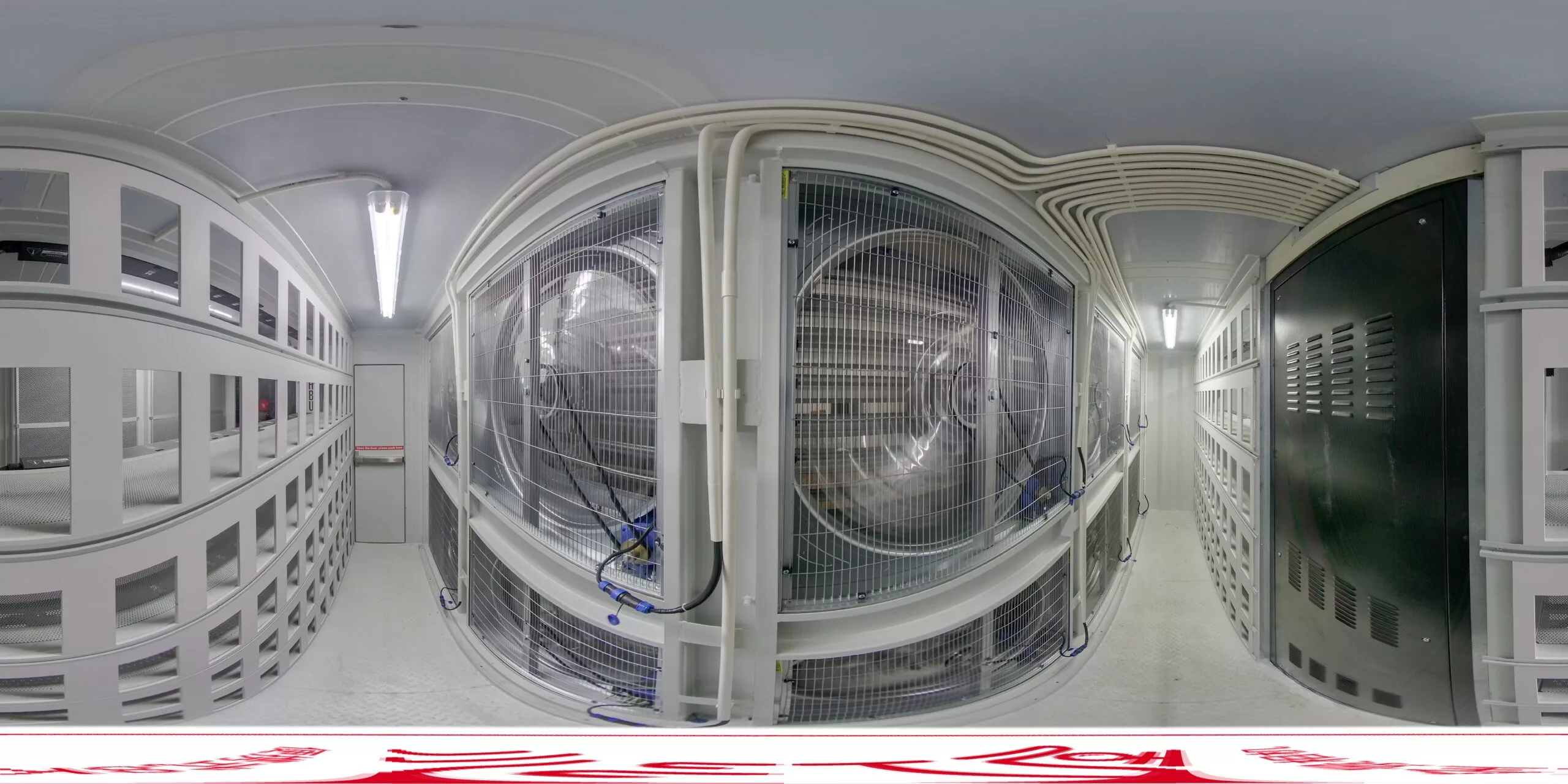
Air-cooled containers rely on massive airflow — typically 60,000+ CFM for a fully loaded 40-foot unit. That means industrial fans, properly sealed hot/cold aisle separation, and external ducting. In a Northern European winter, you have natural cooling assistance. In a Southern European summer, you are fighting ambient temperatures that push hardware past safe operating thresholds. Hydro-cooled units eliminate most of this complexity at the cost of a coolant loop infrastructure that adds upfront capital.
In our experience shipping to customers across 27 EU countries, the biggest mistake beginners make with container planning is underestimating the cooling infrastructure cost. The container itself is often the cheapest component. Electrical switchgear, cooling systems, network infrastructure, and fire suppression can easily double the total project cost.
Honest Trade-offs Most Sellers Won't Tell You
Container bitcoin mining looks compelling in a spreadsheet. In practice, several things consistently catch operators off-guard.
- Noise: An air-cooled container at full load generates 80–90 dB at one metre. You cannot operate this in a residential area. Period.
- Maintenance access: 200 miners in a container means 200 potential failure points. Plan for 2–5% monthly hardware failure rates and budget for replacement units and a maintenance person.
- Remote monitoring is not optional — it is the difference between catching a failed PDU at 2am and losing 40 machines to a power fault you did not notice for six hours.
- Regulatory risk: The EU's Energy Efficiency Directive and evolving member-state regulations on large energy consumers are moving targets. What is permitted today in Romania or Estonia may face new reporting requirements or surcharges within your hardware's depreciation window.
- Resale value of a used container operation is poor. The container, the custom electrical fit-out, the PDUs — none of it sells easily. Your exit strategy matters before you start.
The counterintuitive take: for most European miners who think they want a container operation, a 10–20 machine colocation arrangement at a professional mining facility gives better risk-adjusted returns with none of the infrastructure headaches. Boring advice. True advice. (Source: Eurostat energy price data, Q4 2025)
Is Container Mining Right for You?
If you have access to verified sub-€0.10/kWh industrial power, appropriate land with planning feasibility, and capital to cover not just hardware but electrical infrastructure and a 12-month operating buffer — container bitcoin mining is a serious option worth modelling carefully.
If any one of those three conditions is absent, the math will not save you.
For European miners at the earlier stages of scaling, browse the full ASIC miner range at Mineshop.eu — including the Bitmain Antminer series — and consider starting with a smaller deployment to understand operational realities before committing container-scale capital. If you are already at that scale and want to talk through hardware options and container configurations, contact us directly.
Frequently Asked Questions
How much does a container bitcoin mining setup cost in Europe?
A: A fully equipped 40-foot mining container with 200 ASIC miners, electrical infrastructure, cooling, and network setup typically costs €300,000–€600,000 depending on hardware selection and site conditions. The container structure itself is usually €15,000–€40,000; the majority of the cost is hardware, electrical switchgear, and cooling systems. Ongoing monthly electricity costs at €0.10/kWh for an 800 kW operation run approximately €5,760/month.
What electricity rate do I need for container mining to be profitable?
A: At current Bitcoin prices (~$85,000 USD, Q1 2026), network difficulty (~115 trillion), and a 3.125 BTC block reward, most container operations using efficient ASICs (sub-10 J/TH) need electricity at or below €0.10–0.12/kWh to generate meaningful margins. At €0.20/kWh and above, profitability is extremely thin or negative at current difficulty levels. (Source: asicminersprofitability.com, Q1 2026)
How many ASIC miners fit in a shipping container?
A: A standard 20-foot container with custom racking typically fits 80–120 air-cooled ASICs. A 40-foot container holds 180–250 units depending on miner form factor and cooling configuration. Hydro-cooled miners like the Antminer S23 Hyd 3U can be packed more densely because they do not require airflow separation between units.
Do I need planning permission for a mining container in the EU?
A: Yes, in virtually all EU member states. A container drawing hundreds of kilowatts of continuous power requires an industrial grid connection application, and most jurisdictions require planning consent for permanent or semi-permanent structures. Requirements vary significantly by country — Ireland, Germany, and France all have different thresholds. Always consult a local planning professional before committing capital.
Is container mining legal in Europe?
A: Container bitcoin mining is legal across EU member states as of 2026. There are no EU-wide bans on proof-of-work mining. However, individual countries may impose energy reporting requirements for large consumers, and some municipalities have zoning restrictions that affect where containers can operate. Kosovo and Sweden have previously imposed temporary restrictions — always verify current local regulations.
What is the difference between air-cooled and hydro-cooled mining containers?
A: Air-cooled containers use high-volume fans to push hot air out and draw cool air in — simpler to set up but limited by ambient temperature and noise (80–90 dB). Hydro-cooled containers circulate liquid coolant through miners directly, allowing higher density, lower noise, and better thermal stability in warm climates. Hydro setups have higher upfront infrastructure costs but typically run more reliably at scale and are better suited to high-density container deployments.
Comments (0)