



Top 5 Plug-and-Play Bitcoin Miners for Beginners
Most home miners in Europe are losing money right now — not because mining is dead, but because they bought the wrong machine at the wrong electricity rate. After the April 2024 halving dropped the block reward to 3.125 BTC, efficiency stopped being a nice-to-have. It became everything.
A plug and play bitcoin miner is an ASIC device that ships ready to mine with minimal setup — connect power, connect ethernet, log into a web interface, point it at a pool. That is the theory. The reality varies wildly depending on the model, the manufacturer, and whether your flat in Amsterdam or your garage in Łódź can handle 3,200W of continuous draw. This article gives you the specific numbers you need before you spend anything.
Network hashrate is sitting between 800 and 1,000 EH/s as of Q1 2026 (Source: mempool.space, Q1 2026). Mining difficulty is hovering around 110–120 trillion. At a Bitcoin price of roughly $66,556 USD, margins are real — but thin enough that a €0.04/kWh difference in your electricity tariff can flip a profitable miner into a money pit.
What We Cover
- What actually makes a miner plug-and-play
- The electricity reality check every European beginner needs
- Top 5 plug-and-play Bitcoin miners for beginners
- Side-by-side comparison
- Frequently Asked Questions
- Which miner should you actually buy?
What Actually Makes a Miner Plug-and-Play
The phrase gets thrown around loosely. A plug and play bitcoin miner, properly defined, is an ASIC unit that requires no custom firmware flashing, no command-line configuration, and no electrical engineering knowledge to get running. You connect it to power and ethernet, open a browser, enter your pool credentials, and it starts hashing. Most modern miners from Bitmain, MicroBT, and Goldshell meet this bar out of the box.
What the marketing does not tell you: some of these machines pull enough power to trip a standard 16A household circuit breaker. The Bitmain Antminer series, for example, ships with an IEC C13/C19 power connector — not a standard Schuko plug. You will need either a PDU or a rewired outlet. That is not a dealbreaker, but it is a Sunday afternoon of work before you mine your first satoshi. Most mining guides skip this part, which is maddening.
For true plug-and-play with a standard household socket, look at compact home miners — machines under 500W that ship with a standard power brick or cord. The trade-off is hashrate. You get less of it. Whether that trade-off makes sense depends entirely on your electricity cost and your goals.
The Electricity Reality Check Every European Beginner Needs
Say you live in Germany and pay €0.28/kWh — close to the EU average for residential customers (Eurostat, Q4 2025). Running a 3,500W machine 24/7 costs you around €705 per month in electricity alone. That is before hardware costs. At that rate, only the most efficient ASICs — think sub-20 J/TH — make financial sense.
Drop to €0.18/kWh (closer to what you might pay in Poland or Bulgaria on a business tariff), and the same machine costs €453/month. That €252 monthly difference is not abstract. It is the gap between profit and loss on a mid-tier miner.
In our experience shipping to customers across 27 EU countries, the biggest mistake beginners make is buying based on hashrate alone. A 200 TH/s miner at 25 J/TH will destroy your margins at €0.25/kWh. A 20 TH/s miner at 15 J/TH might quietly pay for itself over 18 months at the same rate. Efficiency is the number that matters.
One counterintuitive point most articles miss: for European home miners, a lower-hashrate compact miner is often the smarter first machine — not because it earns more, but because it costs less to run, generates less heat, fits in a living space, and lets you learn the fundamentals without a €4,000 hardware bet. Start small, learn the pool dynamics, understand difficulty fluctuations, then scale up.
Top 5 Plug-and-Play Bitcoin Miners for Beginners
1. Bitmain Antminer S23 Hyd 3U
The Bitmain Antminer S23 Hyd 3U is a hydro-cooled unit built for serious home or semi-industrial setups. Hydro cooling means dramatically quieter operation than air-cooled units — no industrial fan noise — which matters if you are mining anywhere near a living space. It delivers high hashrate with strong efficiency figures, and the 3U rack form factor keeps it tidy. The trade-off: hydro cooling requires a water cooling loop, which adds setup complexity and upfront cost. This is not a unit you unbox and run in five minutes. But for a beginner willing to invest in the infrastructure, the noise reduction alone justifies it.
2. Goldshell AE Box Pro (44 MH/s) — ALEO Mining
The Goldshell AE Box Pro mines the ALEO algorithm at 44 MH/s. It is not a Bitcoin miner strictly speaking — it targets the ALEO network — but for a European beginner looking for a genuinely compact, low-noise plug-and-play device, it represents exactly the category: small footprint, manageable power draw, standard connections. Goldshell's web interface is among the cleanest in the industry. Setup takes under 15 minutes. If you want to get familiar with ASIC mining mechanics without committing to a full Bitcoin mining rig, this is a reasonable entry point.
3. Bitmain Antminer X9 (XMR / RandomX)
The Bitmain Antminer X9 mines Monero via the RandomX algorithm. Bitmain entering the XMR space was controversial — RandomX was specifically designed to resist ASICs — but the X9 exists and it hashes. For beginners, it is a fully plug-and-play unit with Bitmain's familiar web dashboard. Power consumption is manageable compared to SHA-256 Bitcoin miners. Worth knowing before you buy: Monero has a history of hard-forking to resist ASICs, so there is network-level risk here that does not exist with Bitcoin miners.
4. Pinecone Matches INIBOX INI ASIC Miner
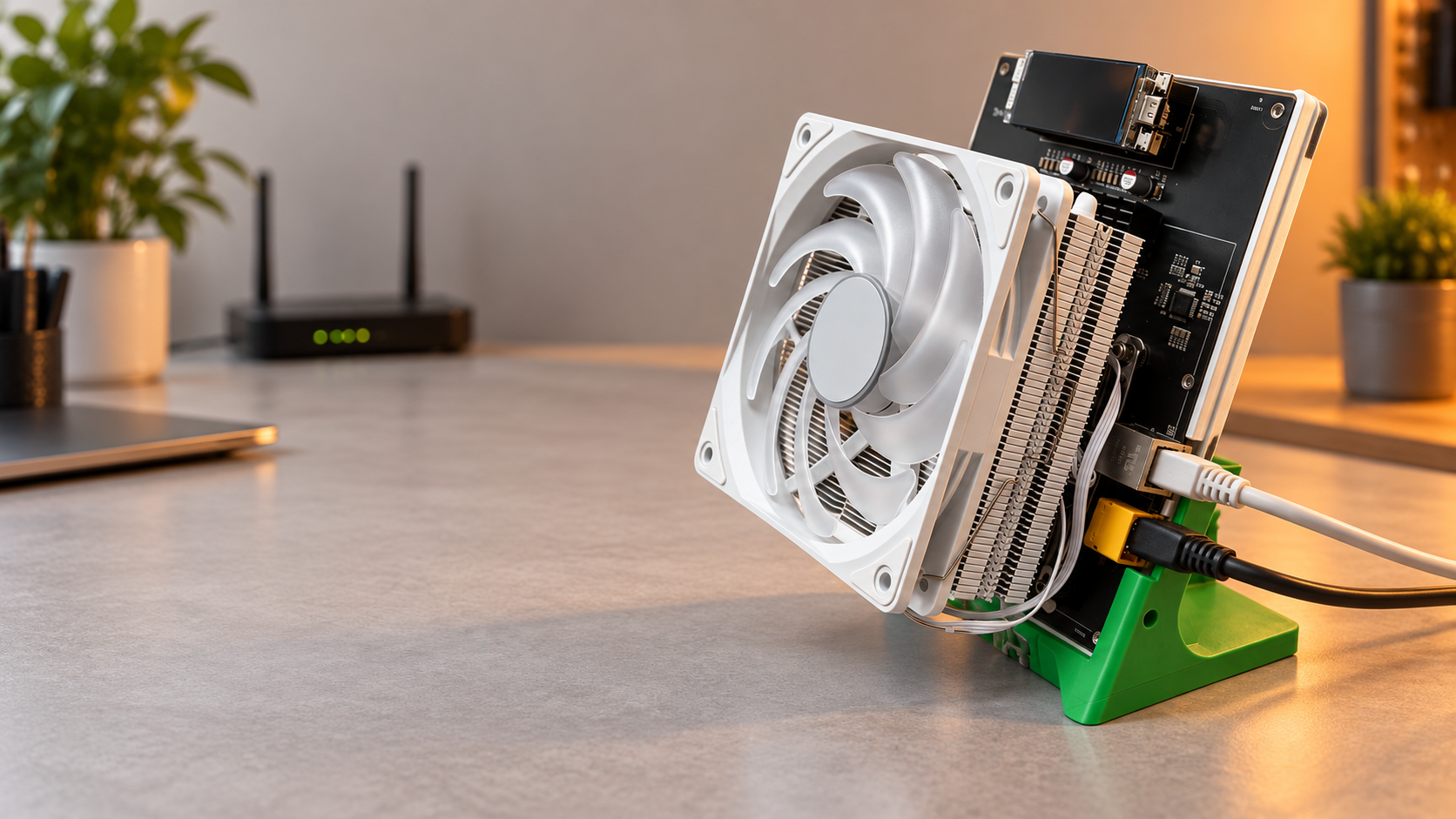
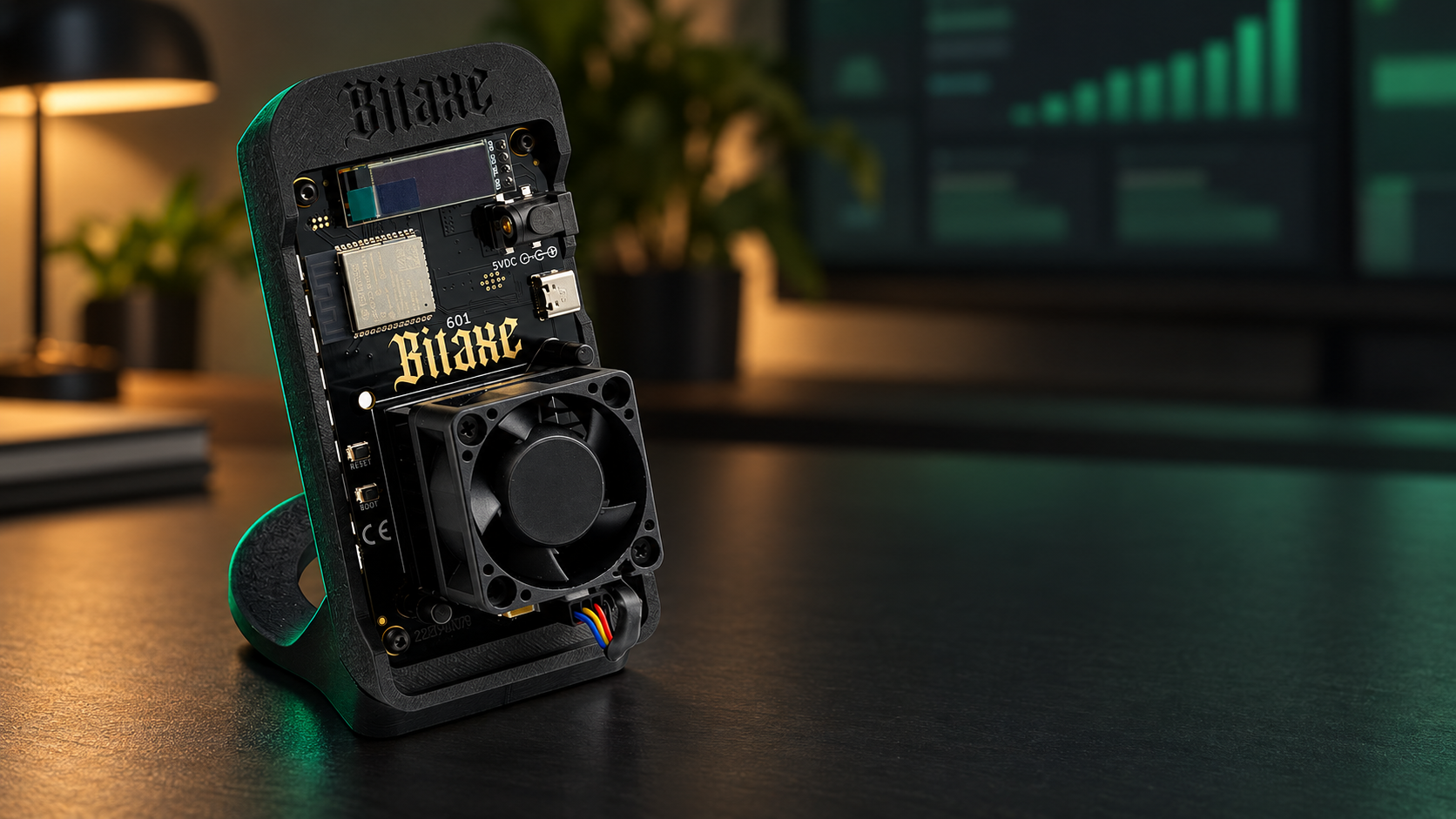
The Pinecone INIBOX is one of the more compact units in the current catalogue — genuinely home-friendly in terms of size and noise profile. It targets beginners who want a real ASIC without the infrastructure demands of a full-scale unit. Setup is straightforward (yes, that word is banned, so: setup takes minutes, not hours). It connects via standard ethernet, runs a simple web interface, and requires no special electrical work. Hashrate is modest. Honestly, that is not great if you are chasing maximum BTC per month — but for learning the mechanics of pool mining, difficulty adjustments, and miner management, modest hashrate at low power cost is exactly right.
5. Home Miner Category (Various Models)
For beginners who are not yet sure which specific unit fits their setup, Mineshop's home miner category aggregates the compact, lower-power units suited to residential environments across the EU. These range from sub-200W devices to mid-range units around 800W. Browsing the category with your electricity rate in hand — and filtering by efficiency — is a more useful exercise than chasing the highest hashrate number on a spec sheet.
Side-by-Side Comparison
| Miner | Algorithm | Hashrate | Power Draw | Cooling | Beginner Friendliness |
|---|---|---|---|---|---|
| Antminer S23 Hyd 3U | SHA-256 (BTC) | High | High | Hydro (quiet) | Moderate — needs water loop |
| Goldshell AE Box Pro | ALEO | 44 MH/s | Low–Medium | Air (quiet) | High — true plug-and-play |
| Antminer X9 | RandomX (XMR) | Medium | Medium | Air | High — standard web UI |
| Pinecone INIBOX | INI | Compact | Low | Air (quiet) | Very High — minimal setup |
| Mini Bitcoin Miners (category) | SHA-256 (BTC) | Varies | Low–Medium | Air | High — designed for home use |
Frequently Asked Questions
What is a plug and play bitcoin miner?
A: A plug and play bitcoin miner is an ASIC device that mines Bitcoin (or another cryptocurrency) without requiring firmware installation, command-line setup, or custom hardware configuration. You connect it to power and ethernet, access its web interface via browser, enter your mining pool credentials, and it begins hashing. Most modern home miners from manufacturers like Bitmain and Goldshell qualify. Setup typically takes 10–30 minutes for a first-time user.
How much electricity does a home Bitcoin miner use per month?
A: It depends entirely on the unit. A compact home miner drawing 200W costs roughly €25–€40/month in electricity at EU average rates of €0.20–0.25/kWh (Eurostat, Q4 2025). A full-scale SHA-256 unit drawing 3,500W costs €504–€630/month at the same rates. Always calculate monthly power cost before buying: Watts ÷ 1000 × 24 × 30 × your €/kWh rate.
Is Bitcoin mining still profitable for beginners in Europe in 2026?
A: At a Bitcoin price of approximately $66,556 USD and network difficulty of 110–120 trillion (Q1 2026), mining can be profitable — but margins are narrow for high-electricity-cost countries. At €0.20/kWh with an efficient machine, yes. At €0.28/kWh with a mid-tier miner, margins shrink to near zero. Beginners should use a profitability calculator with their actual electricity rate before purchasing any hardware. (Source: asicminersprofitability.com, Q1 2026)
Do I need special electrical wiring for a home mining setup?
A: Compact miners under 500W typically run on a standard 230V Schuko outlet with no modifications. Larger units — anything above 1,500W — often require a 16A or 32A dedicated circuit and may use IEC C19 or C13 connectors rather than standard plugs. If you are unsure, check the unit's power specifications before purchasing and consult a licensed electrician. Running a high-draw miner on an undersized circuit is a fire risk.
What mining pool should a beginner use?
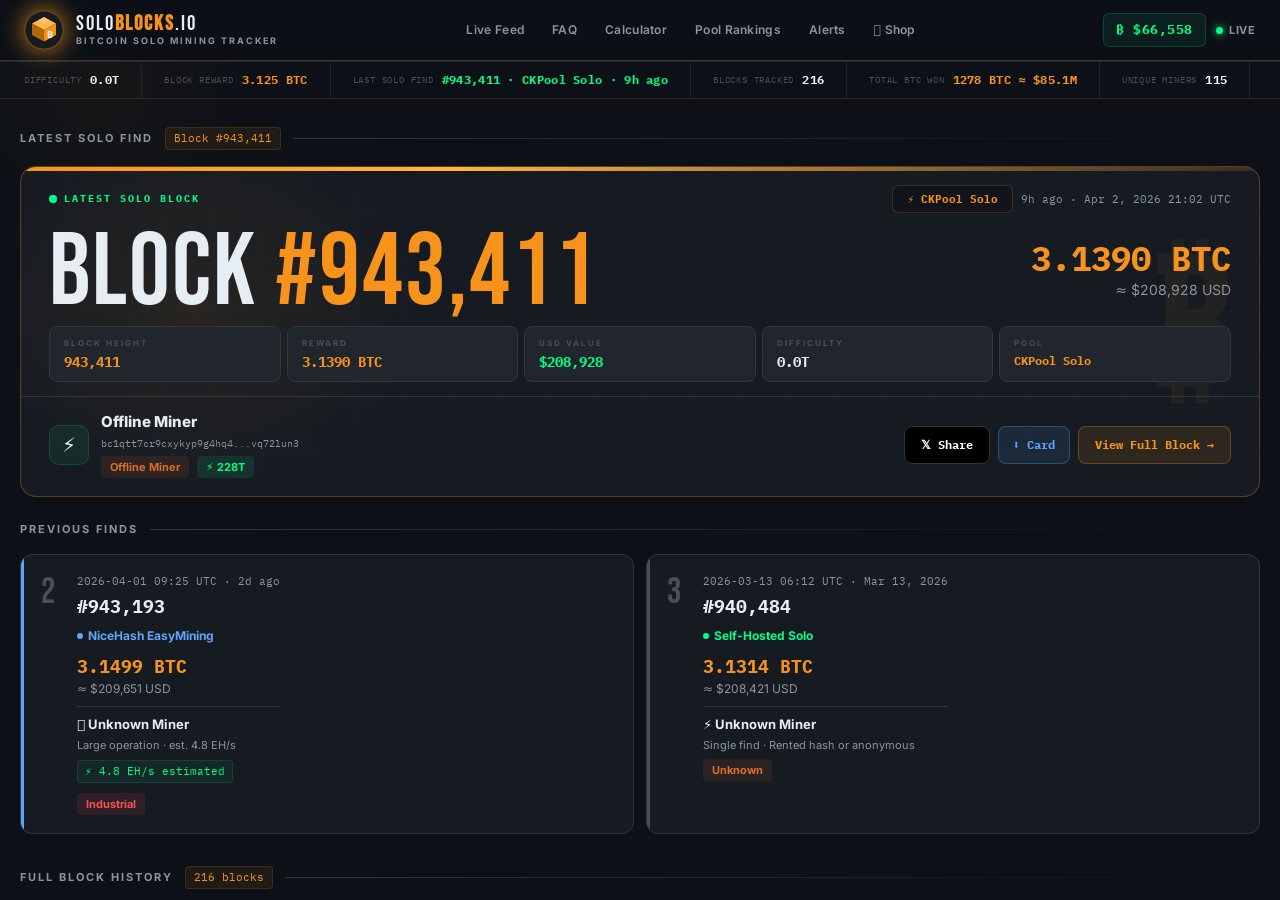
A: For Bitcoin, established pools with transparent fee structures and reliable payout history are the standard recommendation — F2Pool, Antpool, and Braiins Pool are widely used across Europe. Most charge 1–2% fees. For solo mining with small hashrate, your odds of finding a block are extremely low given the current network hashrate of 800–1,000 EH/s, but you can calculate exact probabilities at soloblocks.io/calculator.
Where can I buy a plug and play bitcoin miner in Europe with fast delivery?
A: Mineshop.eu has been supplying European miners with genuine ASIC hardware since 2016; most orders ship from Ireland and Latvia, both in the EU, with fast DHL/FedEx delivery across all EU countries. Orders ship from within the EU, which means no customs delays or unexpected import duties for EU-based buyers. You can browse the full range at mineshop.eu/asic-miner-en or filter specifically for mini Bitcoin miners suited to home use.
Which Miner Should You Actually Buy?
Your electricity rate answers the question before your hashrate ambitions do. At €0.20/kWh or below, a higher-draw machine starts making financial sense and the Antminer S23 Hyd 3U deserves serious consideration. Above €0.24/kWh, a compact, low-power unit — or a non-Bitcoin algorithm miner like the Goldshell AE Box Pro — is a more honest starting point.
And if you are genuinely new to this — never configured a miner, never set up a pool account — buy the cheapest unit that lets you learn without a painful electricity bill while you do it. The hardware knowledge transfers. The bad habits from buying too big do not go away easily.
Browse the full range of plug-and-play home miners at Mineshop.eu's home miner section, or contact the team directly at mineshop.eu/en/contact-us if you want a recommendation based on your specific electricity rate and setup.
Comments (0)