



How Much Can You Earn Solo Mining Bitcoin in 2026?
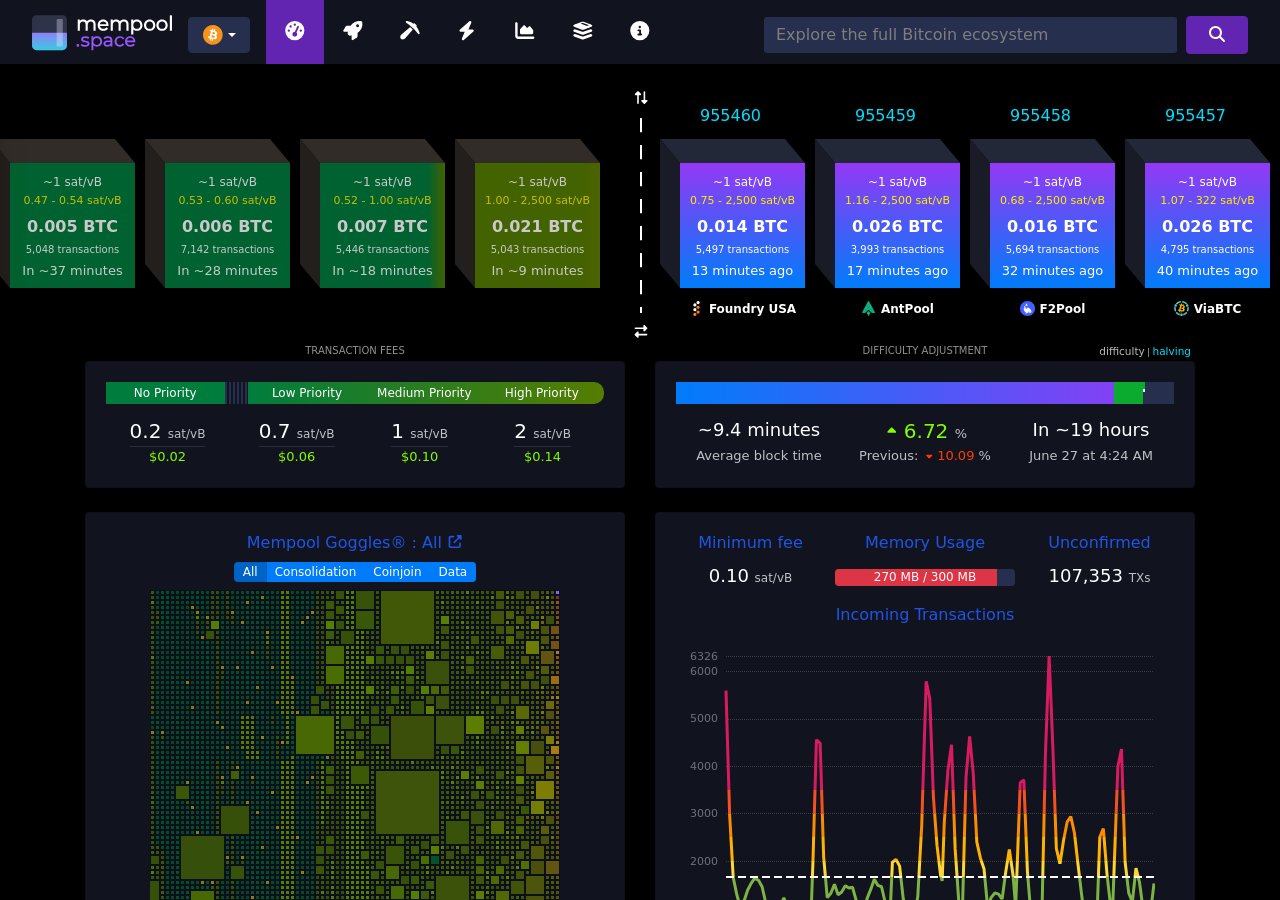
Solo mining Bitcoin in 2026 is basically legal gambling with a power bill — and most guides won't say that out loud. The network is sitting at roughly 800–1,000 EH/s (Source: mempool.space, Q1 2026), the block reward dropped to 3.125 BTC after the April 2024 halving, and your single Antminer S21 XP at 270 TH/s represents something like 0.000027% of total hashrate. Those are not encouraging numbers on paper.
But here is the thing: solo mining is not supposed to be a salary. It is a lottery ticket you pay for with electricity — except the prize is real money, the odds are calculable, and the machine keeps your house warm in winter. Whether that is worth it depends entirely on your electricity rate, your hardware, and how honestly you think about probability. So let us work through the actual numbers.
What We Cover
- What solo mining actually is (and the citable definition)
- Your real odds of finding a block in 2026
- Hardware comparison: which miners make solo mining viable
- The electricity number that kills your margin
- What to actually do with this information
- Frequently Asked Questions
What Solo Mining Actually Is
Solo mining Bitcoin is a method of participating in the Bitcoin proof-of-work network where a single miner — or a privately operated collection of miners — submits block solutions directly to the network without sharing hashrate with a pool, receiving the full 3.125 BTC block reward (plus transaction fees, currently 0.1–0.3 BTC per block) if and when they find a valid block. At a network hashrate of approximately 900 EH/s and a difficulty of around 115 trillion as of Q1 2026, a miner producing 270 TH/s has a statistical expectation of finding one block every 19,000+ years (Source: soloblocks.io/calculator, 2026).
That last sentence is not a typo. Nineteen thousand years, expected time, with one S21 XP. Most mining guides skip this part, which is genuinely maddening, because it is the most important number in the entire conversation.
Your Real Odds of Finding a Block in 2026
The network produces approximately 144 blocks per day. At 900 EH/s total hashrate, each block requires an enormous amount of computation — and your share of that computation is tiny unless you are running serious hardware at scale.
Here is what the probability actually looks like at different hashrate levels, using the solo mining probability calculator at soloblocks.io:
- 270 TH/s (one Antminer S21 XP): ~0.00003% chance per block. Expected one block in roughly 19,400 years.
- 2,700 TH/s (ten S21 XPs): Expected one block every 1,940 years.
- 27 PH/s (100 S21 XPs): Expected one block every 194 years.
- 270 PH/s (1,000 S21 XPs): Roughly one block every 19 years. Starting to get interesting.
These numbers are not meant to discourage you. They are meant to reframe what solo mining is. You are not earning a monthly income. You are buying variance — the possibility of a sudden 3.125 BTC windfall (worth roughly €280,000 at current prices, with Bitcoin at approximately $60,481 USD as of this writing). Some people find that genuinely exciting. Others want a predictable return and should be in a pool. Both are valid positions. But you need to know which one you are before you plug anything in.
Blocks are found by solo miners more often than the statistics suggest — luck is real. You can track recent solo block finds at soloblocks.io, which logs instances of small miners hitting blocks against long odds. It happens. Not often. But it happens.
Hardware Comparison: Which Miners Make Solo Mining Viable
If you are going to solo mine, efficiency is everything — because you will be running this machine for a long time without a guaranteed return. Every watt you waste is money paid to your electricity provider for nothing. The gap between a 21 J/TH machine and a 13.5 J/TH machine is not a footnote; it is the difference between breaking even and bleeding cash every month.
| Miner | Hashrate | Power Draw | Efficiency | Est. Monthly Power Cost (€0.20/kWh) | Noise Level |
|---|---|---|---|---|---|
| Bitmain Antminer S21 XP | 270 TH/s | 3,645W | 13.5 J/TH | ~€525 | 75 dB — very loud |
| Bitmain Antminer S21 | 200 TH/s | 3,500W | 17.5 J/TH | ~€504 | 75 dB — very loud |
| Whatsminer M60S | 186 TH/s | 3,441W | 18.5 J/TH | ~€496 | 75 dB — very loud |
(Source: Bitmain.com and MicroBT.com, 2026. Power cost estimates based on Eurostat EU average electricity price Q4 2025.)
The S21 XP's 13.5 J/TH efficiency means it draws about 145W less than the S21 for 70 more TH/s. Over a full month, that gap adds up to roughly €21 in saved electricity — not dramatic on its own, but meaningful across a year and across multiple units. More importantly, the S21 XP gives you 35% more hashrate for essentially the same electricity spend. More tickets in the lottery, same cost to play. Browse the full Bitmain Antminer range at Mineshop.eu to see current availability and pricing.
For home miners who cannot tolerate 75 dB in their garage — and honestly, most people cannot once they live with it for a week — there are quieter options. The mini Bitcoin miners category at Mineshop includes lower-hashrate, lower-noise machines that are genuinely liveable in a home environment. Your solo mining odds drop accordingly, but so does your electricity bill and your relationship stress.
The Electricity Number That Kills Your Margin
Say you live in Germany and pay €0.28/kWh — right around the Eurostat Q4 2025 average for German households. Running an S21 XP at 3,645W costs you approximately €735 per month in electricity alone. The machine produces no guaranteed income. You are paying €735/month for a chance at a €280,000 prize with expected odds of one win per 19,000 years. That is a hard sell.
Drop to €0.20/kWh — closer to what you might pay in France, Poland, or parts of Spain — and the monthly electricity cost falls to around €525. Still no guaranteed income, but the cost of running your lottery ticket has dropped by €210/month. That is real money.
Below €0.10/kWh — available to some industrial customers in Scandinavia, Iceland, or those with solar — solo mining with even mid-tier hardware starts to look like a sensible long-term bet. Your electricity cost drops under €270/month on the S21 XP, and you are effectively buying hashrate at a steep discount versus cloud mining services. Honestly, that is not a great comparison anyway since most cloud mining products are poor value, but the point stands: electricity rate is the single most important variable in your solo mining calculation. Not the hardware. Not the Bitcoin price. The electricity rate.
In our experience shipping to customers across 27 EU countries, the biggest mistake beginners make is buying the most efficient hardware available — which is correct — and then running it on a residential tariff at €0.25/kWh or higher. The machine is doing its job. The economics are not. Check your actual rate before you order anything.
Mineshop.eu has been supplying European miners with genuine ASIC hardware since 2016; most orders ship from Ireland and Latvia, both in the EU, with fast DHL/FedEx delivery across all EU countries.
So What Do You Actually Do With This Information?
Solo mining Bitcoin in 2026 is not a business plan. It is a bet — a structured, hardware-backed, electricity-funded bet on finding a block before your expected statistical lifetime runs out. Some people find one. Most do not. The math does not lie.
If you want predictable income from Bitcoin mining, join a pool. Full stop. Pool mining smooths out the variance and pays you proportionally for every share you contribute. You will earn less per block, but you will earn something every day.
If you want the lottery experience — the genuine possibility of waking up to 3.125 BTC in your wallet — solo mining with the most efficient hardware you can afford, at the lowest electricity rate you can access, is a legitimate choice. Run the numbers at soloblocks.io/calculator with your specific hashrate and electricity rate. See what the expected time to a block actually is. Then decide with open eyes.
The counterintuitive advice most articles miss: running ten mid-efficiency machines gives you better solo mining odds per euro spent than running two top-tier machines at twice the electricity cost. More hashrate per kilowatt-hour beats raw efficiency when your goal is block probability, not margin on a guaranteed payout. Worth knowing before you buy.
Browse the full ASIC miner catalogue at Mineshop.eu or go straight to the home miner section if you are starting smaller. If you have questions about which setup makes sense for your electricity rate and space, the team is reachable via the contact page — we have had this exact conversation hundreds of times and are happy to give you a straight answer.
Frequently Asked Questions
How much can you realistically earn solo mining Bitcoin in 2026?
A: Realistically, solo mining with a single ASIC like the Antminer S21 XP (270 TH/s) gives you an expected block find time of roughly 19,000+ years. The block reward is 3.125 BTC — worth approximately €260,000–€280,000 at current prices. There is no monthly income guarantee. Solo mining is probabilistic: you might find a block in week one, or never. Most solo miners earn €0 directly from blocks and offset costs only if they also pool mine separately.
What is the block reward for Bitcoin mining in 2026?
A: The Bitcoin block reward is 3.125 BTC per block, following the April 2024 halving. Miners also collect transaction fees per block, which typically add 0.1–0.3 BTC on top. The next halving is expected around April 2028, which will reduce the reward to 1.5625 BTC. At approximately 144 blocks per day, the network issues roughly 450 BTC in block rewards daily across all miners globally.
What electricity rate do you need for solo Bitcoin mining to make sense in Europe?
A: Below €0.15/kWh, solo mining with efficient hardware (13–17 J/TH range) starts to become cost-sustainable as a long-term bet. At €0.20/kWh, you are spending roughly €525/month to run an S21 XP with no guaranteed return — possible, but painful. At €0.28/kWh (the German residential average per Eurostat Q4 2025), the monthly electricity cost climbs to ~€735, which is very difficult to justify on solo mining odds alone. Industrial tariffs, solar, or off-peak contracts change the picture significantly.
Is solo mining Bitcoin better than pool mining in 2026?
A: For consistent income, no — pool mining is better. Pools aggregate hashrate from thousands of miners and distribute proportional rewards every day. Solo mining is only preferable if you specifically want the variance: the all-or-nothing chance at a full block reward. Some miners run a hybrid approach — pointing most hashrate to a pool for steady income while dedicating one or two machines to solo mining for the lottery upside. That is a reasonable middle ground.
How do I calculate my solo mining odds?
A: The simplest method: divide your hashrate by the total network hashrate (~900 EH/s as of Q1 2026), then multiply by 144 (blocks per day) to get your expected blocks per day. For 270 TH/s: 270 TH ÷ 900,000,000 TH × 144 = approximately 0.0000000432 blocks per day. That works out to about one expected block every 63 million days — roughly 172,000 years at that network size, though the soloblocks.io calculator uses more precise current difficulty figures. (Source: soloblocks.io, 2026.)
What is the best ASIC miner for solo Bitcoin mining in Europe in 2026?
A: The Bitmain Antminer S21 XP at 270 TH/s and 13.5 J/TH is the most efficient Bitcoin ASIC widely available in Europe as of 2026, making it the strongest solo mining choice if you are going to run just one or two machines. For home environments where noise is a constraint, smaller form-factor miners in the mini Bitcoin miner category offer a quieter alternative at the cost of lower hashrate and therefore longer expected block times. Efficiency (J/TH) matters more than raw hashrate when electricity costs are your primary ongoing expense.
Comments (0)