

Best Solo Mining Pools for Home Bitcoin Miners (2026)
Solo mining flips the usual pool bargain. Instead of splitting every block across thousands of miners, a solo pool lets your hardware submit work on its own: miss, and you earn nothing; hit, and the full 3.125 BTC block reward lands in your wallet. For home miners with a compact SHA-256 rig, it is a lottery with real odds and no house edge beyond pool fees. This guide compares the best solo mining pools for small-scale hardware in 2026, explains how to choose between them, and shows two ways Mineshop's own tools fit in.
What a solo pool actually does
A solo pool is not a normal payout pool. Your miner connects with your Bitcoin address as the username; the pool serves work at your hashrate and checks your shares, but every share is your own ticket. If one of your shares meets the network target, the coinbase pays the full block reward and fees straight to your address. Most solo pools charge a small percentage fee on a hit, or run at low-to-zero fees and keep the block found by their own infrastructure. Registration, dashboards and minimum payouts in the traditional sense mostly disappear — there is nothing to withdraw until you find a block.
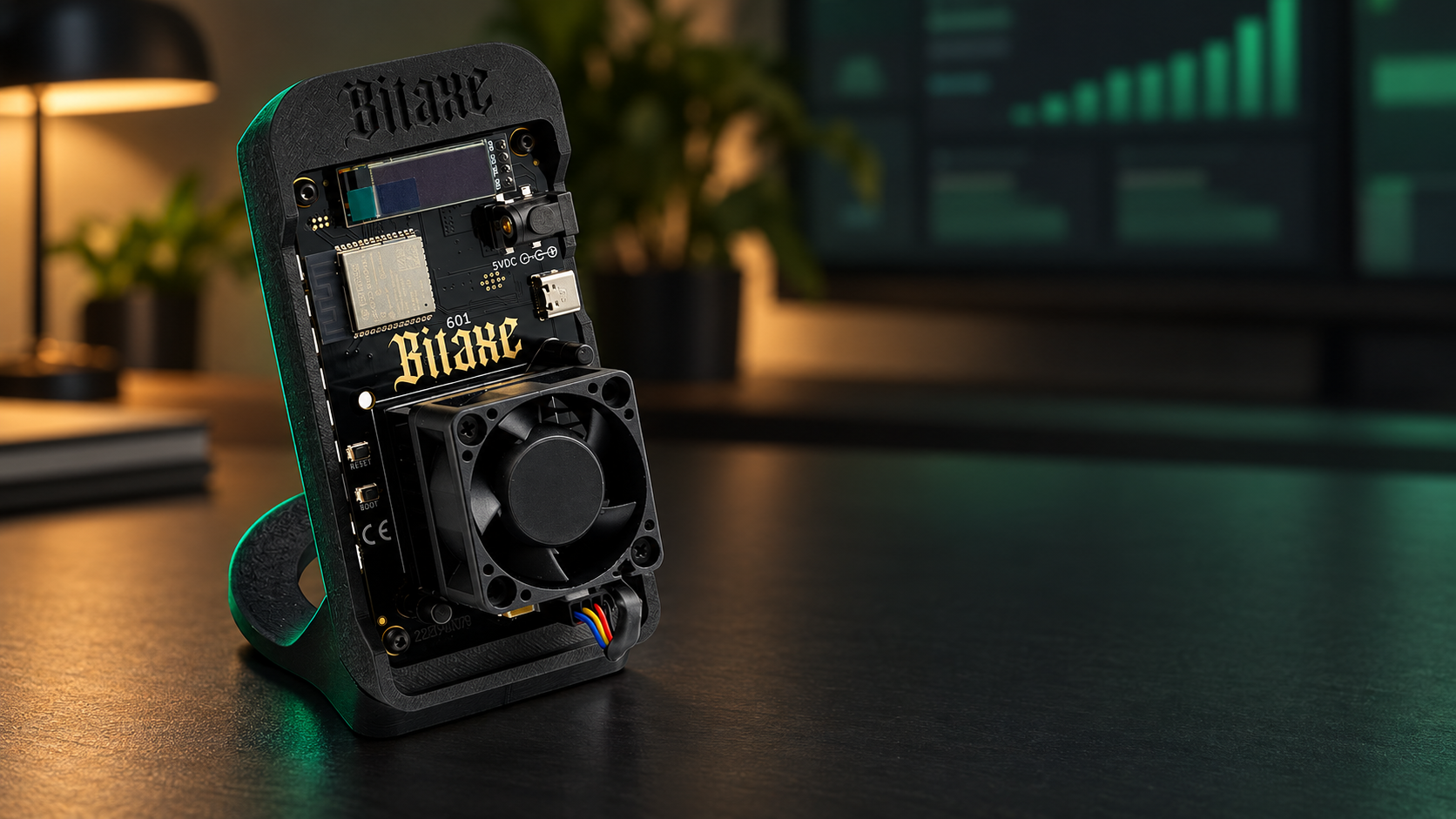
That means the honest framing matters. Against a network hashrate measured in hundreds of exahashes per second, a single Bitaxe Gamma at roughly 1.2 TH/s is a lottery ticket, not an income stream — expected time to a block is measured in millennia at average luck. Treat solo mining as a hobby with a jackpot attached, and size your electricity spend accordingly. The step-by-step solo setup guide covers the wallet and stratum basics if you are starting from zero.
How we compare solo pools for home miners
| Criterion | Why it matters at 1–10 TH/s |
|---|---|
| Fee on a found block | The only moment money moves. 0–1% is standard; anything higher needs a good reason. |
| Stratum support | Small devices need SV1 compatibility; SV2 and DATUM support is a bonus for efficiency and decentralization. |
| Transparency | Live stats, found-block history and open-source code let you verify the pool is actually solo. |
| Small-hashrate friendliness | Reasonable share difficulty defaults and a UI that shows your worker, not just farms. |
| Uptime and location | A pool close to Europe with stable uptime wastes fewer of your (very few) tickets. |
The solo pools worth pointing a home miner at
1. Mineshop Solo Pool — zero-fee solo mining built for this shop's hardware
solo.mineshop.eu is our own solo pool, run for the miners we sell: no fees, no registration, full 3.125 BTC reward to your address when you find a block, with stratum endpoints for Bitaxe-family and Nerd-family devices. It pairs naturally with SoloBlocks.io, our real-time solo-mining block tracker, so you can watch solo blocks land across the network and calibrate expectations before you spend a cent on power. A monthly Bitaxe Gamma giveaway for pool users is running at the time of writing. Being blunt about the trade-off: we built it, so verify our claims like you would anyone's — the pool's live stats and found-block feed are public.
2. solo.ckpool.org — the classic no-frills solo pool
The longest-running public solo option, solo.ckpool.org runs on ckpool software with a simple web interface showing users, hashrate and recent blocks. It has served the Bitaxe and Nerdminer community since the beginning — most open-source miner guides default to its stratum port 3333. The fee is 2%, taken only when a block is found. It is a sound pick if you want a battle-tested third party with deep forum history rather than an operator with a shop attached.
3. Public Pool — open-source and radically transparent
public-pool.io is a fully open-source solo/lottery pool: the code, the stats and the block feed are inspectable end to end, which is exactly the transparency a lottery deserves. Configuration is standard stratum with your address as username, and it is popular in the small-miner community precisely because nothing about it is hidden. If "trust the code, not the company" is your motto, start here.
4. OCEAN with DATUM — the decentralization maximalist's route
ocean.xyz takes a different shape: its DATUM protocol lets miners assemble their own block templates instead of mining on the pool's, and it supports solo-style payout modes. For a home miner this is the most ideological option — you are not just playing the lottery, you are refusing to hand template construction to a third party. The setup is slightly more involved and the interface is aimed at people who enjoy that; treat it as the enthusiasts' pick.
Two creative plays with Mineshop's own services
Rent a hashrate push for a lottery sprint
Buying hardware is the slow way to buy tickets. HashStrike rents SHA-256 hashrate by the day, which turns solo mining into something you can experiment with: point a rental at a solo pool for a weekend, watch the odds move in real time, and stop when the sprint ends — no noise, no heat, no hardware depreciation. It is also the honest way to feel how steep the odds are: a day of rental hashrate against the network is still a lottery ticket, just a bigger sheet of them. Set a budget before you start and treat any block as the miracle it is.
Watch the lottery live on SoloBlocks
Before committing electricity, spend ten minutes on SoloBlocks.io. It tracks every Bitcoin block as it is found and surfaces the small and solo miners that occasionally beat the farms — a useful reality check on both the odds and the fact that small miners do, sometimes, win.
Pointing your miner at a solo pool
The mechanics are identical across pools: in your device's pool settings, paste the stratum host, keep the port the pool documents, and put your receiving Bitcoin address as the username (add a .workername suffix if you want per-device stats). Password is conventionally x. Save, restart, and confirm on the pool's user page that your address appears with live hashrate. Our Bitaxe Gamma setup guide walks the same fields with screenshots of the correct power supply — the part most beginners get wrong.
Which hardware makes sense for solo lottery mining
Since every TH/s is a ticket, efficiency decides how long you can afford to play:
| Device | Approx. hashrate | Solo-lottery fit |
|---|---|---|
| Bitaxe Gamma 601 | ~1.2 TH/s | The cheapest open-source ticket; USB-slot power draw, quiet, ideal first solo rig. |
| NerdQaxe++ Rev6.1 | ~6 TH/s | Five times the tickets for a modest power bump; the community's default lottery machine. |
| Full mini-miner range | Varies | Compare noise, watts and TH/s before buying — the right ticket sheet depends on your electricity price. |
Run the electricity math before committing: watts ÷ 1,000 × hours × your €/kWh rate. A roughly 20 W device costs a few euros a month to leave running — a fair price for a standing lottery ticket — while a full-size ASIC redefines "lottery budget" entirely.
Set expectations before you mine your first share
Solo mining rewards patience and punishes magical thinking. Your expected time to a block is your hashrate divided into the network's — with hundreds of exahashes out there, small rigs measure the wait in geological time at average luck. The payoff model is not income; it is optionality: a standing chance at 3.125 BTC for the cost of electricity, plus the fun of watching your worker hash on a public pool page. If a steady trickle of sats fits your goals better, a conventional payout pool remains the rational choice — our mining pool selection guide covers that side. If the lottery calls, pick a low-fee solo pool, double-check your receiving address, and let it run.
Related Blog
Hammer Miner Thor P2 Review: 10 TH/s Home Bitcoin Miner Guide
Oct 13, 2026 by Mineshop Team
mini bitcoin miner
AMD Instinct MI455X: CDNA 5, 432GB HBM4 and 40 PFLOPS Explained
Oct 13, 2026 by Mineshop Team
Mineshop